Key Takeaways
Build your reputation by closing deals even if you lose money initially - people will trust you're legitimate when you consistently perform
Focus on creating passive cash flow through rentals or private lending before trying to take extended time off from active deal-making
Pay VAs based on KPI performance rather than time worked - if they don't hit metrics like posting 3 Craigslist ads daily, they don't get paid
Network with local wholesalers and realtors by giving value first - share leads and run marketing on your own dime before asking for anything
Track personal life KPIs like date nights with spouse, quality time with kids, and exercise frequency to maintain balanced lifestyle alongside business success
Quotable Moments
”“Cash flow is king, not cash. Because if money is not coming in on a monthly basis regularly, you can't take off.”
”“You can't learn how to swim by reading a book. You gotta be in the game.”
”“I had all the tangibles to be successful. I was just too comfortable. I had my safety net was my paycheck.”
”“In San Francisco, you exchange convenience for equity. It's not necessarily dollar figure.”
About the Guest
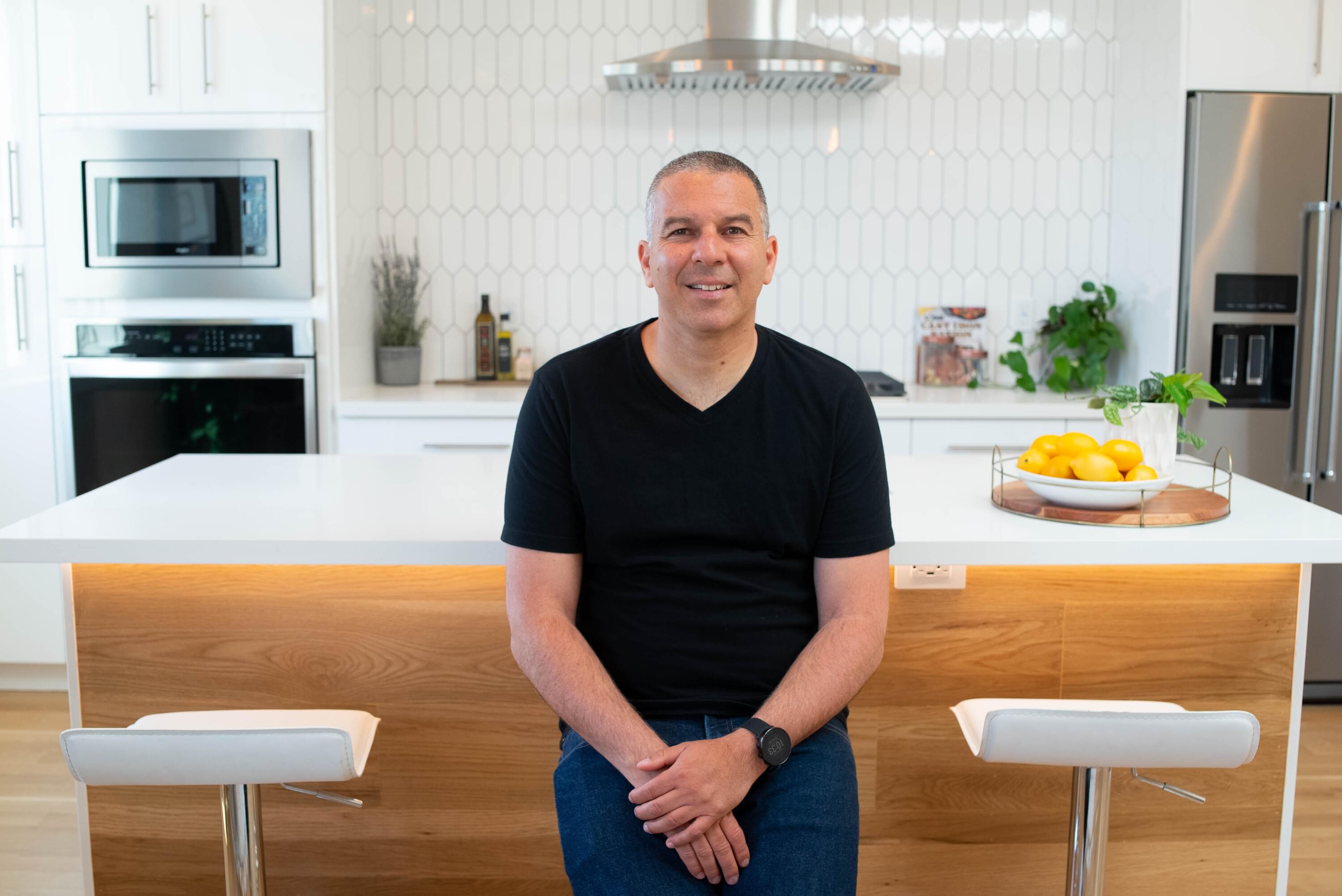
Haim Mamane
The Virtual Wholesaler Guy
Real estate investor and coach known as The Virtual Wholesaler Guy. Started investing in 2011 in California, quit his 9-to-5 in 2015, and built a virtual wholesaling and flipping business. Now based in Israel, coaching investors on virtual wholesaling and high-end fix-and-flip strategies.
Full Transcript
12440 words
Full Transcript
12440 words
Steve Trang: Hey, everyone. Thank you for joining us for today's episode of Real Estate Disruptors. We have a special guest coming in from out of town. We got Hai Mamont Palman, the virtual wholesaler guy. It's me.
And he's flown in from San Francisco to share his journey on getting rid of his nine to five job to virtual wholesaling to seven figure flipping. If this is your first time tuning in, I am Steve Trang, broker and owner of Stunning Homes Realty, founder of the OfferFast Homes app, the only, MLS for off market wholesale properties. And I'm on a mission to create 100 millionaires. So if that's something you're interested, let's connect on Instagram. If you're excited for today's show, please give me a wave.
Give me a thumbs up. And as a friendly reminder, I don't charge a dime for this show. I don't make any money doing this. So here's all I ask. This is what it cost for you guys to listen to the show.
If you get value today, please tag a friend below. Tell me your best takeaway, from the show later on or share this episode right now. That way, we can all grow together. And don't forget, this is a live show, so please post your questions for Haim to answer. You ready?
Ready. Let's do it. Alright. First question is, what got you into real estate?
Haim Mamane: What got me into real estate? I just wanted to spend more time with the family, and I was working nine to five. And and I just researched and read and and all the ways, all the words got me to real estate. So that's why.
Steve: Okay. So what were you doing when you when you when you had that, you know, epiphany?
Haim: I was reading a lot. So I I worked nine to five job. It was a block away from the public library. So, like, every week, I was just bringing, like, five to seven books Mhmm. And read and listen to podcasts like this podcast, just reading and buying courses and and implementing and testing.
And that was probably for two to three years. That's what I was doing.
Steve: Okay. So then when did you get into wholesaling?
Haim: My first virtual wholesale deal was in August 1533. Okay. That was my first deal. But I was trying to do it for almost a year and a half, just trying new strategies, just not being consistent. But it took me almost a year and a half to two years to get my first deal.
Steve: Well, that's a great message because I think a lot of people are watching these shows, listening to this podcast, watching other podcasts, and and and buying courses. Mhmm. And they're expecting to be overnight.
Haim: It's it wasn't the case for me. I know, again, I bought I can name all the, like, at least 15 gurus that courses that I purchased. Uh-huh. And I think, again, most of it was my fault. It's not like the course wasn't good.
I was just not implementing the right way. So Right. That's the message. It's again, you have to stick with something and be consistent. Yeah.
Most of the mess the the courses work. There's a lot of again, I I don't like the anti sentiment towards gurus this day because people blame the gurus because they can't get shit done.
Steve: Yeah. So okay. So you said you had your first wholesale deal in '13. 2013. So tell me about that wholesale deal.
So I
Haim: I think I need to put us in context. I was initially after reading reach that, poor dad when most of us read, I was buying rentals. And I quickly figured out after buying four rentals that that's not the best way because I need 30 more in order for me to quit my job. Mhmm. So I bought few properties in Memphis, Tennessee.
So I knew the turnkey companies. I have connections with real estate agent, property managers, other local wholesalers, and somebody just pitched me an off market deal. So I went back to my the the company that purchased the turnkey company, Memphis Invest, and told them, listen. I bought a property from you in this neighborhood for $80,000. I have a deal for you for 40.
Do you want to buy it? And they told me yes. And and that was the deal. I sold it to the turnkey company that I purchased the the first rentals from them, and this is how I made my first $4,500 deal.
Steve: So you you lived in San Francisco this whole time?
Haim: Yes. And you were buying rental properties in Memphis? Yes. I started in California. I went off of money after buying two rentals.
So I I was looking for to buy cash flow properties, and Memphis markets.
Steve: Mhmm.
Haim: So, yeah, so I was buying rentals in Memphis as well.
Steve: And then at some point, you realized that you could buy directly from you're buying from another wholesaler? You're buying directly from
Haim: That was again, I was networking with agents. Again, I ran out of money after buying, like, four rentals, because I was putting 20% down at w two jobs, so I was able to finance it. But then I ran out of money to to buy, more properties. I said, again, I have to figure out another strategy to generate a generate a lot of income so I can quit my nine to five job. Mhmm.
So, wholesaling was was the answer. Right. And since I was active in in Memphis, I said, okay, let's try to do it in Memphis. I was working a nine to five job. I didn't have time to drive around for dollars.
So that's what I did. I started looking for deals, and and a real estate agent pitched me this off market deal. And and that's how everything happened. Awesome.
Steve: Okay. So then from there, how did you grow to become the virtual wholesaler guy?
Haim: So that was my moment. Obviously, just sitting in an office, in San Francisco and and doing a deal without speaking with the seller, without meeting with the buyer in person, and everything was done with the phone call and emails, that was a big moment. I can make again in in two weeks what I was making in a month. So, that's was moment, and then I was just starting to do more. And and I initially, I just doing most of this from the MLS.
I was just blasting offers on the MLS. I had, initially a virtual assistant, and we're just making, like, 200 offers a week. Oh, wow. We put together a system, and it was a numbers game. So, like, every 200 offers, we got a deal.
So and this is why I'm working a nine to five job. So I have to leverage somebody else to to put in the offer. Back then, it was much easier to get deals off the MLS. Mhmm. And for the first two years, most of the deals were from the MLS.
Steve: And this is strictly, in Memphis?
Haim: Memphis. Memphis and and North Mississippi, which is part of the the Memphis market
Steve: Gotcha.
Haim: Metro area.
Steve: Yeah. Okay. And then, at which point did you start focusing on not just wholesaling, but, you know, like, you're known for enjoying your your time with your family. Right. Right?
So at which point did you evolve from just doing deals on MLS to where you're, you know, able to enjoy time So across the world with your family?
Haim: So so goal number one was to quit my nine to five job. That was the goal. So for two years, I was doing again, while working a nine to five job, I was doing deals on on the side as a side gig.
Steve: Mhmm.
Haim: After two years, at the end of the two years, I was making more money on my side gig than my nine to five job. But I was just too scared to quit my job because I had two kids. Again, I was raised to be an employee. All my friends were employees. My mindset was of an employee.
Mhmm. So for two years, I was making enough money to quit my job, but I couldn't because I was just scared.
Steve: What were you making of that job?
Haim: What I was making? I was making again, and that's the thing. Is I had a good job. So, again, I don't have a story when I was, again, miserable and and broke, and I slept in my my friend's couch in the living room. I don't have this story.
Steve: Mhmm.
Haim: My story that I have a good job, I was, again, making close to 6 figures. Mhmm. Good benefits. I had a I have a director level, job, and everything was great. And I was very comfortable because every two weeks, I had a paychecks coming in.
Steve: Right.
Haim: So I was just scared to quit. So but after two years, I was making enough money, and I told my wife, listen, honey, I think we're ready. I'm just again, I'm just like a an airplane on the runway, and I can just take off. But, again, I'm holding myself Mhmm. Down.
It was again, I call it the fear of success. But after two years, again, 09/30/2015 is my Independence Day. I always share that. We we we celebrate in the parliament family. September 30, that's my Independence Day.
That's when I quit my nine to five job Oh, wow. And was able to go all in and and just to build a business and just being a full time investor. So that's happened on in 2015. So from my first rental was in 2011, and my first virtual wholesale deal was in 2013, and I quit my job only in September 2015. So it's not an overnight success.
Steve: Mhmm. And
Haim: I think this is one of the messages that's important to to drive home. So it was a process for me, especially because I had two kids, and I worked a nine to five job, and I wasn't ready mentally to quit my job.
Steve: So you called the term the fear of success. I haven't heard that term, you know, mentioned a lot. I I've heard, like, you know, people self sabotage Mhmm. Because they're you know? But, I mean, fear of success, can you talk a little bit more about that?
Haim: Yes. I I think I had all the tangibles again to to be successful. And I think a lot of people, they are smart. They're educated. They whether they went to school or they are street smart, but every person has a gift.
And for me, I knew that I have everything. Again, as far as education, I I took, like, 15 courses. I I knew people. I networked people, and I knew what it takes to get a deal done. And I was just too comfortable.
Mhmm. I had my safety net was my my paycheck, my two weeks paycheck. I knew that whether I work hard or not, I have a paycheck's coming in. So I was just fearful to quit and go all in and be successful. Right.
Because I still had my nine to five job, and I still had to go every day to a job place, and I had to work. So I didn't have a full day to work on the business and grow it.
Steve: Yeah. And it's crazy. Right? Because, like, you can make that much you can make more money on the side than you're making on your daily. If you were just, you know, if you just quit your daily, how much more successful could you be on the side hustle?
Haim: And that's what happened when I quit my job. So, again, I I was able to take off.
Steve: Yeah. So So you mentioned goal number one was to quit your job.
Haim: Goal number one was to quit my job. Goal number two? Goal number two was to build a business, and and I did that because I was part of a mastermind. I'm still part of a mastermind
Steve: Mhmm.
Haim: When, I saw that everybody leveling up, everybody have teams, everybody have acquisition guys, disposition guys, they have lead managers, there's virtual assistants. And I saw that what everybody I want me doing Mhmm. And I felt this this is what I need to do, you know. Yeah. It's like they are $100,000 per month, you know.
So I start to build a team. I quit my job, and I went all in. So I said, okay. Now I start to run it like a business. Hire people, run KPIs, you know, just implementing the the the traction version.
Mhmm. And went to three different markets, and and I built a business. And and I thought everything was great, but I I did not enjoy it. I found myself traveling with my family because money was good. I didn't work nine to five job, and I was in Santorini, Greece.
And in the middle of the night, because of the time zone difference, I was just dealing with team b s, you know Mhmm. Quitting. Again, people quitting on me, disciplining, running KPIs, no shows, and I found myself, what what am I doing here? I'm in Greece in Santorini, one of the most beautiful places on Earth, and I'm just dealing with it. I'm not present with my family.
You know, my kids are hanging out in the pool, in the beach, and I'm just dealing with that. So that was another moment. I said this model is not for me, and I let everybody go. So I gave everybody two weeks notice. Mhmm.
And I fired everyone. What year was this? That was, the 2017. Okay. So I built again a business for two years, was in three different markets.
I have, like, seven people on my team running KPI, running a business, just to realize that it's not the right model for me. I wasn't happy, and I wasn't present, and there was no alignment between my core Mhmm. Values and and the business model and the model that I was running. My the the the guiding principle that I have is is to to make more, work less, and play more. Yeah.
And I was working way too hard for me.
Steve: Well, I think that's a key though. Right? You said, like, it wasn't a business model for me. Yes. Because we all have different Right.
Priorities. We're all different what what makes us tick, what makes us happy is different for all of us. You can't say I love that guy's business. I wanna copy his exact business.
Haim: And that was what I was doing. I was copying other people businesses, but it wasn't the right business for me Mhmm. Mhmm. Because the the the the track, the journey that they're on was different. There's some people who want to build an empire.
Again, we we spoke a little bit. Again, sound like you're on this track to build a a monster. Mhmm. It's not the right model for me. Right.
And there's no right or wrong. Again, everybody need to stay in their lane and to know what's their end goal. And for me, just building a big machine and having big team was not the right fit because I prefer to take off for two months and don't do nothing.
Steve: Mhmm.
Haim: And I don't care if I have a big team or not. I don't want to have on Monday morning meeting when I'm in Israel with a ten hour difference. Yeah. It just I was miserable just to to wake up in 4AM in the morning and just run a again, a business meeting with my team. It was just bad.
So you were three different markets.
Steve: What markets were you in?
Haim: So I was in Memphis, Tennessee, which was my main market in Little Rock, Arkansas, and in New Orleans. Okay. Okay. That was my three markets.
Steve: And then in 17, you
Haim: said you know what? Twenty seventeen, I says, I'm done. So I'm shifting the model from a high volume loss spread type deals to the Bay Area, just moving to the Bay Area, San Francisco where I live, to low volume but big spread deals.
Steve: So So before we transition there, so when you say high volume, low margins, can you put in context what that means?
Haim: Yes. So for me, high volume was, again, between five to seven deals per month.
Steve: Mhmm.
Haim: And the average deal size was was around $10,000, anywhere between eight to 15. So
Steve: Yeah.
Haim: It's I think it's the standard for a cash flow market. Mhmm. Because how much of a spread you can put on a $80,000 property. Again, when you work with properties in San Francisco and the median price is 1,500,000.0, again, it's much easier to create a 6 figure spread as opposed to $80,000 property in Memphis.
Steve: Right. Okay. So five to seven deals between 8 and 13,000 fee. Okay. And then, along the way, though, you were you were spending time with your family.
Haim: Absolutely. Yes. I was still again, I was again, I I delegated and outsourced all the acquisition side of the business, and I was doing only this position. So I had a lead manager. I was basically running acquisition people in three different markets.
And when they had a deal, they're just reporting to me, and I was just basically, with text messages and few emails, will sell the deals. So that was the motto.
Steve: So the reason I'm asking this question is because, you know, you tech you like to take time off to go travel the world. Yes. When did that become a priority?
Haim: It was it's it's been always a priority. So that's why I was started to research what I can do to quit my job Mhmm. Because I wasn't happy that to have only fourteen days a year, vacation time. I wasn't happy calling to for sick days or to taking my kid to rehab. I didn't like when people tell me this is what you're worth.
You're worth $100,000 because that's what people in your position get paid in San Francisco. Mhmm. So part somebody put a tag price on me, and I couldn't create my own value. So I knew that there must be a better way to live life Right. Than going to a nine to five job and and have limited time with your family.
So right off
Steve: the bat when you quit That was the end goal. That was the that was the end goal, to spend more time with your family? Yes. Okay. And so how soon from when you quit your job, in in '15, right Yes.
Till you actually were able to spend quality time with your family? I know wholesaling was eating into your family time. Mhmm. But how soon till you were able to travel with your family?
Haim: It was, it was pretty immediate because, I was I'm still working from home. Mhmm. So every day, I can take my kids to school. That was a priority for me. Every day, I pick up the kids from school and having lunch with them.
So just being there and being there present and just going to their soccer games on the weekend Mhmm. And spending any interruption from work, that was huge for me. And also every time the kids are off school, I can travel. So when they're off school in the summer, I can travel because all of my work was virtual. I was never meeting with with sellers or buyers.
Everything was done via phone call and email. So I had a CallRail account, and I have a again, I have Podio, and every I knew what's going on in the business.
Steve: I
Haim: had, like, my KPI, and when I needed that, I just was jumping on a Skype call with my team and was able still to run the business while being in Israel. Yeah. So that was huge for me.
Steve: Okay. Yeah. I I imagine, like, the teachers must have thought, like, you were, like, some unemployed bum.
Haim: Yeah. They still do, but I don't care. Because, again, I I come with t shirt and jeans and flip flops, and they see me all the time. And even, again, my my neighbor is renovating a house. And he tells me, again, I see you all the time.
Don't you have a job? So that's what people think about me, and and I love it because
Steve: Or or maybe you're just like the, you know, the, house husband.
Haim: Yeah. Exactly. But that's exactly what I wanted. I wanted to work from home Mhmm. Or from, coffee shops.
I always dreamt of working from a coffee place. I see all these people sitting in Starbucks with their with their Mac Mhmm. And and just working from there. So that was one of my goals, just to be able just not have a location that I need to go to every morning.
Steve: That would be good
Haim: for me.
Steve: So before transitioning to, you know, the phase you are right now Mhmm. What, a lot of people that are listening are are more wholesaling heavy. Yeah. So can you give, you know, like, two or three major takeaways that that made you super successful on on on the wholesaling operation, particularly where you can spend time with your family?
Haim: If I I think, initially, there is no way there's no shortcuts. Mhmm. So I can tell you that from from from the beginning, I had a lot of times. There was a lot of hustle and grind in the beginning, even though I don't like these words. But in the beginning, when you work a nine to five job and try to build a business and to learn, you have to grind.
You have to to to put in the work. So but you know what's the end the the reward at the end of it. Mhmm. So, you gotta be success. You just be with the right mindset.
And for me, again, I just knew that, it may take time. It took me a year and a half to get my first deal done. So just staying at it, a lot of people think that it's there's an easy way to get deals done. And I know it's even more competitive than three years ago, so it's even harder. Mhmm.
So I think for me, the goal is just to be consistent. I think, initially, I I even lost money just to get deals done, and and I think it helped me just to build my reputation. Yeah. Just to know that I I'm gonna close. I'm gonna get the deal done even though sometimes I lost like a thousand bucks.
Mhmm. Because the buyers came in lower. I was double closing. And after just running all the closing costs, I end up not making anything. Mhmm.
But people knew that when I have a deal, it's my deal. It's not a daily chain deal, and I'm gonna close. Mhmm. So I think this is something that's gonna help me build my reputation, especially when you're out out of towner, you know, like a virtual wholesaler. They never met you in person.
So they don't they never shake your hand, and all they know about you is from email and phone calls. So Right. So there's always again, this this is real. I mean, this is a fraud. This is a scam.
But when you close deals, that's make it real.
Steve: Yeah. Well, I I think you hit something really important there is the reputation part because I think something that's really shortsighted is that, you know, they they they treat this a little little too transactional. Yes. And it's a very transactional business, but in the community, it's a relational
Haim: Absolutely. Business. People miss that. Absolutely. Yes.
I I spend a lot of time just building the relationship, especially with the buyers. And and one of the rules that I have that I will never market somebody else's deal. In the beginning Mhmm. Just focus on creating your own deals Yeah. That that you earned, that you are direct to the seller, that you control the deal.
So it's not like you get into contract with somebody to to realize that the wholesalers, the direct to the seller already sold the deal. Mhmm. So, it was one of my rules to never co wholesale a deal, when the deal is someone else. I had other people marketing my deals, but, it was always small deal. I was always in 100% control of the deal.
Steve: Maximenis wants to know what's
Haim: the one of the difficult challenges having too many VAs. If I didn't have too many VAs, so I don't know. So I had the three was the most that I had at one point. So I don't think it was too, too hard, and everybody knew specifically what they were doing. So it was they they had KPIs.
Steve: Mhmm.
Haim: There's very clear instructions of the deliverables and what they're supposed to do. And also managed my my VAs based on KPI, not based on time. So if they don't hit their KPI, they don't get paid. So that made it
Steve: very don't get paid?
Haim: They don't get paid because that's yeah. They don't exchange time for money. They exchange performance for money.
Steve: So on a entrepreneurial attitude. I'm surprised that you have VAs that agreed to it.
Haim: It. Yes. They again, the KPI was very basic. It's not like they need to close deals, but they need to post three times a day in Craigslist. And if I don't see three links in Craigslist, they don't get paid because it didn't perform the job.
So it was very easy to to keep them accountable. Right. And only when they complete the KPI, they get paid.
Steve: I like that. So then what are some of the key KPIs for virtual assistants?
Haim: For virtual assistants? So it was, again, post on Craigslist on the seller side and on the buyer side.
Steve: Mhmm.
Haim: It was sending text messages or generating leads from Craigslist and from Zillow and from all the other online site just to build list or maybe just, pull information for public records. So they had to hit a KPI. It's not like they they need to spend eight hours in front of the computer and somebody take a screenshot to make sure that they work. I never believed in that. So they they knew exactly what's the KPI for the day.
They need to report at the end of the day, and they need to hit the KPI for the week. And if they don't hit their KPI, we need to have a conversation. And if they consistently don't, they hit the KPI, somebody else will take their job.
Steve: Gotcha. Makes sense. Yeah. I like that. So if you were brand new, right, or if I was brand new,
Haim: and
Steve: let's say I wanted to go to, you know, you were saying Little Rock, Arkansas. Right? So what is the advice
Haim: you would give someone that's brand new looking to, wholesale virtually? I think networking first is the key. A, know the ZIP codes that are more active, the most active where investors are buying, and then just just have a KPI habits of speaking with five realtors per day
Steve: Mhmm.
Haim: In that market. Just introduce yourself, tell them who you are, what you do. Second thing is just network with local wholesalers. I think initially when you go into a new market, partnering with local with local wholesalers is key. And just find a way to add value to them.
Don't just take. Mhmm. Give, give, give, and then again, we we spoke about Gary Vaynerchuk against the jab, jab, jab,
Steve: right hook.
Haim: Mhmm. Find a way to add value to every person you talk to. A lot of people, what they're doing wrong is they keep asking question and they take
Steve: instead of give.
Haim: Mhmm. So find a way to give first before you ask and and and you're basically asking for information about a market, but find a way to give first
Steve: Mhmm.
Haim: Which is again, give leads. Run marketing on your own dime. Share the leads with them, in exchange for something that you ask in in exchange. And and then just with with buyers. Just network with buyers.
Find understand what they're buying. Who is a repetitive buyer? Don't look for the one offs. Try to to understand who is the main players that buy two to three plus properties per month, and find a way to add value to them as well. So how do you network remotely?
You just pick up the phone. Okay. You just pick up the phone and and sometimes, again, after you have a good conversation, you you send a thank you card. Mhmm. You send, again, a topic.
Again, you send a book.
Steve: Mhmm.
Haim: You send a a a $20 Starbucks gift card. This is what makes you real and that you pay attention and there's a person behind it. It's not somebody from Nigeria that's speaking with you. So make it real. Sometimes, again, I just do a Zoom call or try to get them Facebook live as opposed to there's a face to face, they see your face, and they don't just hear your voice or your emails.
Steve: Right. Yeah. So Edgar Berg, yes, wants to know how are you finding your cash buyers?
Haim: When I was working the cash flow markets, again, it was all the turnkey companies. There's turnkey companies everywhere. Go to bigger pockets. If you put turnkey companies in Memphis, you'll have at least 10 companies there. If you're going to, again, to, to Little Rock, same same idea.
Nowadays, it's mostly, again, it's mostly Facebook. Mhmm. You can go on Facebook and, again, there's a big group. So I'm sure in Phoenix. Phoenix, again, real estate investors group.
Again, there's a lot of wholesalers. There's realtors, and there's real buyers there Mhmm. Too. I also just pulling list from lease source. Just doing absentee owner list.
Just pull a list from the last six months and and Sue who purchased prop more than one properties during a six months period. So if it's a company, I would just research the company and just trying to to reach them and and find them and try to beat their relationship.
Steve: Demarco Jefferson wants to know how you went about training and hiring your VA.
Haim: It's basically, I you have it's a lot of people get it wrong by expecting VAs to know what to do Mhmm. Even if they work for another, investor. It's basically creating videos and and and documents, standard operating procedures. Just recording my screen with a step by step actions, and giving it to them and try to have them give me feedback if they got it and and doing a small sample size of of the what I want them to get done. If I see that it's clear and they get it done, I let them run with it.
If they tell if I see that they're doing something else, I just tweak it and ask them for feedback. And once they give me a good feedback, I'm just creating a new video with the new instructions and then give it to them to do.
Steve: Perfect. Is there a software you like to use for tracking KPIs?
Haim: If I initially, I was using, just Google Sheets. Mhmm. I I now use a Bismode Pollio. So they have a KPI that track it automatically in the background. But, initially, I was just having my VAs go to CallRail, pull all the information of how many calls came in, how much time they spoke with the people, how many appointments.
They were just pulling it manually, because unless you're doing 10 deals plus per month, it's fairly easy to pull your KPI. Yeah. Especially if you have CallRail, you know how many calls coming in. You know how many appointments you book per per month. And and other than that, I think that's the the key, metrics that you need to to track.
And other than that is basically how much you spend. So, like, the key the the cost per deal. It's probably the most important metric that you you can track. Cost
Steve: per deal.
Haim: Cost per deal. Yeah.
Steve: Okay. So then you eventually make a transition. End of '17 said this isn't working. This isn't fitting my lifestyle anymore. Correct.
Haim: So what was that? What was that? Again, I said I and I I want to buy my time back. Mhmm. So how can I make close to the same amount of money or more by working less?
That was the question. That was the key question. Again, if you you ask the the right questions, the right answers will will appear. So Right. That was the question.
How can I make more by working less?
Steve: Mhmm.
Haim: So it's just going after bigger deals. That was the answer. So I start to look for opportunities in in where I live in San Francisco. And when you start to look for opportunities, opportunities appears. So Right.
Just found a fire damaged property. I was just sending one mailer to one seller, and he called me back. Oh, wow. That's awesome. So one from one.
And we we just see spoke with the sellers. We agree on the price. We put it under contract, but it was a $900,000 purchase price as opposed to $27,000 purchase for us in Memphis.
Steve: Fire property.
Haim: Fire damaged property.
Steve: $1,800,000.
Haim: A duplex in San Francisco, and I didn't have the money. Mhmm. I didn't have the money. So, I partnered with somebody, with Jason Buzzi. I told him, listen.
I this is the deal. I just need your help. Mentor me. You don't need to do anything. I negotiate a deal.
I know the numbers work. I just need you to verify the number, and I need you to help me with the financing so we can close. So he came. He saw the property. He liked it.
We put it on the contract. And three weeks later, we sold it for $450,000 hire. So that was a big moment because it's pretty much it took me almost 10 deals to do one again, in in Memphis as opposed to doing one deal in San Francisco, and I didn't work very hard to get this deal. Mhmm. I got lucky, of course, but it was a big moment.
And it's funny because on the same deal, in San Francisco, they want you to put 3% down for the earnest money deposit, all the realtor. So it was $27,000. Again, that's the 3% of $900,000. Mhmm. And on the same deal, I purchased a property in Memphis for $27,000.
So so that's the difference. Like, earnest money, $27,000. Memphis, buying a property with $27,000. Yeah. So that was it.
So I was hooked.
Steve: So that was, 2018, I I I presume.
Haim: That was, yeah, 2018.
Steve: Okay. So how much did you make on it?
Haim: We we made between the two of us. We, it was, like, $360,000. So $1.80 each. $1.80 each.
Steve: Okay. And so with that, you were confident you made the right move.
Haim: Yes. I said, okay. I'm game. You got my attention.
Steve: Alright. So then how do you transition from doing one of those to now what what does your
Haim: operation look like? So first of all, I don't need to have a lot of deals to live a very comfortable lifestyle. Mhmm. So if you do the math, if I'm I'm I'm trying to make at least 6 figure per deal. That's my goal.
So I don't need a lot of deals. I don't need a lot of deals. So I don't need a lot of marketing operation. I don't need a marketing machine. Mhmm.
I don't need to keep spending money on marketing, because I don't need to have 25, 30 leads per day. I just need to have good quality leads and just to be able to close on them. So I had to shift my my mindset to to be better at closing face to face, to close on a million dollar home. I think it's different in closing on a vacant property in Memphis for $27,000. So, again, the conversation is different.
The distress is different. Somebody who owns a million dollar properties is, again, they usually don't have a financial distress. There's something else going on. And, again, it's you need to be a better negotiator face to face, and you need to do to have the backing to close on this deal on these deals because most of the big deals, you need to close on it. Yeah.
So you need to have a good lenders. You need to have, you need to be able to close quick, and you need to negotiate better.
Steve: So let's talk about that. Right? Because it's it's hard to wrap your head around. I mean, like, what's the percentage of ARV that you guys are buying in in San Francisco? Forty eighty.
80. Okay. So on a 1 and a half million, right, that's, 4 300,000 discount. Right? Yeah.
So you're you're negotiating a 300,000 discount. That's a pretty big chunk. Yes. So how are you able to negotiate that?
Haim: John Martinez fan. Mhmm. I'm a huge John Martinez fan. So it's it's all about most of the deals in San Francisco, you exchange convenience for equity. Mhmm.
It's not necessarily dollar figure. So you need to understand what's the motivation. Mhmm. Why you don't want to sell. So a lot of people, they just don't want to deal with realtors.
They don't want to do open house. They want to sell as is. You know? But it's. And sometimes they need a rent back.
So they want to stay in the property and have their time to move to another property. So we close we close on a deal last Friday, and we let the the seller stay in the property seven days post closing. So that's what's got us the deal. Mhmm. Because he wants to pack.
He doesn't want to get in the middle of packing, to have open house. He didn't want to spend any dime on his property, and and we exchange convenience per deal. So he will get again, he will not get top dollar for his property
Steve: Mhmm.
Haim: But he will have headache free transaction, and he was gonna get the the profit from from the from the property that he sold to purchase another property. So he needed the money in order to put a strong offer, on his property for cash. Mhmm. So that's how we're able to get the deal. It's just exchanging convenience for equity.
Steve: Okay. So you're direct to seller then?
Haim: I usually, it's off market from another realtor.
Steve: Okay.
Haim: So I don't do a lot of marketing right now Okay. Because I don't need a lot of deals. I don't want to spend 10,000, 20,030 thousand dollars per month and and speak with sellers all day long or to manage somebody because I don't need as many leads, personally. I just need one good quality lead, and it's usually off market from another realtor. Okay.
So that's how I got it. It's off market from another realtor. That's the it's been the last three deals that we did.
Steve: So the realtor brings it to you? Yes. And I'm assuming they're still getting their commission then? Yes. It's usually
Haim: not it's they're not it's funny. Usually, they don't like to double end, so they don't get get both sides of the commission. Mhmm. So if they like like, Compass is a big brokerage now in San Francisco. So they will pitch an off market deal to all the Compass agents before it goes on the market.
Mhmm. So so that's how I was able to get this deal. So this Compass guy, got us the deal, and we put it out again, put it under contract. So it it was one showing to the listing agent, one showing to our agent, and they both got a nice commission on a $910,000 sale. Mhmm.
So I think it was, like, 30 times 30 something, in one week. Mhmm. So both agents loves us. Right. And, of course, he got and found us the next deal, the following week.
So he is gonna make at least $6,570,000 dollars by basically showing one again, two properties one time to one buyer. Yeah. So we are his heroes now because we made his job super easy. And the other agent also loves us because she didn't do any work. Basically, she opened the house Mhmm.
And she dealt with the paperwork. That's it.
Steve: So you never talked to the owner then?
Haim: Never spoke with the owner.
Steve: Okay. So then, you're taking these properties down. So you have because you said you have to close on them. Yes. And then after you take them down, are you In
Haim: most cases, I rehab. In most cases, I rehabs. Again, rarely, I just do a wholesale. It really depends on how I can make the most amount of money in the shorter period of time. And it's also depend on the timing right now because it's before the summer.
So we have two projects. The goal is to sell both of them before the summer so I can take off for the summer and don't worry about working
Steve: Right.
Haim: During the summertime.
Steve: Okay. So then are you dealing with the con with with the the contractors, the subs?
Haim: So now so my model evolved. So that's one of the issues I hated to deal with contractors. So in my last three deals, I partner with somebody that deal with the contractor. Mhmm. So now my my partner is an architect.
He's an architect that hated to work with for investors because he saw how much money investors make in San Francisco.
Steve: Mhmm.
Haim: He says, I want to be an investor too. So he reached out to me. We met, and we decided to to do one deal together, and we made a killing. And and his background is basically as an architect, and he's also oversaw big project in San Francisco. So he has huge network of subs.
He knows how to manage contractors, and he's great at managing contractors. He knows how to pull permits. He knows how to, create a very detailed scope of work, and I don't need to do it anymore. Mhmm. So I love it.
So my job is basically to bring the lead, negotiate the best price possible, bring the funding, and then just hand in the the deal to him, and he brings it to the finish line.
Steve: Right. And then for that partnership, like
Haim: It's fifty fifty. Fifty fifty. Fifty fifty. He brings, again, 50% of the funds that we need to close, 50% of the rehab to renovate the property, and he gets 50% of the profit. We just started an LLC together, and and it's been great.
And it's that's a great return on time. So remember, for me, I want to work less and make more.
Steve: Mhmm. So
Haim: the return on time is huge, the same return on investment because he brings 50% of the funds. But he deals with everything after we close the deal, and the return is still the same. But now the return on time is huge because I don't need to deal with the property during the rehab phase. Right. That's it.
Steve: Oh, yeah. No. That's that's great. So someone's asking right here is Daryl Banks wants to know. He says that he's having a hard time staying consistent.
Do you have any advice for someone who has a hard time staying consistent?
Haim: Just have accountability partner, and I think just you need to redefine your why. Mhmm. I don't I don't know why. Again, I don't know the guy, and why he has a hard time because he has lack of finances, lack of motivation. I I don't know what's the reason, but I think you need to redefine the why and have accountability partner.
Maybe have a coach. Maybe go to masterminds. Maybe just level up. For me, one of my biggest motivation is just to be in a mastermind when everybody are super successful people.
Steve: Mhmm.
Haim: And I wasn't one of them. So I I had to earn the rights to be in the room. Yeah. So it pushed me higher just, you know, just peer pressure, I guess. But you level up.
You know? It's not peer pressure that people putting you down. You just had to step it up or you don't belong in a womb.
Steve: So let's talk about that. You know? You were talking about before we started, you went to extreme freedom in 2015.
Haim: Yes.
Steve: And that's where you met my partner, Max.
Haim: Yes.
Steve: And so you went there. You signed up for the VIP, and then talk about, you know, that journey or how that's helped you.
Haim: Yeah. So I I was buying a lot of courses, and and there was extreme freedom in in here in in in Phoenix. And one of the option was to pay for the VIP. Mhmm. The VIP is direct access to the speakers.
You you have, like, a money day when they, again, they're all speaking, breaking down your your your business model. And I decided to pay the $2,000 or $3,000 just to just for the experience. I did few deals. I had the money, and I said, you know what? What the heck?
Let's let's let's see. Everybody speak about mastermind. Again, I was still thinking as an as an employee, as a nine to five. It says, why do I need to pay $2,000 when I can buy a a $97 and get the same content? That was the mindset of a nine to five.
Right.
Steve: For some people, it's a cost. Yes.
Haim: It's a cost. It's not an investment. That was the best investment that I ever done in my life. Mhmm. Because I was in the room with with great players, people who who making money, who who pay to play.
Right? You just need to pay to be in this room. They understand the value of networking, and and I just created friendships. And sure enough, after this meeting, Jaylen, which is again a local guy Mhmm. He knew that I'm doing deals in Memphis.
He reached out to me and we did a deal together. Again, and I made $20,000.
Steve: Mhmm.
Haim: And just from the $2,000 investment, I just was in the room that got me a deal, that made me $20,000 and then I met a lot of good people that I'm now part of a mastermind with them Mhmm. And had other business opportunities to work with them by lending opportunities. We did deals together with other people, because this is how the real players play. Right. They either pay to be in the room or they're in the right to be in the room.
And I think mastermind is something that is huge that helped me a lot, to level up.
Steve: Yeah. So I think that's a great way to answer that question. Right? Is that you gotta be in a room. You gotta surround yourself by people that are kicking your butt.
And that will help you, a, motivate you. Yeah. And then, b, it'll help you shortcut a lot of the gaps.
Haim: Yes. And, also, again, you talk about, again, hard to stay consistent. When you pay $15,000 to be in a room, you wanna make sure that you, again, you have a good return on investment. You'll do everything you can to make it worth the investment. Right?
So if you don't pay, you don't pay attention. So this this right. So a lot of people get a lot of stuff for free, but they never implement it. Probably, there's tons of information on YouTube right now that you can take and implement it and build a million dollar business. Mhmm.
100%. But most people don't do it. And only when they join a program or they pay for it, they start to implement.
Steve: Yeah.
Haim: Why? Because psychology of the
Steve: psychology. Skin in the game.
Haim: Skin in the game. Because they have skin in the game.
Steve: So another thing you were talking about, offline was partnerships. Yes. So what are your thoughts on partnerships?
Haim: I I love partnerships because, as I mentioned, I did not enjoy, having employees. Employees will never have the same stake in your business, and they will never work as hard as you Mhmm. You do. Again, you you can you can build a great culture. You can have KPI.
You can have bonus structures. It's all great. But nobody will be as dedicated as you unless they have the same stake as you in this business. Mhmm. And especially when they bring a skill set and the money, they would have equal stake.
So that's what I found. So and and it was a little lonely, to be honest with you. Just to run it, everything works for me, especially when you run a virtual team.
Steve: Mhmm.
Haim: So it's kind of you miss the camaraderie and just doing deals together. It just make more fun to make money with other people that you enjoy working with. Right. And that's one of the reason that I, I decided to go with the partnerships, just because I wanted to have more time for myself. So the partners brought a skill set to the table, and they just kinda took over the operation side of the rehab.
Yeah. Or One partner was a a real estate agent. So they was dealing with all the selling of the property. Mhmm. So another person was a a construct again, a construction site manager kind of so that's partnership.
They take half of the work. They have the same stake. They want you just to just they want the deal to be as successful as you, and it's more fun to to make money with other people that you enjoy working with.
Steve: Right.
Haim: Yeah.
Steve: One thing that you also mentioned was that this virtual thing doesn't work if you don't have cash flow.
Haim: Yes. So it's not a virtual thing. It's the lifestyle that you want, doesn't work. I cannot take two months off unless there's money coming in. Mhmm.
So all the profit that I make, everything, I push it out of my bank account as soon as possible and put it to work. If initially, you know, I I purchased the book, Real Debt, Rich Debt, Poor Debt, but I didn't have the money to put and buy rentals. Again, I don't know there's other strategies to how you can create cash flow without buying properties and then put your own money. But for me, everything I make, I push out and either do private money loans or buy rentals. Mhmm.
Because cash flow is king, not cash. A lot of people say cash is king. Mhmm. No. Cash flow is king.
Yeah. Because Because if money is not coming in on a monthly basis regularly, you can't take off. I can't take off for two months and do nothing Mhmm. Unless money coming in on the first of the month. Right.
So that's the the bigger picture is a lot of people are very successful wholesalers, but they don't invest the money that they make into, income producing assets.
Steve: So you're buying rental properties?
Haim: I'm buying. Again, I'm I'm selling a property, make a nice profit. I just push it out and buy rentals or do private money loans. So every month, the goal is to increase the cash flow. That's one one of my KPIs and most important, how much I increased my cash flow per month Mhmm.
On a quarterly basis.
Steve: So private money lending, are you lending in San Francisco or you're lending outside of it?
Haim: I'm lending primarily outside. I'm lending to only people that I know and trust, so I have a relationship with. And and, honestly, private money loans is much easier than rentals, especially if you work with an experienced investor. Mhmm. And you know your LTV, you know your numbers, and you trust them.
They pay you on a monthly basis whether the property is rented or not. I know there's the down again, there's there's downside. There's no depreciation. So, there's pros and cons.
Steve: Mhmm.
Haim: But it's much easier. Oh, you're diversifying anyway. Yeah. So I love private money and loans.
Steve: Okay. So you're what was what's the best deal you've done so far?
Haim: My best deal that I've done so far, so I have two. One is the the first deal that I did in the Bay Area. It was a pocket listing. Purchase price was, again, the fire damage duplex in San Francisco. We bought it for $900,000.
Mhmm. And we sold it, three weeks later for 1.35. Mhmm. So, again, it was, like, $350,000 net profit between two partners in twenty one days. Did you have to
Steve: do anything to that property? I didn't do anything to it. Man, that's incredible. Okay. So then Excuse me.
Haim: That a good deal is actually earlier in the year. We purchased a property during the holiday season when everybody were checked off checked out for the the holidays. We we bought the house, in December 26 or twenty seventh, and we we put again, it was purchased by 07/25. We put $120,000 $170,000 into it, and we sold it for 1.28. So that was also $330,000, between two partners, in two and a half months.
And that's a good deal.
Steve: That's a great deal. Yeah. Max Maxwell says, you're you're his guy. Thanks.
Haim: Max, I hope I see you for lunch. Oh, Max Maxwell. Max Maxwell. I like Max Maxwell. Yeah.
If you can make it too. Yeah.
Steve: I think you can get in here. So then, what about some bad deals?
Haim: Bad deals. So that's one of the reason that I did not start to do deals in San Francisco, because I was scared to get burned on a million dollar properties as opposed to a $50,000 properties Memphis. So the good news that I told you about, the the $350,000 profit, the flip side, there are two properties side by side. One, we made $350,000. The other ones, we lost $250,000 between two partners.
And if I was doing these deals in the beginning of my journey, when I was still having a nine to five job, that I would never be in this room today. Mhmm. Because it would pain so much. And it would probably would be devastating financially and and also spiritually. I will never be able to kind of overcome first day losing, $250,000.
You're done. Basically, you you you getting an help cut.
Steve: Any hope is gone.
Haim: Yeah. So, we just bought not in the right price. We were cocky and arrogant, making a lot of money on the other deal. Mhmm. We did not know the market, good enough.
We just thought that the four unit building would be much more desirable than the two unit building in San Francisco. We thought we'd be able to sell a much in a much higher price a four unit building as opposed to two unit building. And in San Francisco, a two unit building, it's much more desirable than a four unit building. Really? Yeah.
Why? Why? Because a lot of people in San Francisco want a duplex so they can, again, like a parents and son can move. Mhmm. Like two families can move.
Like two friends can move. And with the four unit bill, it's also eviction laws are sooner. You can do owner move in eviction, when you move to a duplex. And four unit building is 100% investors. So it just was, it was tough.
We learned it the hard way.
Steve: Valuable lesson. Very expensive lesson.
Haim: Very expensive. $250,000 lesson.
Steve: So Sushanika wants to know, what's been your most creative deal?
Haim: Most creative deal? Most creative deal was when I purchased a property for cash, with my Roth IRA. Mhmm. And I assigned the deal, for and I I signed the deal and sold the deal to as an owner financing deal. So I basically I charge interest on the assignment, and I basically charge interest on money that I created out of thin air.
Steve: Mhmm.
Haim: So that was in an in an IRA, in a Roth IRA environment. So it was very creative.
Steve: So we're also talking about, KPIs earlier. Yes. And you have different KPIs for your personal life.
Haim: Yes. Let's talk about those. So KPI, again, most people I'm sure read the the the book Traction, but tracking KPI's, and I try to take this KPI and all this lesson that I learned running a team, and just implement it on my my family life, on my personal life. It means, again, for example, is I need to have to hit the KPIs when I have date nights with my wife. Mhmm.
Right? So we have at least once a week, a coffee date, and we need to at least once a week to spend one hour maybe just watching a movie together. So that's a KPI between me and my spouse. So there's also KPI of quality minutes with my kids every day. So I need to spend quality time and I turn off my phone and I just be with them.
I present. I play with them. I do homework I take them from school or to school or having lunch together with them. So that's a KPI. We have, trips that we need to hit.
We have, like, a four big trips per year that we need to hit. If we didn't hit this KPI, we we failed as a family because this is gonna need to we didn't hit this KPI, we we failed as a family because this is gonna need to create memories. Mhmm. I love sports, so I like to go to to sporting events. So I need to at least to go to four major sporting events.
Steve: I think I saw one of those World Cup.
Haim: I was in the last two World Cups.
Steve: So I
Haim: was in Rio De Janeiro. Man. That was and I was in Russia with my son. I was in the Euros in 2016. I love sports, so I hope I will go to a Warriors final game, in the next two weeks.
That's the next goal.
Steve: Well, I mean, I'm sure no matter That's the idea. No matter how much the the, the courtside are, you can probably swing it.
Haim: Yeah. I just want to also another KPI is, again, it's family related, but they also, like exercise. I need to eat a KPI for the week. Mhmm. So I need to at least exercise four times a week.
If not, again, I'm not committed to staying healthy.
Steve: Mhmm.
Haim: So, giving, it's also something that's super important to me to give to my community, to my synagogue. Mhmm. So all these KPIs, I think it has to be everything needs to be a balanced lifestyle. It's not just build a business and make you millions of dollars because then I I met a lot of millionaires that were miserable, that didn't have good relationship with their kids, or the the kids were on drugs. So, You're
Steve: talking like in your community? In general.
Haim: You know, in general. So they were just too career focused, and they just neglected other important parts of their life, like their health and their relate and, like, important relationship with their families. Mhmm. And
Steve: That's that's that's really wise. JT wants to know what markets are you buying your rentals in and why?
Haim: I buy in cash flow markets. So, I own properties in Memphis, Tennessee, in Ohio. Most of my my private money loans are in Kansas City, Saint Louis, some in Maryland. But it's mostly cash flow markets.
Steve: So you, you gave me this book, Start with Why before we even started this meeting. So then I have to ask you, what is your why?
Haim: My my wife is lifestyle, you know, lifestyle. I'm just saying, you have one shot at life. You have one shot of being a parent. You have limited time with your kids before they are grown ups. And for me, I just want to to live life to the fullest, you know, to spend as as much time as possible as I can with them, to to be the the coolest dad in the world that I can be.
Because these moments, again, they would be grown ups, teenagers, and, I wanna make sure that, again, this is the time, the most important time to to have this bond, this relationship, to build it, to make sure it's strong because it's the foundation for when I get older, when they get older. And and also just we are not here to work Mhmm. All the time. I think the world is great. And if you can experience it and travel and see other, parts of the world and have a better perspective on life
Steve: Mhmm. And
Haim: it's not only about money, That's that's why. That's my why. So I would try to to live life to the fullest every day even though if it means that I need to come and fly from San Francisco just to be here with you and share my message and hopefully inspire people and fly back so I can see my kids before they go to bed. Yeah. I'll do it.
So
Steve: Well, I think, I think a lot of people are already inspired. You know? I think one of the you've got this reputation already, right, of having a lifestyle Mhmm. That's not just a business. It's a lifestyle.
Because it's one thing to make money. It's another thing to enjoy your life Yes. With your family, with your friends. Because what's the point, like you said, to all those unhappy millionaires? What's the point?
What is your biggest struggle right now?
Haim: My biggest struggle right now, just spreading my message. I want I think I we spoke about it later that how can I help other people Mhmm? Change their life. Real estate changed my life. And and and how can I spread the message to make sure that there's a better life than working in nine to five?
And, again, I don't have anything against people who work nine to five, and they are happy and fulfilled.
Steve: Right.
Haim: If you are not happy and fulfilled and work a nine to five job, there's others where there's other ways to to make a living, where you don't need to go to one place every day and work for somebody else. There's online marketing. There's real estate. For me, it was real estate. So they just need to to know that it's out there.
It's not gonna be easy, but it's it's it's very rewarding. And we spoke about it again. I enjoy more when one of my coaching students do a deal than my own deals. Yeah. Because I know that's gonna help them change their life.
Mhmm. So for me, again, how can I impact a lot of people? I know there's a lot of anti gurus sentiment out there. Mhmm. But, again, most of the gurus teach how to to make money.
So I want to to teach people how to to have a a good balanced lifestyle when money just one one way. Alright. Again, you need to have, again, good money coming in so you can do the cool stuff, with your loved ones or to give it away. You know? A lot of people just they they fulfill when they give they give to charities that they believe in, to important causes.
So why not? So just if that's your motivation, just go on and do it. So I just want to inspire more people to do it because it's it's changed my life and changed my my family lives.
Steve: Is there any one lesson that's, you know, the greatest lesson that you that's changed more than anything else?
Haim: I think just you need to be in the game. A lot of people, they they I know for my my mistake, I was learning for too long. You know? I was just buying courses and think that everything needs to be perfect and learning another strategy and jumping from one strategy to another. You you gotta be in the game, and it's okay if you are suck in in the beginning.
Right. You gotta swing. You gotta be at bat. Right? You gotta be just just swing, you know?
Just embrace the the suckness, I guess. Embrace the suckness of the beginning because it's part of the of the of the process. You have to be stuck in the beginning. But if you are not in the game, you will never learn as quickly and as effectively as opposed to just reading a book. Right?
Steve: You can
Haim: I can read a book, but until you you do it, you will never know how you can get better? One of the things I, one of the expressions I enjoy was
Steve: you can't learn how to swim by reading a book. Exactly. Exactly. And that's the thing. Right?
Like, you know, we're we're providing as much content as we can, but until you go and do it, you won't understand the nuances and the differences and and so on.
Haim: And I think that's the mental block for a lot of people. They are afraid to to come across as newbies or or as not knowing what to do exactly or or to mess something up. But you have to. Yeah. You have to.
I I remember my first calls with sellers. I didn't know what I was doing. Again, my offers were way off. I didn't know how to comp a property. But without those lessons, I would never be able to correct and offer the right price.
Steve: So you don't know whether you have to
Haim: improve. Exactly. Perfect. Be in the game.
Steve: So I think that's a great place to end it. So, guys, tomorrow, our regularly scheduled time, 02:00 Pacific, 05:00 eastern, we got Brent Marino and Adam Johnson flying in from Mississippi. So definitely, join in tomorrow. If someone wants to get a hold of you, how would they do that?
Haim: I think Facebook would be the best. The their virtual wholesaler, Facebook page, the virtual the virtual wholesaler guy Facebook page. Again, that's where I'm most active where this is where I share content. So if you you wanna reach out to me, either my Facebook personal page or my Facebook, the virtual wholesaler guy page should be the best way.
Steve: Awesome. And, guys, if you like the show, please share this episode right now because a rising tide does lift all boats. Thank you guys for watching, and thank you. This was amazing.
Haim: Absolutely. Thank you for having me.