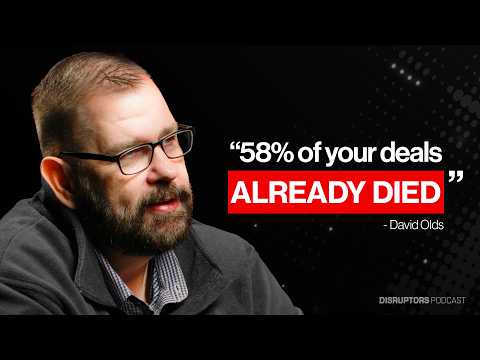
Key Takeaways
Hire people with no prior real estate experience and train them your way - they don't have preconceived notions or bad habits to unlearn
Focus on getting extremely good at one marketing channel before expanding to others - master the fundamentals before diversifying
Use multiple personality assessments and testing throughout the hiring process to objectively match candidates to roles and reduce bad hires
Create systems that allow top performers to focus 100% on their highest value activities - including hiring drivers for salespeople to make calls between appointments
Align employee goals with company growth by helping them build investment portfolios and providing clear advancement opportunities
Quotable Moments
”“I believe everyone can teach you something, you know, whatever their skill, their core competency is.”
”“The single most important thing is you can't do it yourself. So it's the people around you. You know? It's the most valuable thing.”
”“We have a rule. You can't have prior experience. We want you to be brand new.”
”“If you can get to $250,000 an hour activity, why would you do anything else you can outsource? Just do more of that activity at scale.”
About the Guest
Phil Green
Gigi Homes
Phil Green is a real estate investor and house flipper who transitioned from corporate America to real estate after earning an MBA in finance and real estate. He started as a realtor in 2013 using cold calling strategies learned from Mike Ferry coaching, then pivoted to house flipping after recognizing the profit potential. His company has grown to generate significant revenue through systematic approaches to sourcing and flipping properties.
Full Transcript
22069 words
Full Transcript
22069 words
Steve Trang: Hi, Steve. Jump on the Steve train. We real estate disruptors. Hey, everybody. Thank you for joining us for today's episode of Real Estate Disruptors.
Today, we have Phil Green with Gigi Homes, one of my heroes. He flew in from San Diego, California, talk about how their company grew to $4,000,000 in revenue last month. If this is your first time tuning in, I'm Steve Trang, sales trainer. And every month, we help hundreds of people buy more houses at deeper margins. If you want more information about that, DM me the word sales.
I am gonna mention to create 100 millionaires, and the information on this podcast alone is enough for you to become a millionaire in the next five to seven years. If you'll take consistent action, I promise you'll become one. And the show is brought to you by our company, Investor Lift. Get access over 2,000,000 cash buyers across the country. Go to investorlift.com, put in disruptors to get 10% off.
And if you get value today, please tag your friend below. Share this episode right now. That way we can all grow together. And we are always hiring. So if you're interested, DM me the word hiring.
And, this is a a show for you guys to ask whatever questions you got, so please fire away. And, you ready?
Phil Green: Yeah. Let's do it.
Steve: Alright. So first question for you is what got you into real estate?
Phil: That's a really good question. Because originally, I had never actually planned to be in real estate. Yeah. I went to school for finance. I thought, wow, I gotta be in the finance industry, go work for a hedge fund, figure out how to make a lot of money, get on Wall Street, and that's the key to life.
I'll be happy. I'll have a lot of money. I'll be happy. Right?
Steve: So you're the wherewithal at least about Wall Street. What, when was when was that?
Phil: As soon as '18.
Steve: '18.
Phil: I didn't know anything.
Steve: But you felt like you knew everything? Or
Phil: Oh, yeah. I thought that would be the key to life.
Steve: If I
Phil: can make a lot of money, I'm gonna be really happy.
Steve: Got it. Got it. Okay. So things didn't quite go to that plan?
Phil: No. So I finished, my undergrad with a bachelor in finance.
Steve: Mhmm.
Phil: Went and worked for corporate America. Get a good job with a big Fortune 500.
Steve: Mhmm.
Phil: Safe. It's gonna be a good life.
Steve: Right.
Phil: Couple years later, they wanted me to go do an MBA, which at the time I didn't wanna do. Mhmm. But extremely fortunate that I did it. So I went back to school and
Steve: San Diego State?
Phil: Yeah. Did an MBA. They went there because they paid for it.
Steve: Right. All
Phil: the other schools are really expensive, and I was like, I don't need to go to USC or whatever other school. I'll just go and they pay for free. I don't have to worry about the debt.
Steve: Right.
Phil: So I ended up doing a MBA in finance and real estate.
Steve: Okay.
Phil: So it was great. Really, really good experience. It opened my eyes to real estate. Mhmm. When I graduated, I decided I was gonna interview a lot of different guys in a lot of different industries.
Steve: But they paid for you to go get your MBA?
Phil: They did. They did. And I made them a lot of money.
Steve: Okay. So I
Phil: don't feel bad about it at all. Alright. We broke records, and we built a huge call center. And
Steve: Well, yeah. So let's talk about our regional teams. What what what did they hire you to do, and then what did you do while you were there?
Phil: I was really fortunate. I started off in retail sales. Mhmm. I was number one, I think, out of 50 guys. They moved me up to management.
And then from there, I just got to move around. Learn how to do retail, face to face, door to door, inbound, outbound in the call center. So I just got a really good sales education because I got to see all the different industries, of sales and I got to see, you you know, what made someone succeed in a retail environment, what made someone succeed in an inbound environment, why was it an outbound. So
Steve: But you also keep count on this stuff too.
Phil: I do. I really enjoyed it. It was fun. I love the diversity and it naturally allowed me to move up quickly.
Steve: But I imagine that was not your first sales job. I mean, growing up in my life I
Phil: actually had prior worked in marketing, ops, IT.
Steve: Sell anything in school.
Phil: Customer service. Lots of customer service. Lots of, But
Steve: I mean, like, in, like, elementary, middle school, high school, college, like, you didn't have any side hustles? You were just, like, a really studious kid?
Phil: We played a lot of different games, involved in a lot of different sports, a lot of different activities Mhmm. That are all competition based.
Steve: Mhmm.
Phil: But actually not sales.
Steve: Okay. Not
Phil: sales at all. Yeah.
Steve: So your first experience in sales was working at this company?
Phil: It was.
Steve: Okay. Yeah. Alright. And now so I'm asking this question because, for those that, you know, are watching this, like, you're a maverick. Mhmm.
And a maverick is just a natural salesperson. In my end understand that could be completely wrong. That's why I was asking you were selling anything beforehand.
Phil: No. I wasn't. I was raised differently.
Steve: Okay. My
Phil: dad wanted me to become an engineer. And I love math. Really good at it. Gifted at it. I still love math today.
Mhmm. But because I'm so extroverted, I love math for about an hour a day. Yeah. After that, I was like, I wanna go talk to somebody. I can't sit in a room all day doing numbers.
Steve: Got it. It
Phil: was just draining.
Steve: Alright. So you went to go get your MBA. And then after that, what did you do? You said you interviewed with a bunch of different companies?
Phil: I did. I just checked out a lot, pharmaceutical, medical, the finance industry, and interviewed a couple of realtors. Mhmm.
Steve: And I
Phil: was like, what do you, you know, what do you use? And they're writing their notes on a note card. Mhmm.
Steve: It's like,
Phil: you guys don't have, like, a CRM or, like, use data or anything like that? I was like, wow. Really?
Steve: Mhmm. So as
Phil: I dug deeper and deeper into real estate, I was like, I think there's a major opportunity here.
Steve: Alright. So you get your MBA. You in your best year at that company, what did you make?
Phil: 6 figures. I kinda saved up pretty good money. I was very fortunate. I think I had saved over 300,000.
Steve: Alright.
Phil: I could've saved 300,000 in cash.
Steve: So sound. Wow. Impressive. So Yeah. You went from doing really well financially, got an MBA in finance and real estate, and then you decided after interviewing everybody to go into real become a realtor.
Phil: Yeah. And I feel like I had a good enough cushion where I was like, okay. I'll just go for it.
Steve: Yeah. So I don't think that's a very traditional path for a realtor.
Phil: So It isn't, is it?
Steve: Okay. So became a realtor. What year did you become a realtor?
Phil: I got my license broker's license in 2013.
Steve: 2013. So Yeah. The market's already on its way up again.
Phil: Just barely. Yeah. It was a little more optimistic considering the last five years was the greatest, you know, recession of our lifetime.
Steve: Right. So how did you do your first year in as a realtor?
Phil: I was very fortunate. I wanted to find a coach, someone to teach me. Because I realized in life, like, the key is to learn from someone who's really good at that, and you can just quickly jump. Right?
Steve: Right.
Phil: You get all the right information. Coaching's, like, been essential to my life. Yeah. I always try to find the best person, whatever I'm learning, learn from them, and it probably
Steve: x's my learning curve. Where'd you get that wisdom from? Just life. Okay.
Phil: Every time I didn't do that, I'd get smacked and end up on my face on the ground. I'd be like, I need a coach.
Steve: Alright. So you you hired a coach? I did. Who was your first coach?
Phil: Mike Ferry.
Steve: Okay.
Phil: So for many people, like, oh my gosh. Mike Ferry, that guy is so old. Yeah. I think I'm very, very fortunate to have hired him.
Steve: So just for everyone else watching, like, if you wonder who Mike Ferry is, I look at Brent Daniels as kinda like the wholesale version Yeah. Of my and Mike he's also Mike Ferry trained. And I actually got some training from Mike Ferry because I connected with Brent Daniels, like, thirteen years ago. So, anyway, so Mike Ferry was your coach.
Phil: He was.
Steve: And what'd you do with that?
Phil: He taught us cold calling.
Steve: Alright.
Phil: Here's how you call. Here's how you get deals. And I already had that background from corporate America. I understood cold calling, worked my way up in it, understood face to face sales and how to grow a call center and how to build a team. So it all clicked for me.
Steve: Really relevant experience.
Phil: Yeah. Really fortunate. Just really lucky. Like, it was just, like just got incredibly lucky
Steve: Yeah.
Phil: To have had that background and then given that coach that, like, this is all you should do to succeed. Yeah. Here's how you do it. Call it call called expireds, for sale by owners, you know, notice of defaults, everything they told you to call. Mhmm.
Go door knock, and it just worked. Found deals.
Steve: So when you say it worked, like, can you, quantify, like, how many deals you did your first year? What kind of revenue came in?
Phil: Yeah. Let me see. I'm getting the numbers in my head. I think the first year, I probably only did, like, maybe 18 deals.
Steve: Okay.
Phil: The first six months is really hard to transition to understand.
Steve: Mhmm.
Phil: Our market was really competitive on expired listings.
Steve: Yeah.
Phil: But the next year really blew up. I got it, and I was starting to get, you know, four, five a month, and it was really clicking. But there's a really steep learning curve.
Steve: Well, in San Diego, I mean, you're consistently leading the the country, right, in price values. I went to UC San Diego, so I lived in La Jolla for a bit. And there was a moment in time where La Jolla was the most expensive ZIP code in the country.
Phil: Wow. Really?
Steve: Right? So this is back I mean, I graduated back in 2003. So it was at that time. And I remember when I first went to San Diego, I was like, people are buying condos for, like, 300,000. That doesn't make any financial sense.
So it's a little different now.
Phil: Yeah. It is.
Steve: So your price point, I imagine then, when you're doing four deals a month, five deals a month, at this time, what kind of revenues were you bringing in?
Phil: Oh, it's still really good.
Steve: Yeah. So did it did you, in your first year, supersede what you were doing in corporate America? I think
Phil: I had about the same.
Steve: You had about the same?
Phil: Yeah. Alright. About the same. And then from there, I saw investors who would buy a home that had a cracked slab slab or some kind of issue or a water leak or whatever the situation was, and they let me double end it. So I make in my mind, oh, I made a ton of money.
I got $25. I double ended the deal as a realtor, and then watch them flip it.
Steve: Mhmm.
Phil: Then I'd resell it for them on the back end because I negotiated that, and I was like, hey, you better give me this.
Steve: Right.
Phil: And I watched them make, like, a $150. And I I saw them do it a couple times. Mhmm. And I asked one investor. I was like, hey.
Instead of giving me a 2% back end listing, I want 3% this time. I penciled it because I could do the numbers in my head. It's not hard.
Steve: Right?
Phil: Right. So you're making, like, a $150. He's like, no. There's risk for me. And I sat there and was like, doesn't look that risky to me.
Like, I understand there's probably gonna be 20 buyers the first weekend it's gonna sell. Mhmm. This is a total win. So I was like, well, I saved up enough money. Let me just try and flip this thing myself.
Steve: So were you the one that brought the deal to that realtor or to that investor?
Phil: Yeah.
Steve: So you brought the deal to an investor. You double ended it. And when you double ended it, you're talking about 6% total commission? Yeah. Alright.
So you get 6% on that on that on that deal. Mhmm. And you listed again for 2%, so it's 8% in total.
Phil: Yeah. And, well, the first deal was a little better than that. The second deal, he offered me less.
Steve: Okay.
Phil: So that's where I was like, well, let me see if I can do this myself.
Steve: Yeah. Which kinda goes to there's a conversation Eric and I, Eric Eidison, he and I were talking, at the event. And one of the biggest ways to show lack of appreciation for an employee is to adjust their compensation after doing a good job. Mhmm. And Especially
Phil: when you know they're doing extremely well.
Steve: Yeah. Mhmm. So
Phil: Adjust it down. That's not gonna work well.
Steve: No. Never someone does a good job, I was like, hey. How about I pay you less? Mhmm. And so he created a competitor.
Phil: I'm really glad he did. Very fortunate to this day.
Steve: Yeah. Alright. So you so you tried your hand at this.
Phil: Were you
Steve: still going full blast calling expired in FSBOs, or did you, like, pivot completely? How did you do that?
Phil: I still was. I think my very first deal, I did really well, which I'm very glad. I made, like, 80 1,000, first flip ever. Next couple of ones didn't go so well, but that's okay. I did well the first time, so I knew you could do well.
Steve: Yeah.
Phil: Really fortunate that happened that way.
Steve: And you've and you sourced that call and expireds in FSBOs? Yeah. Yeah.
Phil: And then from there, I just called every house in the neighborhood.
Steve: So it expired or not? Yeah. You just started calling everybody? Yep. Okay.
So this is around two 2014, 2015?
Phil: Yeah.
Steve: How are we getting their numbers?
Phil: Oh, man. I don't even remember. Back then
Steve: because IDI was not a popular thing back then.
Phil: Reddix or Lanvoice? Yeah. Vulcan was another one back then. I don't know if it's Still around, but other ones
Steve: So the software is that
Phil: Any of the Mike Ferry software. Anything Mike Ferry told me to do, I just did it. Yeah. This is my coach.
Steve: The software that Mike Phil's talking about is what the realtor community was using for a very, very long time. Right? So RedX, Land Voice, and and and Vulcan seven, where the tools you use, if you're a realtor trying to get get listings from expires canceled and for sale by owners.
Phil: Mhmm.
Steve: Yeah. So you're sourcing deals. You aren't getting listings, so it turned out to be more lucrative that way.
Phil: It did. Yeah. Yeah. And most of them are still listings, I would say, but I we'd get ones that had issues and need need an investor to buy it and and fix it up and and resell it.
Steve: So how long did you continue to call canceled and expires as you're having more success flipping?
Phil: Called them for a while. Yeah. I think as I started to realize the investor business was a lot more lucrative Mhmm. We slowly changed who we called. And at that time, the notice of defaults and the short sales were great.
So we started calling them Mhmm. And just realized there was so much of an opportunity helping these people short sell
Steve: Right.
Phil: Or get out of, you know, whatever debt they were in and walk with whatever I could we could put in their pocket. And it was a really easy call.
Steve: Yeah.
Phil: Just trying to help them. And you could pick up five to 10 deals a month just doing that. And that's what I did for a while.
Steve: So when did you go gung ho on flipping houses?
Phil: It was about a year later.
Steve: Okay.
Phil: I realized that this this is doable. But I realized I needed a team. Like, there's construction. You know? There's financing.
There's operations. There's a lot of different positions that require different skill sets. So I just gave everyone I knew around me, and that was awesome, a call. I said, hey. It's like your job over here in corporate America.
Let's let's go have some fun together.
Steve: When you had when you were doing the listing side, the the realtor hat, did you have a team behind you?
Phil: It was just myself. I had a partner, a buddy at the time who wanna do it with me. And
Steve: then
Phil: my brother came in and then we got an assistant. So no, not really. It's a couple of us.
Steve: Yeah. Well, the reason why I asked this is something that because there's this conflict that seems this tension between the realtors and wholesalers. Right? Mhmm. It just seems like a constant source of tension.
And something I I say on a somewhat regular basis is that the the greatest threat to a wholesaler is a realtor that opens his eyes and realizes more money
Phil: Mhmm.
Steve: On on the investor side. Right? But there's this kinda, like, looking down. It's like, oh, these guys are are, you know, ambulance chasers or whatever. So because they're judging it, they don't explore that opportunity.
And I look here again. Right? You were a realtor. You were happy, I imagine, at this time as a realtor.
Phil: Mhmm.
Steve: And then you saw how much is available this side. And, obviously, you've had a lot more success on this side.
Phil: Yeah. We kept the brokerage too.
Steve: Yeah. It's a
Phil: good business too, and there's a lot of value to provide people.
Steve: Right.
Phil: And in San Diego, I think the median price down is over 900,000. So we're saying a home isn't a bad deal.
Steve: A little bit more of those condos I was looking at back
Phil: Yeah. It's insane.
Steve: Back then.
Phil: I mean, you can make 20 plus grand just on the average priced home.
Steve: Right.
Phil: Still a good business.
Steve: It is still absolutely good business. So, you went gung ho. You hired your it sounded like your friends, just to join you on this flipping adventure?
Phil: Yeah. Just everyone I knew that was great. I thought it'd be a good fit.
Steve: Okay. Good fit because they're your friends or a good fit because they're qualified for the roles?
Phil: Yeah. They're qualified. They're smart. I know they're hardworking. They either succeeded with me in corporate America.
Steve: But they didn't have the relevant experience. You're
Phil: just like I understood.
Steve: You have the right attitude. Mhmm. Let's let's go crush this together.
Phil: We've actually stuck with that. Our entire sales team today Mhmm. Today Mhmm. We actually have a rule. You can't have prior experience.
We want you to be brand new.
Steve: So elaborate on that, please.
Phil: Yeah. We've noticed that a lot of the real estate industry is really stuck in their ways. Mhmm. They don't like to change, and they know it all already. I've been a realtor for fifteen years.
I know what I'm doing. We noticed that by hiring outside the industry
Steve: Mhmm.
Phil: Giving them a roadmap today of exactly what works, they don't have any other preconceived notes, any ideas. They don't have any mindset challenges. They just do what you say.
Steve: Right.
Phil: And it works.
Steve: And my coach, like,
Phil: my coach told me what to do. Mhmm. I didn't know anything else. I did what Mike Ferry told me to do, and it worked.
Steve: Absolutely. It was it. Yeah. I'm trying to remember there's, like, a scene in Boiler Room. Right?
Like, like, you have a series seven? Get out of my office.
Phil: Yeah. Exactly. Same thing. Same thing. We've literally to this day, that's still our formula.
Steve: Yeah. Alright. So you and your friends get together. How how'd that all work out?
Phil: There's a a lot of struggles along the way. I'd say the first couple years in any business is really hard. Mhmm. There's a big reason why nine out of ten realtors in their first twelve months leave the business. Right?
Steve: Right.
Phil: It's not easy.
Steve: It's not.
Phil: It sounds glorious. Create your own hours. Work hard when you want to. Make a lot of money and be a real estate agent. Right?
Steve: Yeah.
Phil: Or being an investor is even better. Find a house, turn it around, renovate it, and sell it on TV, and make a $100,000.
Steve: Right. Gross.
Phil: But, But yeah. But it's not
Steve: that easy. It's not that easy. So what were some of your early struggles, in in hiring your friends and flipping together?
Phil: I think the hardest thing at first was construction. We had no idea. I had lifted a hammer in my life. Didn't know anything about it. We found a contractor who we trusted.
He did one house for us. He did three for us. He did five for us. He did seven for us. So you think the guy's trustworthy.
Right? Mhmm. We gave him, like, 10 or 12. I forgot exactly how many. And we paid him in advance because we trusted him.
Steve: On all 10 houses? Mhmm.
Phil: And he ran away with all the money.
Steve: Paid him in advance for 10 houses.
Phil: Yeah. It's absolutely demoralizing.
Steve: How much are we talking about here?
Phil: It was, like, 750,000.
Steve: Wow.
Phil: Yeah. It was invaluable lesson. Yeah.
Steve: It's very expensive. We were
Phil: on top of the world at that point. Like, oh, we figured this out. We're we got it.
Steve: Did you any of it back? It's, like, smack.
Phil: No. None of it? No. He was catching me if he can good.
Steve: Yeah. So did you ever find him?
Phil: I could probably find him today with our skip trace system.
Steve: Yeah.
Phil: But there's no trace of getting him. He's
Steve: He's a ghost.
Phil: He's smart. He keeps everything cash. He he pretty much ran the same scam on everyone in town. And we kept telling everyone to avoid this guy, but he's just so smooth and so good. Like, oh, he's gonna treat me differently.
He wouldn't do it to me. I'm like, guys, he's done it
Steve: to everyone else. You you warn him. Yeah. They didn't believe me. Wow.
Phil: Yeah. Because I just couldn't stand the guy. I wanted to ruin anyone else's Yeah. You know, year. But So
Steve: you said it's demoralizing and so, like, talk about that because that's that's a bigger struggle than most people run into, but it's still like, a lot of us run into our own massive hurdles. What was that experience like and how did you how did you get out of it?
Phil: It's extremely humbling. I'm actually really thankful it happened Mhmm. In hindsight. Obviously, at the time, my anxiety was at a 10. Yeah.
I didn't know what I was gonna do, how I was gonna find money to be able to continue to even pay a new contractor to take over these jobs or to make anything happen. It was one of the toughest points, I think, in this industry for us. Yeah. Someone who really never gives gives up. I almost quite almost did.
It went through my hand quite a few times, like, maybe this isn't bad decision for me. You know what I mean? Really poor, decision to allow him to do this to us, and I was blindsided. I trusted him.
Steve: Mhmm.
Phil: So it was really, really humbling.
Steve: How did you get out of that spot?
Phil: I after a period of weeks of just feeling sorry for myself and depressed, decided I needed to find other money. So I went and worked my network and found other money, paid for it, you know, got it agreement in place, and was then able to hire another contractor and get out of the deal and and eventually dig myself out of that hole.
Steve: Yeah. Was there were you married this time?
Phil: No. I was not. Alright.
Steve: So you go back to your parents, like, support system.
Phil: Unfortunately, I'd put away money, as a cushion because I've done well in corporate America, so I was very lucky. Mhmm. I just lived very modestly. I still do this day. Yeah.
Haven't paid myself. I don't. I just live very modestly. And and any extra money we have, we just reinvest it
Steve: Right.
Phil: To grow in the company and making sure we're safe and secure and and growing from that experience. It taught me an invaluable lesson. Like, you can never have, you know, too big of a cushion. You just don't know what's coming.
Steve: Yeah. So since then, it's been smooth sailing?
Phil: Oh, no. There's so many struggles along the way. I think every single month, we learn something new. Yeah. The key to it is just never give up.
Steve: What were some of the other major lessons learned along the way?
Phil: Oh, man. Hires. Right people in the right seat. You can have somebody extremely talented, but they're not the right culture fit.
Steve: Mhmm.
Phil: And one virus can infect.
Steve: Did you have that experience?
Phil: Oh, multiple times.
Steve: Yeah. Yeah.
Phil: And you've learned from it.
Steve: Can you talk about that experience?
Phil: One person with the wrong culture and the wrong attitude and, you know, negative mindset.
Steve: But what did it do to your company having that case?
Phil: Influence a lot of others. Mhmm. And in the worst situation, right around COVID, like, we lost over 10 people in our organization.
Steve: Really?
Phil: One person convinced them to go follow them, and it was the right path, and they would do better together.
Steve: To compete against you
Phil: Yeah.
Steve: In San Diego.
Phil: Burn themselves down down and and end up nothing six months later, which happens usually. But at the time, it just sounded like a great idea.
Steve: A a group of guys decided to leave GG Mhmm. And compete against you guys.
Phil: Mhmm. Happens all the time. Really? Yeah. It does.
Steve: Surprise. I mean, you guys have such a massive footprint.
Phil: We do. But the funny thing is we hire such ambitious, aggressive, assertive individuals.
Steve: That's true.
Phil: And there's a lot of flaws in our system and our culture. And although we gave incredible opportunities, we still do. I don't think we did a good enough job of conveying it to everyone. And since we've done that in the last, you know, couple years, it's been a lot better.
Steve: So we've So how do you convey that message?
Phil: I think we constantly reiterate all the opportunity we do. Mhmm. You know, we have a home buyer program. We help everyone in our company today first buy a home to live in, have their own home, and then, you know, buy an investment property every
Steve: year. Mhmm.
Phil: In addition to that, we help them grow in every way possible from, you know, being a leader. Whatever your goals are, we align them and help you elevate and get to that level.
Steve: Because one of the things I liked, was you got you're you're a top sales guy, and he's got, like, the most posh, benefits. I've never heard of another company offering these kinds of benefits. Right? If you're doing really well for the company Mhmm. Right?
If I come in and I crush it for Phil, what can I reasonably hope to get?
Phil: He hopes to retire in ten years. Yeah. That's his plan. In addition to that, he's got, man, pretty much everything. Mhmm.
Investment properties, multiple every year, assets that are growing in value, producing cash flow income, assistance, a car Yeah. A MacBook Pro, an iPad, a iPhone, and everything like that all the way down. We build systems and software around, our superstars so that they could do what they do a 100% of the time.
Steve: Well, one of the things I really liked a lot that really stuck out to me because, like, for me, I'm really passionate about time. And, like, you got whatever time you got, you get everything you can out of it. And as a salesperson, if they're doing anything besides selling, it's below their optimal activity. It is. Right.
Yep. And I
Phil: learned that from Mike Ferry. It's the first thing he taught us.
Steve: So the, so you guys did a presentation a few months ago, and, like, I'm just shaking my head. Because your guy not only has the company Tesla, but he also has a driver for the company Tesla. So he can do follow-up calls between appointments.
Phil: Yeah. He's that good. Yeah. We realized he's that good that if he can get on the phone, he's got, you know, two x the opportunity of closing the deal. Right.
Why is he driving between appointments? That doesn't make any sense. Right? Yeah. If you can hire someone at $20 an hour to drive him around, you know, complete introvert that won't talk to him, so he actually sits there and calls.
Steve: Right. So not like the propeller booboo driver.
Phil: I mean, his value is there's no value to that. I mean, it's insane because we want him calling. He's He's gonna do twice as good as anyone else.
Steve: Yeah. So the arbitrage, you pay someone $20 an hour, pay for the car so that he can do what he do does best Yeah. Which is way more than a $100 an hour. Mhmm. Right?
But, like, the fact that you took it to that extreme, like, it's just had me shaking my head, but I love it. Right? Because it makes complete business sense. But how many how many people will actually go and
Phil: do that? Mhmm. And, honestly, it didn't even come with myself. Mike Ferry taught us
Steve: that.
Phil: Yeah. Your job is to set David apart.
Steve: About hiring a driver.
Phil: Yeah. I mean, literally, though, it's like outsource everything you don't do, starting with paperwork and then just all the way up. If you can get to $250,000 an hour activity, why would you do anything else you can outsource? Just do more of that activity at scale. Makes sense.
Right?
Steve: Makes total sense.
Phil: And, I mean, I just listened to him. Did it move from there.
Steve: Yesterday, we had an opportunity. Right? You're in you are in town also for Collective Genius. We're both in there. And when I first joined Collective Genius, you know, I look around, Like, this Eric Brewer guy, well, he's super impressive.
This Frank Cava guy has every system you possibly need on the planet. And there's this Phil Green guy who's in San Diego who's doing, like, 20 or 30 or more flips a month. This is crazy. Right? So that was something that was huge when I first joined CG, and I connected you intentionally.
I was like, man, I gotta talk to this Phil guy. And then we had Daniel Marcos talk yesterday, and he's another, coach out there. And I got a chance to to listen to his presentation. And one of the things I thought I wrote down. Right?
And he did a chart of culture fit and productivity on x y axis.
Phil: Mhmm.
Steve: Right? And if someone is low culture, low productivity, that's an easy fire.
Phil: Mhmm.
Steve: Right? Someone has a good culture fit but low productivity, we can coach them up. We can coach him or her up. But if they're a high productivity culture fit, this is the part I love the most, was that because we instinctively, as business owners, through times, like, you know, you just gotta get rid of that guy. You gotta cut that cancer.
Mhmm. But what Dan said was, what do you do with cancer? You use chemo Mhmm. To weaken the cancer before we remove the cancer. Mhmm.
And that was something that was, like, an moment for me. Right? So you got someone that's cancerous, like, you don't necessarily need to fire them today because they're super productive. Mhmm. But you gotta start putting systems and processes in place so you can get rid of them as fast as possible.
That was a huge lesson for me.
Phil: Yeah.
Steve: Yeah.
Phil: Yeah. It's really true. I look at it like it's usually my fault as a leader. I'm not communicating well enough. You know, what can I do to get better first?
And many times, it is something I'm not doing. I just didn't see it. Mhmm. And if I says and I actually think about it and analyze it and then, you know, talk to them and say, you know, what matters to you? What am I not doing?
How can we make this better? There's usually an opportunity to connect.
Steve: Right.
Phil: Find some synergy between you and they get the opportunity to level up and they're on the right path.
Steve: Usually. Mhmm. But not always.
Phil: Not always. Not always. Yeah.
Steve: Yeah. And so one of the things that I'll, I appreciate from our one of our initial conversations was you're a die hard way, Dalio fan.
Phil: I am. You think you
Steve: said how often do you read principles?
Phil: Maybe every six months.
Steve: Every six months. It is crazy. Right? And I was like I looked at that book, I was like, that that thing's way too thick. But Phil says I need to read it.
Fine. I'll read it. Right? One of the things he talks about in there is that you can scientifically predict a person's behaviors and everything else.
Phil: Mhmm.
Steve: Maybe you'll just be intentional about it. And I've noticed that with you and Eric, this is the one thing you guys excel at. Even Gary Harper says, like, these guys are better predictive index than I am. So you wanna talk about, like, this dive into personalities and what you guys have learned in in in learning and exploring this side?
Phil: Yeah. There's there's so many great personality assessments from when we first started using the DISC in corporate America to now there's so many we use. Strings finder is really cool. We used that for a while in corporate America too. Now we're using predictive index.
That's really cool. There's quite a few.
Steve: Right. And
Phil: we still use quite a few. We're actually testing four new ones this month. So we're obsessed with it. We learned that it's really cool. We're all subjective.
Right? We all have biases. We all have certain views, and nobody can see everything all the time. Right? But if you can get data on what works in a certain position, and you can test objectively, and then use that data to correlate that match, not match, match, not match, it's really difficult to be that successful when you just talk to someone on a subjective level.
You know, you might be right nine out of ten, but one out of ten is one out of ten bad hires hurt.
Steve: Yeah.
Phil: Every time you get a bad hire and you invest all this time into it, you put all this money and resources, and then six months later, you start over again. Boy, it hurts.
Steve: Yeah.
Phil: We realize that there's a way to use data to give us that perfect match every single time.
Steve: So if I want to go work for your for you, right, how many tests do I need to take before I get an interview, before you make an offer, and before my first day on the job?
Phil: It's kind of a series of tasks. So Right.
Steve: So I'm just trying to figure
Phil: out talk to our, recruiter. Yeah. You'll get a test and then you get an interview and you get a couple more tasks. Mhmm. And then if you hit the next stage, you probably get a couple more.
And then when you're hired, there's probably a never ending series of new tests that we figure out every month.
Steve: Does your team, like, get, like, frustrated? Like, Phil, like, I how many more exams do I need to take?
Phil: You know what? Everyone's actually pretty impressed by it
Steve: Yeah.
Phil: Because it's so accurate.
Steve: Right.
Phil: It's incredible. Like, when they see that it actually is, wow, like, that is me. Wow. I do have that strength or weakness when I communicate with this personality. Wow.
It's really good feedback. This is how I should come in first. Mhmm. Like me, I'm very aggressive. I I like to come in like this, but sometimes with certain personalities, I need to slow down, not just dump on them.
Yeah. You know, slowly give them the information, which is hard. I have to be very conscious of it. But, you know, that assessment reminds me, and this is who I am. And know that when you're interacting with this personality, be very slow.
Give them the time to process it, and then they'll get it, but they'll do it really well forever.
Steve: So and I think it's an interesting point because you just mentioned you're very aggressive. I have never seen the very aggressive Phil. Right?
Phil: I think I modify.
Steve: You modify absolutely. Audience. Yeah. Right. So when does the aggressive feel come out?
When I'm competing.
Phil: Anything competition. From the basketball court, I can't help it. It's just my nature.
Steve: Yeah. So, like, are you gonna be screaming? Are you gonna be more physical? What what does that aggression look like?
Phil: Probably a combination of everything.
Steve: Because we have Leon Barnes. Right? He's our ambassador. And, so we play basketball. Like, I think that's one of the, cool things that, you know, we do at CG.
Mhmm. Leon's such a such a mellow guy. You don't see this fire from him necessarily. Right? I haven't seen him chew anybody out.
I haven't seen him raise his voice. I've never seen him lean into a person.
Phil: Mhmm. He's a
Steve: very mellow guy. On the basketball court, man, he is very particular with his words. I heard. Yeah. So and and he's gonna let you know when he scored on you.
Right? There's no, like, I mean, there was one hit a game winner and just kinda jogging back with a little extra swag, you know, like some Steph Curry.
Phil: So A little comment under his breath all day. Yeah.
Steve: All day. So one of the things that I I found really interesting, about you and Eric was that you guys also like to game. You talk about the competitive side.
Phil: We do.
Steve: So let's talk about that experience.
Phil: Yeah. I think a big part of me is the love of the game. Mhmm. So there's a really fun game competition. I've always believed it brings out the best in you.
Steve: Right. Or worse.
Phil: Can. Yeah. I mean, you can. Depending on who you are. Yeah.
I think as I started as a young kid, I had a really poor attitude when I lost. I I got really upset Mhmm. And didn't handle it well. But I was very fortunate my dad is a good character, and he taught me over the years, like, that's not the right way to handle it. Yeah.
You lost the final championship game, but that's on you. Go go start tomorrow. Shooting hoops, you got three hundred sixty five days to win next year. And that really transferred.
Steve: Yeah.
Phil: Almost every year I did that, I came back and we won.
Steve: Yeah. Where you say you got two young, you had two brothers.
Phil: I do.
Steve: Where are you in the birth order?
Phil: I'm the oldest, but we're all a year apart. You're the oldest. So we grew up with, like, best friends. Yeah. Yeah.
It's really cool.
Steve: So were you, like, the alpha?
Phil: Kind of, because I'm the oldest. Right? And, actually, you end up being that way. Yeah. Just because of nurture.
Steve: So going back to gaming though
Phil: Mhmm.
Steve: You also became a professional gamer?
Phil: We did. It was one of the rabbit holes we went down.
Steve: Yeah. So and I I like to pull this out because, you know, tell me your your your success today, today, which we're gonna get to. People might be getting frustrated how long we're taking to get there. But I love to see, like, see this journey, what it takes to get to, you know, like, maybe I'll go get an MBA to $4,000,000 in a month. There are some stories here that built who you are.
Right? So professional gamer, not a lot of people in real estate do I know got became professional gamers. There was one guy that came on our show who, when he's cold calling, is playing Madden online. So talk about the professional gaming experience.
Phil: It was fun. It was great. Yeah. It taught me to be a good leader. It involved a lot of strategy, a lot of teamwork, hard work.
You know, he probably played eighteen hours a day sometimes.
Steve: So you're seeing hard work. Are we talking about video games here?
Phil: It is. But it wasn't it wasn't so much, you know, you're sitting there having fun and goofing off. It was incredible focus.
Steve: Okay. So this is not the the Doritos and and Mountain Dew?
Phil: No. No way. It's incredible focus. And I think as a leader, I always try to put everyone in their strongest position Mhmm. Even from a young age, whether we were playing sports or on the football field or on the basketball court, you know, playing soccer to video games, you know, if someone was a way better sniper in this situation, they were way better.
And and, you know, whatever that came from
Steve: Put them in a position to succeed.
Phil: Yeah. And if you could utilize everyone's best skill and you could see it, understand it, and then put them in the best position, it gave you the best opportunity to win.
Steve: Okay. So really relevant experience.
Phil: Yeah. Because it was transferable all the way today and every single thing I've done.
Steve: So when was this, you said rabbit hole. When was this rabbit hole?
Phil: Probably, like, grade school into high school.
Steve: Okay. Oh, so this is way before, corporate America.
Phil: Oh, yeah. Way before.
Steve: Okay. So you're Mhmm. You're you're playing sports because you're you start you're a quarterback and a point guard. Yeah. And then now you're also gaming.
But you you guys are making money.
Phil: We were. We were. At the time, we we won a contest for quarter million once. Yeah.
Steve: Won a contest for quarter million dollars.
Phil: But that's nothing compared to what you make today in gaming. It's insane.
Steve: But to someone that's not this is high school?
Phil: Or Yeah. Yeah. At the time, it was the largest
Steve: In high school, that's the largest
Phil: amount of money. Was. Yeah. It was the largest amount of money we never wanted. It was unheard of to us at that time.
It was a
Steve: whole lot. So how many ways did that get split?
Phil: So between 10 people.
Steve: Okay. Yeah. So 25 k each. Mhmm. You're doing pretty well.
Phil: Well, at that age, it was like, yeah. A thousand dollars. I was like, oh my gosh. A thousand dollars.
Steve: But you didn't blow in a new car or anything like that? No.
Phil: We saved it all.
Steve: Saved it all. Mhmm. Very responsible.
Phil: Yeah. That's how we were raised. Very fortunate we had parents that taught us, you know, save everything you
Steve: have. And then there was a four way into poker.
Phil: Yeah. We went down that rabbit hole too.
Steve: Yeah. So let's talk about that. We went to
Phil: pay poker and helped pay for some of my college and
Steve: So you were with program college?
Phil: Yeah. It was fun.
Steve: So you went to San Diego State. I did. Where were you playing?
Phil: All the local casinos.
Steve: Yeah.
Phil: I like playing in person because you can make those nonverbal tells Mhmm. Reads.
Steve: Yeah. And I
Phil: always felt like I had a really good advantage being able to read the room.
Steve: Did you play Ocean's 11?
Phil: I did. It's a great game.
Steve: Yeah. Because that's where I learned to play poker. Yeah.
Phil: It's an aggressive game.
Steve: Yeah. There's a lot of fun there. So what lessons did you take from poker? Because I I've taken so many lessons Mhmm. From poker and applied it into business.
What are some of the lessons you took from poker?
Phil: Risk equals reward Mhmm. I would say is number one. Number two is the nonverbal tells, especially it's transferred to sales, business, everything you do. If you learn to read people Mhmm. Although they're saying something, their nonverbal might be telling you something else.
Steve: Right.
Phil: And I think that's really powerful even today. It transfers into almost everything we do as a species. Right?
Steve: Yeah.
Phil: I think, lastly, it's calculating odds.
Steve: Mhmm.
Phil: You know? And sitting back and doing a quick risk assessment in your mind, like, is this a good decision? Who am I against? Statistically, okay. It sounds like I'm gonna win here, but is there something I'm not seeing?
So you always second guess what you think is the best decision, and that sometimes allows you you to see things you weren't originally seeing if you move quickly. So Poker is kind of that game. Right?
Steve: One way I make my decisions is if I make this decision a 100 times, in the long run, will I win?
Phil: Mhmm.
Steve: And I got Calculate out. Straight from poker.
Phil: Mhmm.
Steve: Even if it doesn't apply. Right? Because, like, when I was like, should I quit Intel to go become to get into real estate? Right? Mhmm.
Because you only get one time to quit. But it's like, if I make this decision a 100 times, long term success, what are the odds? What is the expected value? And the expected value, including my job to go chase my own career, chase my own business, far exceeded working at w two. Yep.
So so let's see what else was there I wanna talk about. Alright. So you guys have obviously evolved tremendously. You guys are now the largest home buyer in San Diego.
Phil: We are.
Steve: Yeah. So what makes your company so successful?
Phil: I think it's the people. Yeah. My goal has always been find smarter people than me. Yeah. A good example is our COO, Eric.
Mhmm. He's absolutely brilliant.
Steve: Yeah.
Phil: You know, we decided we wanted to start building software because it just didn't exist in the real estate industry. There just wasn't enough data, and there wasn't what we needed. Right. So Eric just decided he would go figure out how to code. Six to twelve months later, he figured it out and
Steve: With no background?
Phil: No background. He just figured it out and then hired a developer, and we've built all the software we've needed since. You know? I don't know too many people who can do that.
Steve: Yeah. And he's not an ordinary like, he's not just a smart guy. Right? Because I've had conversations with him. Actually, we were preparing dashboards yesterday.
Right? It was like one of my rocks for this quarter is to create a CEO dashboard for myself so that every morning I can see that, okay, here's where we are on KPIs, here's where we are on projected revenue, here's our actual revenue, and where are we for each priority, for each company, the top three priorities for each company
Phil: Mhmm. How are
Steve: we doing in progress? And I wanna see that, you know, as part of my morning routine. And so we're comparing notes, and he showed me what he looks at every day. He said, okay. How can we make this graphical so, like, we just see this on our phone?
We don't know to dive into another app. Right? So he's a super sharp guy, but on top of everything else, he's an incredible salesperson as well.
Phil: He is. Yeah. Ray Dalio would call his personality a shaper, meaning he can do anything.
Steve: Yeah.
Phil: Phenomenal salesperson, leader, manager. He learned how to develop. Yeah. He can do anything.
Steve: Right.
Phil: Anything he wants to do.
Steve: So knowing that he can do anything he he wants to do, How do you like, some I've said this before, not a lot, but, you know, like, I can't imagine as an individualist working for anybody else. Right? I can't imagine it unless their vision was so powerful, right, that it makes sense. So for me and this is what I'm talking about, like, powerful. I'm talking about, like, Elon Musk.
Right? Just something crazy. It's like, okay. I can get behind that.
Phil: Yeah.
Steve: Right? But their vision has to be so much bigger in mind for me to adjust my sales. So, like, how are you able to have these amazing people agree to to work with you?
Phil: Yeah. I mean, someone as talented as him could go do whatever he wants to do tomorrow. Right. He knows that. Yeah.
But he also knows that we've built a system with homes and and the opportunity he has, to grow, that we're better together. Yeah. Together, we're much stronger than we ever would be individually. Mhmm. And I think we're up to six or seven companies now that we're building.
And we're building a new one together that's gonna be on the development side that has more potential than all of our businesses combined. Yeah. You know, and he's gonna be a partner in that business. So he knows that together, we're better
Steve: Yeah.
Phil: And we'll be more successful than we ever could be alone.
Steve: Yeah. And then so Eric, obviously, is an incredible example. You also mentioned that, you got these people that are coming as developers. You're competing because you're in San Diego.
Phil: Mhmm.
Steve: Cost of living is pretty high. Technology companies are not too far away. You've got these amazing developers as well, and you're competing against sometimes Facebook or Google. How in the world do you compete against these guys for retaining top talent?
Phil: It's a really good question. Sometimes I wonder. It's tough to compete with them. Yeah. I mean, they're they're just monsters.
Steve: Mhmm. You
Phil: know? They've got revenue bigger than some countries. It's crazy. When you look at the numbers, it's like, wow. It's staggering.
You know, it's like, oh my gosh. Yeah. I think it's because they know that we have their best intentions. Like, my goal every day is I look at our team and our leadership team and even all of our employees, and I say, you know, what can we do to make their life better? Mhmm.
How can we help them elevate with us? Yeah. And I think that's why our retention over the last year has almost been a 100%. We work extremely hard to help them meet their goals, whether that's getting their first house, you know, building an investment portfolio, leveling up as human, you know, finding that whatever that purpose is, and just helping them grow with us as we grow.
Steve: How do you do that? How do you help them grow?
Phil: It depends. Everyone's path is different. I don't think there's one size fits all. Mhmm. You know, everybody needs something differently.
And even though we do that, we have a lot of room to improve. Every day I learn that. Yeah. They know we have their best intentions. You know?
The other thing makes me happier than to see everybody else around me grow and elevate. And then just as a byproduct of that, we then rise with them. Right?
Steve: Yeah. And one thing that so you got a chance to check out our office before we started. He made a comment that I'm taking to heart was that we don't have enough females here. Right? And one thing you mentioned was that, there was a concern amongst some of the female employees about their job security once they have their kids.
Phil: Yeah. I couldn't believe it.
Steve: Can you talk to that?
Phil: I felt as a leader, that I allow everyone to be extremely radically transparent with me, Ray Dalio, and free and safe. But apparently, you know, a female employee who'd leveled up to the highest level of our sales team felt like she wasn't safe. You know? She would probably lose her position, if she had a child. Mhmm.
And I got I heard from it. I heard from, you know, the rumors in the company. I couldn't believe it. I was really, really sad. I felt like I'd failed as a leader
Steve: Yeah.
Phil: That they didn't feel safe. And I immediately addressed it.
Steve: Mhmm.
Phil: And it taught me that I've still got a lot of room to grow and a lot of room to get better.
Steve: Right.
Phil: And that if, you know, certain individuals feel this way in the company, there must be other stuff I don't see. So there's just it's a constant game of learning. Yeah. You know, and you have to be open to it, and you have to identify it and immediately address it. And I think if you don't do that, you can lose some of your team.
Steve: Yeah. And the other moral to the story is that she didn't get fired. And you guys have clear explanation of your maternity policy now.
Phil: Yeah. We went I think we did what everyone should do.
Steve: Yeah. You
Phil: know? We gave her a guarantee. You're good. You're welcome to come back when you feel comfortable. Mhmm.
And told her she had to take time off. You know? Yeah. And we're gonna obviously compensate her, and we want her to go take that time and spend that time with your child. It's it's invaluable.
Like, you can never get that back. Right. A job will always be there
Steve: for
Phil: you. But, you know, those first couple months of bonding with your child won't. It's incredible. It's Yeah. I recently just experienced it, and I your job isn't important in perspective to your child.
Yeah. And I hope she saw that. I think she did. And and I hope the rest of the company does too. And it was just a really good learning experience for me that as a leader, I hadn't conveyed
Steve: that. And one of the things you kinda talked about, like, you know, she didn't feel safe. Ray Dalio calls this radical transparency. And this is something that I'm encouraging, and I say it. And I pay as much I say as much as I can, but it doesn't matter how much you say it.
Right? Like, this is a challenge I think every organization goes through. And, you know, I went I read a leadership as language, which is a powerful book on leadership. Eric Brewer shared that with me, went through multipliers, you know, talking about how we can encourage because we will say it, but our action doesn't necessarily reflect that. You know?
Mhmm. We can say, hey. I want you to speak up, but the word choice or our body language doesn't reflect that we're we're we're trying to get people to speak. So is there something you've done to address, you know, the psychological safety? Because as as much as we say, like, I want you to speak up and, like, you know, people don't.
Is there anything that you found that's been effective in getting people to speak up?
Phil: I try to individually take time to to speak to as much of the leadership team.
Steve: Mhmm.
Phil: And even just, you know, a janitor on the team or a construction worker. Every once in a while, I I block off time and I go drive by a house and I I talk to a painter.
Steve: And I
Phil: just wanna get their perspective. Mhmm. Because sometimes you get so far removed as your company grows. You don't even know what's going on on the ground level.
Steve: Right.
Phil: And I think it's really important to stay in touch with that. Because sometimes the simplest things that haven't been brought to you because it's so many levels up, somewhere along the way, it gets blocked.
Steve: Or misconstrued.
Phil: Yeah. You're just not aware of it. You're like, what? We're doing like this. Really?
Wait. They told you that? Like, that is not our culture. Like, no. Yeah.
Like, you you should be free to take this time off. This is really important you go spend this time with your child or whatever the situation is and, just being more aware. Because, like, obviously, you know, I want the culture to be a certain way. But as you grow and you scale, it it's challenging. You know, once you get over a certain amount of people, you don't get that same amount of time Mhmm.
With everyone in the company. And you get to bond, and you get to spend time, and you get to help them grow because you're so busy and there's so many people that, you know, the company keeps growing.
Steve: What are some questions you might be asking, you know, in this one on one time separately to encourage, feedback?
Phil: I I really ask them about the job. Mhmm. You know, what are they like? You know, where do they think there's room to improve? And I wanted to create a situation where they feel safe, obviously.
And I think I do that when I get that one on one time. Most of the time, I feel like I do get to hear what's really going on. Mhmm. And just let them know that it's actually a positive thing to let us know.
Steve: Right. A lot
Phil: of people were scared. Like, I don't wanna stir anything or get into us. I know it's the opposite. Yeah. You know, by giving us this information, you know, we're gonna make the right decision.
We just don't know, and that's why it's being done this way.
Steve: Yeah. One thing that, I also discovered when we first connected was, you watched the Closers Olympics.
Phil: I did.
Steve: And I'm thinking to myself, this this guy is flipping 25, 30 houses a month in San Diego. Not 25, 30 at a time, 25, 30 in a month because a lot of people will say if they're doing 20 flips a month if they got 20 flips going on, they're saying they're doing 20 flips a month. Not the same thing. Yeah.
Phil: You guys
Steve: are legitimately doing 25, 30 flips a month. Why would you, with all the success that you've got, listen to the closest Olympics?
Phil: I firmly believe every person in the world has something
Steve: Mhmm. That
Phil: they can teach you.
Steve: Yeah.
Phil: And they do better than you. Something you can learn from them. It's just up to you to learn and extract it. Right? Right.
And in sales, it's an art. You know, it's a beautiful game. Every style is different. Every situation is unique.
Steve: Mhmm.
Phil: And the key to it is to learn. You know, the more dots you get from each situation whether you won or lost, you can then apply it to the next time and hopefully you win in that exact situation. Right?
Steve: Right.
Phil: So the more you level up, the better you get. When I stopped closing for our team, I think I got the last 10 out of 10 signed. So I left thinking I was, you know, the king of the world. I was the best closer I ever was. But in hindsight, looking at some of these guys that close those Olympics, they're really good.
Steve: Yeah.
Phil: You know, obviously, I haven't done it in years. I don't I don't think I'm nearly at their level anymore. But even at the peak of my game, it would be a really fun it'd be a fun challenge to see. Yeah. They're really, really good.
I mean, these guys are experts. And there was a lot of great little takeaways. Each one of them did something better than I do and I can learn from it.
Steve: Yeah.
Phil: So I thought, you know, pick up what each one of them do, learn from it, add it to our game, and then teach our team to use all these skill sets.
Steve: Yeah.
Phil: And that's what we did.
Steve: And I was really thankful that you watched it because you knew about me when we first connected
Phil: Mhmm.
Steve: From that. And what was really I I really appreciate it. Right? Because, you know, like I mentioned before, like, Collective Genius Genius has been really impactful for me. And one of the things that really helped a lot kind of spur the the impact was, you already was had already watched some of my stuff as far as sales.
So when I said, hey. I'm the sales trainer at at SCG. Like, I want it.
Phil: Yeah. We hadn't found a good sales trainer.
Steve: Yeah.
Phil: I hadn't found someone that actually knew how to sell in real life. Like, everybody else knew how to train or sell in theory.
Steve: Yeah.
Phil: Like, if you do this and do this, then it should work. Well,
Steve: it's a
Phil: little different actually when you get out there. I think to myself, I know how to close. Like Right. Thank you. Wish you the best.
So we found you. I was like, ah, Steve's actually sold. And he's actually done this before, and what he's teaching actually works because I've used that. And in some situations, like, oh, I haven't used that, but that connecting the dots, that would really work. Like, wow.
I was like, we need to get this training for our guys. This is gonna be incredible. This is gonna add so much value.
Steve: Yeah. And did you find after working with us?
Phil: I did. We learned so many things.
Steve: Awesome.
Phil: We always had planted little seeds Mhmm. You know, with sellers to give us an advantage. But when you coined it land mines and you gave us all the verbiage, it made it so much easier to teach and applicable that everyone in the company was able to adopt it. Yeah. And then we actually built a whole series of landmines for every situation and how to do it.
And then it just took, you know, each one of those concepts you gave us to a whole another level.
Steve: Yeah. But
Phil: I think today, you know, our our top closer is just unbelievable. Yeah. He walks in, and he's he laughs if there's four other competitors. Like, oh, good. At least there's gonna be some competition
Steve: this time. This will be interesting. Yeah.
Phil: It's gonna be fun. Maybe there's someone that could be me. Probably not, but maybe. So that's kind of his mindset, and he has a really good time with it.
Steve: That's awesome.
Phil: But we elevated because we were able to learn so much, you know, from you and your group.
Steve: Yeah.
Phil: And I think that that's the key to life. Right?
Steve: Right.
Phil: Nobody does anything at the highest level. I mean, even Michael Jordan would have told you that. Yeah. You learn from others that are also at a high level. Right.
I think that's the key to a mastermind. That's the key to coaching. It's the key to growth. It's the key to life.
Steve: Yeah. And that was it's something that I asked you actually yesterday. Right? Because, again, Marco was speaking. It's like, this is one of your coaches.
And I asked you, like, how can you have multiple coaches? Because for me, like, I I I wanna have one coach and I can I can go all in and I'll shift to a different coach at a later time? But I wanna go all in on one coach. But you said something why you want to, just elaborate what you just said, like
Phil: Yeah.
Steve: Having multiple coaches, you want to reiterate that one?
Phil: I believe everyone can teach you something, you know, whatever their skill, their core competency is. So for me, having multiple coaches, it doesn't conflict. Yeah. I'm someone that I take what they teach that I think has value to me. Mhmm.
Steve: And
Phil: obviously, everyone's different. One coach teaches me what sticks with me, maybe very different than what they teach you.
Steve: Right.
Phil: But you can learn from them. Yeah. And the key is to extract what you think is best for you and your situation, your company, your style, and add it to your arsenal and then level up. Yeah. And as many coaches as I can work with, I'm going to continue to and just keep growing and keep leveling up.
Steve: Do you think there's something to the fact that you've been doing this for so long that there's a certain amount of discernment that you can make that, you know because I think one thing that can happen if you have too many coaches, because I see this, I think, with newer wholesalers. Like, the follow me, the follow pace, the follow follow Jamil, the follow Brandt, Carlos. Like, there's all these other guys. Right? And I think one thing that might happen is it might get overwhelmed.
Phil: For sure. I think my first couple years, I stuck with one coach. I think it's very important too because you need to build the foundation first.
Steve: Yeah.
Phil: Build the understanding. Like, I worked with Mike Ferry for my first two years.
Steve: Yeah.
Phil: And then I switched to someone else. It's very important initially to build that foundation.
Steve: Right.
Phil: If you have too many inputs, it'd be overwhelming. Yeah. Right? But once you get to, like Malcolm Gladwell, say ten thousand hours and you've really figured out the game and mastered it, at that point, we're elevating with so many different coaches from outside the industry
Steve: Mhmm.
Phil: That have different perspectives just because we wanna understand finance. We wanna understand, you know, all these different levels of growth you can achieve and structure in a business and they aren't even real estate.
Steve: Yeah.
Phil: It was because they can teach us different stuff.
Steve: What was really interesting yesterday, it was not only are they outside of real estate, they're outside of America.
Phil: Yeah.
Steve: So Alice started talking about how, like, the price of food changes from beginning of dinner to after dinner if your country's inflation is out of control.
Phil: Yeah. It's insane.
Steve: I can't even fathom that.
Phil: It is. It's crazy. We're so fortunate.
Steve: We're incredibly fortunate.
Phil: We don't realize how good our life is. And many people in this country haven't left this country, and they don't even understand how good we have it. Yeah. And when you start to see other countries and how good our life is here, I think you have a much greater appreciation and a lot more gratitude for how fortunate you are to be born in this country.
Steve: Yeah. That was incredible blessing. So to do a million in a month, that is an incredible accomplishment. Right? But what gets you from one to one a month might be different than what you said two a month.
What gets you to two a month, it gets 4,000,000 a month or different. So we've had a lot of different people on the show that I think a lot of those key takeaways will help someone get to potentially a million dollars a month. Right? What would you say are, like, the three to five or more biggest levers to get from 1,000,000 a month to having your best month ever at 4,000,000?
Phil: I think the single most important thing is you can't do it yourself. Mhmm. So it's the people around you. You know? It's the most valuable thing.
If you find great people
Steve: Mhmm.
Phil: And you help them grow and level up with you, it's a natural byproduct of success. Right? Right. We have quite a few strong leaders in our company, and I have to help them elevate. I have to help them grow.
Some of them need to grow in their own companies. So if we don't figure out a way to make that happen Mhmm. We're gonna lose them. Right. And with that, we're naturally just elevating, which is cool.
Yeah. I think number two, it's not necessarily any sort of channel, in sales or anything like that. It's just getting really good at what you do. Mhmm. You can succeed in any channel.
Yeah. Whether you're calling, which is still, you know, probably our greatest skill six. That's what I initially learned. Right? That's what I became an expert in.
To whatever channel you wanna do. Mhmm. I know guys that are doing it every single one at that level. It's just getting really, really good at that one thing to where you're better than everyone else, and then you focus on the next
Steve: Mhmm.
Phil: And the next and the next, and then you just get good at multiple things, and that helps you get there. But if you let the gas off any one of them, like we have in one of our channels, and our second top competitor has taken all that business from us. Yeah. And he's really, really good, what he does, but that's happened because we let off that gas. Right.
So we're gonna now shift and go back. But it's just staying at that highest level in whatever you're doing.
Steve: And I
Phil: think it comes down to the quality of people you have.
Steve: Any other major levers?
Phil: I think the single most important thing, second, I guess, behind that is just having a really, really good coach. Mhmm.
Steve: Or
Phil: a consultant team that helps you identify what you're not doing right or wrong. And then, you know, putting gas on what you're doing right, stepping back, changing what you're doing wrong, and adjusting it. And that objective outside view is sometimes what you need. Yeah. Because you have this sometimes what you need.
Yeah. Because you have this subjective lens and many times you don't actually see
Steve: Mhmm.
Phil: Your blind spots.
Steve: Right.
Phil: And if somebody else can sit there and you for you, it'd be obvious. Like, oh, man, TJ, you're missing this.
Steve: I'm like, oh, really?
Phil: Yeah. It's like that just changed their whole year. Yeah. So having that objective outside perspective is just invaluable.
Steve: So I wanna dive deeper into each of these three because it's easy to say hire great people. Right? Mhmm. As you say that. And right now, we are experiencing what was it?
The great resignation.
Phil: We
Steve: hire. Right? So not only is it difficult to hire quality people, it's harder today than it's ever been as far as in my experience to hire great people.
Phil: Mhmm.
Steve: So how are you hiring great people? And just again for perspective, everybody else, like, I've got to interact with Phil's people. When he has great people, he's not talking like, hey, these are high quality people, like, these are professionals that had high success in different careers. You're not taking this other guy that just graduated college or whatever. Like, these have have a successful track record.
Yeah. So how do you, a well, I guess the first one, how you how are you attracting these people?
Phil: Yeah. I guess it first starts with leveling up yourself.
Steve: Mhmm.
Phil: I grew up with a very strict, subjective view of the world. I probably read a 150 self help books
Steve: Mhmm.
Phil: From, like, '18 to '23, which completely changed my perspective of life. Yeah. I mean, the amount of growth I went through is just was humbling.
Steve: Mhmm.
Phil: I realized I knew nothing about life.
Steve: You're doing that while going through college Yeah. Which is very unusual behavior. College just opened
Phil: up my mind. Yeah. Reading books that taught taught me the opposite of what I believed was reality just really expanded my mind to the idea of perhaps I could be wrong. Perhaps I'm off. You know?
Mhmm. I need to always look at all perspectives and understand that I may be completely missing something.
Steve: Yeah.
Phil: And that I can never be perfect. Right. So I just know that if I don't keep an open mind, I usually be humbled very quickly. And even if I do, I still get humbled. So when you change your mindset Mhmm.
And you try to grow and level up, it then allows you to attract those same kind of people.
Steve: Right. So I
Phil: think you first have to work on yourself.
Steve: Yeah.
Phil: You know, if you're someone that's got a big ego, it's difficult for you to take any kind of constructive criticism. You know, how are you gonna attract those kind of people to work for you?
Steve: Right.
Phil: I think it starts with working on yourself. Yeah. Number one, grow. When you grow, yourself.
Steve: Yeah.
Phil: Number one, grow. When you grow, it'll allow you to attract those same kind of people.
Steve: Mhmm. Because, I
Phil: mean, I wouldn't wanna work for someone who's got a big ego, who's not gonna try to help me grow and elevate and become better and and ride along with them.
Steve: Right.
Phil: And then once you do that and you start to level up and grow, I think you then look at it from their perspective. You know, if I was working with you, what would I want? Well, the first thing we started off was we don't have a PTO policy. You can take as much time as you off as you want. You don't have to show up to work if you don't want to.
Work from home. You know, if you wanna sleep in because you had a rough night sleeping for whatever reason, well then sleep in.
Steve: Yeah.
Phil: Show up to work at noon or don't. All we really care about in the end is getting the job done.
Steve: Right.
Phil: So I think having that kind of mindset, you know, like what would I want?
Steve: Mhmm.
Phil: You know, I'd want freedom to do what I want to do, work when I feel like I want to work. And all that really matters in the end is that you get the results. Right?
Steve: Right.
Phil: Why does it matter if you work eight to five or ten to seven? Mhmm. Or at midnight, you know. If you can just get your work done, it doesn't matter. You don't have to correspond to anyone else.
It shouldn't matter. Right? Right. Corporate America is the opposite. When I was in corporate America, I mean, they're very strict.
These are roles, punch in this, that. It was just horrible. Like, I was like, why would I ever want to exist in this, you know, industrial revolution style
Steve: Yeah.
Phil: Existence. It's just miserable. You're like a drone. Right? So I I just thought, well, what would I want?
Mhmm. And what would make me happy? And then next is set your goals to align with your people's goals. We win together or we lose together. And we elevate and we gain property and we build assets and we change our lives together.
Yeah. And I think when you do that, people are excited because it doesn't really I think a small amount of companies say do that.
Steve: Is there something you're doing as far as, you know, channels can be our next thing, but I look at recruiting. It still sells and KPIs and everything else, channels and marketing, whatever. Mhmm. What is there any, like, particular methodologies in in finding these people, identifying these people? Because, you know, what we found in the past is the best people have jobs.
Mhmm. The best people aren't looking for jobs. So is there anything particular you're doing to find the best qualified applicants that might not even be looking for a job right now?
Phil: Yeah. We're always proactively reaching out. There's many candidates we talk to every couple months.
Steve: Yeah.
Phil: And they're happy at this point. But it doesn't hurt knowing you have a second option if you ever do unhappy and and be a good culture and be a good fit. Mhmm. And we just queue up that relationship. Sometimes it's a year later.
They give us a call and they go, yeah, I can't believe it. We just got a new CEO and they changed this and it's gonna be miserable now. We don't wanna work in this environment anymore. This isn't who we are. Mhmm.
You know? Do you guys still hire for that role? We are now. So if someone's awesome, we we'll
Steve: make a job for him always. Is this
Phil: LinkedIn, Facebook? Every channel. Everything.
Steve: Everything.
Phil: Yeah. Everything works.
Steve: Got it. So I know that one thing you wanna start ramping up is social media, so hopefully that will help too.
Phil: Works. Dude, I think it works better than anything. Yeah.
Steve: So you talked about diving deep in the channel. So it's not the channel per se
Phil: It isn't at all.
Steve: But diving deeper into the channel. And one thing we all struggle as entrepreneurs is we have massive shiny object syndrome. Mhmm. Whereas I hear this, oh, that works really well for that person. Let's go pivot into that Yep.
Versus drilling deeper into that thing. Yep. So how do you drill deeper into any particular channel?
Phil: I think it goes back to the ten thousand hour rule. Mhmm.
Steve: I mean,
Phil: we've got 20 plus deals from every single channel. Every single channel works. Yeah. Really, I match my personality. Outbound calling.
That's just something I grew up on. It's weird. People are like, oh, I hate that. It's scary.
Steve: Yeah.
Phil: It just matched for me. It works.
Steve: Mhmm.
Phil: And, just get really, really, really good at that game. And I think it starts with a growth mindset. Right? If you're open to learning, hiring new coaches, watching the closures Olympics, those guys are really good at it too.
Steve: Yeah.
Phil: You can then level up. So if you realize you're not the best at that channel
Steve: Mhmm.
Phil: And you're self aware, and you're like, I can get better, and surround yourself with people that are better. You can learn from them. And I think that's a really good path to take to getting better, you know, at wholesaling. Instead of doing two deals a month, hang out with guys that do 10 deals a month.
Steve: Right.
Phil: Hang out with a coach that coaches guys that do 20 deals a month. Yeah. When you do that, you're gonna learn what are they doing. Why are they so much better than me? Oh, wow.
I didn't know you could do that. Oh, I learned from that. And then you think you're gonna level up.
Steve: So I guess another way to look at this because oftentimes, like, how many deals are you doing a month? Oh, wow. I wonder how many deals a month. What are you doing? Right?
That's the common question. But maybe a better question is, hey. We're texting, and we're getting two deals a month from texting. But this guy's getting five deals
Phil: a month from texting.
Steve: Let's go find out how he's succeeding at this channel that was already working for us.
Phil: Yep.
Steve: Are you being more intentional
Phil: Going deeper.
Steve: And asking a better question versus the general broader question?
Phil: Yep. Focus.
Steve: Yeah. I like that a lot.
Phil: I think just being relentless, not giving up. Just keep going deeper and deeper and deeper, and you can get 20 plus deals
Steve: Yeah.
Phil: A month from texting. You can. It works.
Steve: So going back to the Mike Ferry thing. You know one thing I've noticed? Because I was never the cold calling guy in in, in my realty days. But it seemed like everyone I and I'm only bringing this up because you talked about how you like cold calling. It seemed like everyone that was successful at cold calling was a prick.
And Mike Ferry, I think, will probably fall into that category as well.
Phil: Do you
Steve: think there's some correlations there? I mean, you probably went to the conferences.
Phil: Actually, I think what it is is you get hardened. Yeah. Because as you start to call people, there's some miserable people in the world. Mhmm. And if you're feeling space, which I think 99% of the sales community is Mhmm.
And people say rough things to you, sometimes they can get you going and get you excited, get you angry, you know, get you sad. It can tilt you, so to say. So I think as you get hardened, eventually, you don't allow those things to affect you. And that's the key for most people's success. I think it's very difficult to call for most people because they get their feelings hurt.
Mhmm. People say really mean things to you, and they're pretty brutal. When they're behind that phone, they got to shield. Alright. They're not looking at you.
Steve: It's like road rage.
Phil: Yeah. They get this crazy liquid courage to just tell you stuff and yell at you and cuss at you in ways that they would never do in your face.
Steve: But do you think there's something more to the people that like cold calling? Right? Because I think one thing that was interesting looking around CG, Mavericks are not a common profile to my understanding. But, man, there are a lot of Mavericks in that that room. Yeah.
Phil: 3% of the population. So one out of 33. It does. It feels like yeah. It's crazy how many there are.
Steve: Right. Yeah. And so I think someone that loves cold calling like yourself is probably gonna be in that Maverick profile. Strong driver. So that's why I was asking, like, you know, do you think there's some correlation between people that like cold calling and how they mostly tend to be very really difficult people to get along with?
Potentially, because you can
Phil: set aside your feelings more maybe. Mhmm. The higher feelings based personalities, I think it hurts more.
Steve: Yeah.
Phil: It's not as enjoyable. Yeah. You'd rather be spending time face to face, you know, on a relationship type basis.
Steve: Right.
Phil: So perhaps, there are better fits than others. Yeah. I think it's just like anything.
Steve: And then the you talked about the coaching. One thing we didn't really talk about was, like, systems and processes. Right? Because we talked about, you know, you guys have these amazing developers on your Salesforce. How much do you think your business grew once you switched to Salesforce?
Phil: Well, I think the first year went backwards because it was a lot of work. We try to do everything ourselves. Yeah. Lesson learned. Yeah.
Find someone else who's really good at the teaching. But now since then, it's awesome. Mhmm. Because we've built, you know, a system that is customized for our business that can give us reporting and data that we didn't even think was possible. Right.
So it's pretty cool. But if you'd ask me the first couple of months, I would have told you, oh my gosh. Worst decision ever.
Steve: So how much of that growth do you think was being able to automate? Because one thing that, I I think I heard was that when Gary Harper was out Gary and Susan were out documenting process for you guys' company
Phil: Mhmm.
Steve: Your developer was in the room too. And he was kinda like, oh, that process? Okay. We could build that in Salesforce. Oh, that process we can develop that in Salesforce.
So do you how much do you think that streamlined or helped your business grow because there's fewer things you need to worry about.
Phil: I mean, it's the difference between being able to scale and not scale. Yeah. Having that kind of reporting that immediately can show you if something's a red flag and then you can identify and fix it, it's invaluable because as you start to scale and you get bigger and you add more and more employees, you don't know what's going on. Right? Right.
But if something gets into the red, you can immediately see, well, what's going on here? And you quickly jump in and diagnose it, fix it, and go go right back.
Steve: Yeah.
Phil: It's your ability to 10 x. Without it, you you really can't. Tech is the future. Right?
Steve: Yeah.
Phil: The reason why Google, Amazon, Apple, all these different companies, Microsoft are rising to the rising to the very top so quickly is that they have
Steve: tech. Mhmm.
Phil: They have data. They have developers. And everybody else who isn't using data, they're gonna be left in the dust. You know? They're gonna become extinct much like
Steve: the dinosaurs.
Phil: So the
Steve: the reporting, looking at the dashboard, seeing something that's in the red Mhmm. The difference between having a Salesforce automating it and you doing it without Salesforce,
Phil: button. We went we went through a rabbit hole of every single CRM
Steve: in the industry. Let's just stick with Podio. Yeah. So the the red flag in Salesforce, how long would it have taken for you to find that red flag in Podio?
Phil: I think it depends on the issue. In some cases, you may have never found it. You may not even been aware it was a problem.
Steve: Yeah. And that's the reason why you're saying it could be a difference of 10 x to your business.
Phil: Yeah. I mean, if there's a small company and you have one channel, you do business and you can be aware enough, you know, you're on the ground floor. But as you start to scale and grow and you have multiple companies, I mean, you may never even be aware of it.
Steve: Yeah. So what are some red flags that you would see just, you know, to help the audience kinda, like, picture it? What are some of those red flags that you can see on Salesforce that you otherwise may not have been aware of?
Phil: I think the most common one is that your sales team isn't following up with the cadence that they should be to be successful. Many times they call once or twice and just give up. And it's probably what happens in most organizations. It probably still happens that aren't sometimes. But, the ability to be able to catch it, diagnose it, and then address it is huge.
Steve: Right. And
Phil: then to build incentive around it.
Steve: Yeah. Got it. So you brought up your family a few times, you know, as we're talking.
Phil: Mhmm.
Steve: Sounds really important to you. How much do you think it made a difference? Like, it sounds like, you know, your parents getting involved with the character and so on, teaching you the the life lessons. How much of a difference it made to you? Mhmm.
Oh, I'll start with that.
Phil: Yeah. I think it was huge. I was very fortunate, to have parents that taught me, you know, save your money.
Steve: Mhmm. Don't go spend it.
Phil: Yeah. You never know when you're gonna need it on a rainy day. And the most important that my mom always taught me was, stay close with your brothers. You know? It's funny.
She she's the kind of mom that was like, you know what? They never messes with your brothers, and you shouldn't obviously teach your kids this, but this is the time. Right? She said, you know, beat the crap out of. I'll walk in there and I'll tell the principal, bad.
You shouldn't have done that. We'll go home. We'll go get ice cream. That was my mom. She's like, you know, keep your family close.
Yeah. Always protect them. And that's just kinda how we grew up. We're very close. We look out for each other, and that was originally why I even started.
I was like, let's build something together. Yeah. Be really cool. And we still work together to this day, and it's really awesome. We have a very tight knit group Mhmm.
And family, and we're inseparable. I think the majority of companies in my market over the last five years, every one of them broke up partners because one was greedy or whatever reason. And we don't have that problem. We're family. So it's really cool.
It's kept us together.
Steve: It's very fortunate. You just had a kid not that long ago.
Phil: Yeah. It's quite an experience.
Steve: So what are you planning? Like, lessons how are you gonna teach your lessons these lessons to your kids?
Phil: Honestly, that's my greatest stressor in life. Yeah. Is fear of failure. Not raising a good human that is gonna make the world a better place.
Steve: Mhmm. You know,
Phil: and, obviously, whatever she ends up loving herself is her thing. Right? I'm not gonna try to project what I want her to be, but just making sure she makes the world a better place. Yeah. That's the single most important thing to me.
And
Steve: is there anything you'll be doing about that to to make sure it's just better? You know?
Phil: There's a lot, and I'm constantly learning how I can be a better dad and and try and be a better dad. But I think a big part of it is just being there. Yeah. Being there for her. I'm not willing to sacrifice, my time with her
Steve: Mhmm.
Phil: For anything else. Yeah. So I'm gonna figure out a way to make the business keep growing while I'm still able to give her the time she needs to grow.
Steve: Gotcha. And I
Phil: guess system software and tech allow me to do that.
Steve: I will definitely help you to do that. You're obviously driven. You wanna win. Is there a why behind all of that?
Phil: I think in the end, it's I love seeing everybody else around me elevate. Mhmm. Just a natural giver. I can't help it. I just love to give.
When someone else gives me, it's something that's actually, I think, for me, I really need to work on. I need to learn to receive better. Yeah. It's really awkward for me. It's probably my biggest weakness.
I think it's really tough for me to even receive compliments. Mhmm. I never really got words of affirmation growing up. I was just always expected to do it. Right?
Right. I've shown acts of kindness. That's my love language. I love to to do for others. Mhmm.
And I guess that naturally worked in the business world. If you help everybody else around you elevate, then you're gonna grow yourself.
Steve: Right.
Phil: So I think that for me is what makes me happy. I love seeing everyone else do well.
Steve: Yeah. Well, I mean, if that's your kid if that's the situation, then that definitely helps to be a leader.
Phil: Yeah. Naturally, I guess you gravitate towards leadership. Right? Yeah.
Steve: Well, I mean, like, I'd rather wanna I'd rather work for the guy that wants me to win than the guy that doesn't care about me.
Phil: Yeah. Yeah. The sad thing is a lot of people are like that. They do everything they do for themselves. Yeah.
And then they realize at the end, it's like, why are you isolated alone? Why can't you scale or build something? It's it's really just yourself.
Steve: Right.
Phil: It's your scarcity mindset. Like, look at it. You know, take a deep look at it. Look at yourself. Help yourself.
You know, come to that self actualization that it's you. Someone else but you.
Steve: Yeah. And there's a think. Liz Wiesen talks about accidental diminishers. There are people that may want people to win, but find ways to screw that up too.
Phil: Mhmm. And it's being accountable for yourself.
Steve: Yeah.
Phil: You know, whenever something goes wrong, whether it's me or not, the first person I look at is myself. I'm always like, what did I do wrong here? Why did this happen? Why is this my fault? How can I fix this?
What could I have done to have put something in place to have solved this?
Steve: Yeah.
Phil: And I think that kind of mindset, it it helps.
Steve: What is your biggest struggle right now?
Phil: I'd say my biggest struggle right now is developing other level five leaders. It's a really, really challenging game.
Steve: Yeah.
Phil: And it's really fun. I'm actually beginning to understand all the things that I'm doing wrong and why I haven't achieved that goal yet. Mhmm. And then hopefully transition myself out of the business to where somebody else can take over and then do the same thing.
Steve: Yeah. And I think that's something we talked about, in December. Right? When we we did a little video, in Orlando, like, what your focus is gonna be for 2022 is elevating leaders.
Phil: Mhmm.
Steve: What are you doing about that right now?
Phil: Working on it. It's not easy. I think it's probably the greatest challenge I've come across so far.
Steve: Mhmm.
Phil: But I love the game.
Steve: Yeah.
Phil: So it's the next level of the game I've been really focusing on, and it's really teaching me a lot about myself. Once again, I'm going back to myself realizing, you know, where do I need to improve? How do I need to grow? What am I doing wrong? And what level do I need to grow to to make this happen?
So I think it starts with myself again.
Steve: Yeah.
Phil: And as I'm really working on myself, I think I'm seeing where, you know, I have a lot of room to grow. And by filling those holes, leveling up, I'm now able to help other leaders underneath me level up.
Steve: Yeah. And then we were talking yesterday over cocktail hour that, you know, we're going through SEAL team leaders and with their hero's journey with Darren Hardy last year. And, you know, I I hired SEAL team leaders because I wanted to grow my leadership team. As they're going through, like, I think I'm the broken one. Like, I think I need the most help.
And so I actually have a 02:00 today with, with Andy Ash. I think she's gonna make me cry. We'll see where this goes. Goes.
Phil: Let's see how many push ups you have to do.
Steve: Yeah. If it's push ups, I can do push ups. So, so this might be a silly question for you, but how do you stay motivated?
Phil: You know, fortunately, I guess based on my personality profile
Steve: Mhmm.
Phil: I'm exactly where I should be.
Steve: Yeah.
Phil: You know, I love challenges. I love adventure, for fun. A fun vacation for me is getting dropped off in the wild and taking, survival wilderness courses. So I'm exactly where I should be. Be.
I'm very fortunate. I think that's a big thing too is, you know, knowing yourself, looking at yourself, and then putting yourself in a position where you're doing what you love. Right?
Steve: Right.
Phil: And then everything you don't is a good starting point. Strong yourself with people that do what you don't do well. And then you have a strong team. Right? And we've done that.
And we've done that for our entire team. Everybody's in a situation where they do what they're best at, you know, 80% or more of the time. So I I think I I'm always motivated because I'm doing what I love.
Steve: So have you had a time where you were dropped off with only a knife and you're like, why did I do this?
Phil: Yeah. Sometimes I'm like, why do I enjoy suffering so much? This is really painful. Got stuck in a blizzard that we didn't know was coming. I thought I was gonna die.
My fingers and toes were frozen.
Steve: Really?
Phil: When was this? Really bad several years back. We had a Navy SEAL leading us, which gave me a little confidence.
Steve: Yeah.
Phil: But it was really, really miserable.
Steve: Where was it?
Phil: I mean, it was suffering.
Steve: So
Phil: we're in the Sierras between Mammoth and Yosemite.
Steve: Alright. And
Phil: It was cold. I mean, I had we had so much snow dump on us. You couldn't see more than 20 feet in front of you. The past, everything was gone. We're out in the middle of nowhere.
And we actually later found out that someone ended up dying that night, which was unfortunate by themselves.
Steve: But not your group?
Phil: No. Our group was we stuck together in pairs because you can easily lose someone, and this blizzard's that rough and it's that cold. Yeah. It was bad.
Steve: Yeah. You were there with peers, or you were out there on your own with I
Phil: was there with a group. We had eight of us.
Steve: But those are people that you knew or this is Yeah. Okay.
Phil: Yeah.
Steve: And you the eight of you thought this would be a good adventure?
Phil: Yeah. We're, mutually enjoy pain and suffering. Yeah. But there was a lot of growth from it. Yeah.
I realized What
Steve: was some of the growth you got from that?
Phil: Well, in between the fact that I learned that you can actually have your teeth uncontrollably chattering all night if you're that cold.
Steve: Mhmm. I didn't
Phil: know that was actually possible. I thought it was always a joke.
Steve: Yeah. Only in the cartoons.
Phil: But it is possible. The cartoons are telling the truth.
Steve: Yeah.
Phil: I learned, one, humility. And at that time, I said to myself, if I can ever find a fire again as an uncontrollably chattering, I'll be so grateful for my life. Yeah. Because it was so cold. I thought I had lost, some fingers because it was that
Steve: cold. We
Phil: were stuck in, like, a little corner cave. I was bad. I I learned that one, preparation is the key to victory. Weren't prepared. Didn't ever think that can happen.
It was record snowfall for that late in the season. But always be prepared
Steve: Mhmm. For
Phil: the 1% of the 1%. And every trip since then, I have been over prepared. And I sleep really well knowing that.
Steve: Yeah.
Phil: In that same exact situation, I've been just fine. So there's no supplement for experience. Nothing beats experience.
Steve: Yeah.
Phil: And that learn from it. That's the key. Like, that was never gonna happen. I was like, if I survive this thing and I keep my fingers, which I think for the next month, my fingers peeled off and I lost my fingerprints. But I ended up keeping them all.
But I learned from that lesson.
Steve: Yeah. Yeah.
Phil: And it was a tough lesson.
Steve: Well, I mean, if anything happens, I know who who to be around, who can help me with this. How do you measure success?
Phil: I think the greatest measure of success is growth. And success is different for everyone. Right? And growth is different for everyone. If you're constantly growing and leveling up and learning from those painful experiences, which we all have Mhmm.
It's not an easy path.
Steve: If you
Phil: want an easy path, don't do what we do. Yeah. You know? Go join the mail.
Steve: But it looks really easy on social media.
Phil: It does. And they're making all this money, and they got a really nice car,
Steve: and they're
Phil: throwing money everywhere, and
Steve: they had
Phil: a check.
Steve: It's not that easy.
Phil: I wish it was.
Steve: I think
Phil: everybody does. Right? That's kind of the attraction.
Steve: Right.
Phil: But the truth is the people that are successful are the ones that are able to learn learn from those painful experiences and they don't give up.
Steve: Yeah.
Phil: That's it. I've seen many, many intelligent, successful individuals in other areas come over here and not do well because they gave up quickly. My initial partner was extremely talented. He gave up. Brilliant.
Just as brilliant as, you know, our current CEO, Eric, but he just gave up earlier. Went to another industry and and just said it was too hard.
Steve: I kinda the way you describe it, I kinda think like Dragon Ball z. Right? Where, like, you have to die and go into the healing chamber and get stronger, but you have to have all these little mini deaths along the way.
Phil: You do. And it never ends
Steve: no matter
Phil: how good you get at the game. Yeah. If you wanna keep growing and you wanna step up to the next level, you know, and you step into the ring, just understand you can get knocked out. I think You probably will.
Steve: I think we're at double digits now where I've thought I had it figured out, and then I got humbled.
Phil: I think it happens to me every quarter. You just don't see something and just wham, you get knocked out. You're like, okay. We're gonna learn this all over again.
Steve: Yeah. Man. And last year, it was like, man. Alright. Now that we got this figured out, let's do this and that didn't work.
I will. What is your superpower?
Phil: I think it's getting people around me Yeah. That can do a better job than I can.
Steve: Yeah. Yeah. That makes sense. And then I we already talked about the don't pay for 10 houses upfront in construction. Besides that, what's the greatest lesson that you've learned?
Phil: Oh, man. There's so many. So many. I think the biggest is make sure you do what you love and you're not just chasing something because there's money, there's this, and you align yourself with people that believe the same.
Steve: Mhmm.
Phil: If you have people that don't believe what you believe and you think they're great performers, ultimately, it's not gonna work out. Yeah. And you'll learn that. It'll be a nice smack in the face one day Yeah. Whether it's a partner that runs away and takes this or someone that affects half the company with a virus and they believe this.
And whatever the situation is, you will eventually learn from it. Mhmm. But it's really important you align yourself with people that have the same vision and the same mission, and then you just level up together.
Steve: Yeah. And is there a favorite, best, or most interesting failure you've gone through?
Phil: Oh, man. They all have so much experience. I would say
Steve: I
Phil: think they all have value. Mhmm. But the key takeaway is that every single time I think I have it, I think I've got it
Steve: Mhmm.
Phil: I don't. To a point now where I don't ever think I've got it, I know there's something. I just don't see it yet, and it's coming. There's a tsunami somewhere. I know it's coming.
I just can't see it on the horizon, but it's there.
Steve: It's on this, like, what is it? That's a really dark joke here we're talking about. Like, you know, like domestic abuse. Right? Like, battery spouse syndrome.
That's what it is. Right? It's that, like, man, like, you're just ready for, like, the moment that he raised his hand, like, you know, you go to block your face. So, like, for you, it's like, I gotta figure it out. You're just waiting where the left hook's coming from.
Phil: Yeah. There's always something.
Steve: Yeah.
Phil: You just don't see it.
Steve: It's crazy. So at least you got into that point. I'm not there yet. I I I still wanna kinda, like, ride high. It's like, okay.
I think I think things are good. And and and hope that it is right this time.
Phil: Cautiously optimistic.
Steve: Right? Cautiously optimistic.
Phil: Is
Steve: there a book you've gifted more than any other? This is probably a really slum dunk answer.
Phil: Wow. I've gifted a lot of books. I I kinda get made fun of. I think every month I go on a spree where I just buy a ton of bucks in the company and just hand them out. Mhmm.
Most recently, I probably gift principles.
Steve: Yeah.
Phil: But all time, it would actually have to be how to win friends and influence people. I gifted a 100 copies of that book.
Steve: And that's a natural gift for you, though. But you're still giving that book out.
Phil: It wasn't originally. It wasn't. That's why I gifted so much of it.
Steve: Okay. So let's talk about what you were before all these books. Because I see you Mhmm. And you're soft spoken. Right?
You're not a dominating presence. I don't think that someone you know, if they didn't know you, they're like, oh, that guy is the one that's killing in San Diego. So what is the, what's the word I'm looking for? Unfiltered version.
Phil: I think naturally, I'm actually a pretty aggressive personality.
Steve: Mhmm.
Phil: According to our profiles, I'm top 5%. Yeah. Alpha. I've just learned to modify.
Steve: Right. I
Phil: think it came from sales. Right? Like, my fair, the four personalities we learn. There's a driver, seller. There's an analytical seller.
There's an expressive seller and an amiable. Mhmm. So you're in your situation there with analyticals, which is my favorite.
Steve: So I'm
Phil: having I'm really enjoying this, Steve. We just sit here and we analyze stuff together.
Steve: Yeah.
Phil: And I just bonafide into that. I guess if it was a very expressive situation, we'd amp it up and we'd be Yeah. You know, getting excited.
Steve: So I need to have, like, a really strong driving personality over here on the podcast, and then you're gonna
Phil: Oh, I'll I'll definitely match you. We'll marry each other. We'll we'll turn it up. Like, this expired to scream at you, Like, I can't believe your house. You go right back and forth out of me.
Steve: Yeah.
Phil: It's just kinda fun to mirror and match, and I like the energy.
Steve: So what we need to do is really get you on that basketball court for the next CG. So is what I'm hearing to get the other side out.
Phil: I guess, is the group like that? Is that what it is? Mhmm. It's just a total aggressive, insane competitive game.
Steve: It's a bunch of older alpha males. Right? If you could if you could get a bunch of alpha males who are probably across their past their prime physically, but want to, hearken back to the old days. Right? I would say that's the group.
Yeah. Right? Because, I mean, there's a couple of guys. I mean, Caleb Pearson, where he played in college, so he's he's just always gonna have it.
Phil: He's a killer.
Steve: Cam, Ericsson. Right? He's 17 years old, and then he just won a state championship on Saturday. He's pretty good at basketball. You don't have to worry about, you know, that Santini, he's really good.
But beyond that, I'm not saying that their people aren't good. It's just we're past our physical prime.
Phil: Mhmm.
Steve: So it's it's a lot of good good fun. No one's overtly angry or screaming. But, you know, I think sports is one of those things that brings out who you are.
Phil: It does. It brings out the best in you.
Steve: Yeah. I
Phil: guess if you like competition.
Steve: Right. Which I do.
Phil: Yeah. We we both do.
Steve: So I want you to think about something you wanna leave the listeners with. I'm gonna make a couple of quick announcements. Guys, if you got value today, please like, subscribe, like, subscribe, share, comment. It really does help us reach more people. And we do have our Discord, so check our Discord in the link below.
And we do have ourselves, master class. An event is coming up in six weeks. You guys wanna get better at buying houses at at buying houses deeper margins, be sure to check it out. And, with that, what last thoughts would you like to leave the listeners with?
Phil: It's a lot harder before it gets easier. Mhmm. So I think most people leave and just think it's not for me. It's not that. You know?
I'll bet the majority of new wholesalers in this business could be successful and would be successful if they just stuck with it. Yeah. It's easy to see everyone else doing well and thinking, oh, this isn't for me. This is too hard. I haven't been able to get a deal or I can only get one or I wasn't able to elevate like I saw this other guy doing it.
That's not it. Some of the best people I know didn't even get a deal their first six months. Took them a while till it all clicked. But today, they're multimillionaires. Mhmm.
They just never gave up.
Steve: Yeah. And I think there's, there's something I kinda look at, like, if the first deal was easy, you kinda got screwed.
Phil: Mhmm.
Steve: Because your first deal was easy, all your expectations are all messed up now.
Phil: I happened to me. I got slapped the second, third, and fourth.
Steve: Exactly. Right?
Phil: Yeah.
Steve: And, like, you know, your first deal is easy. Now I was like, I'm gonna be a millionaire. Like, I got this figured out.
Phil: It's so easy.
Steve: And now you've got, like, six months of adversity that your your expectations are all screwed up. Mhmm. So, so, yeah, I think that's a great point. If someone wanted to get a hold of you, what would be the best way to do that?
Phil: You can message me on Facebook, Instagram, TikTok. I guess email is probably really good.
Steve: What's your email?
Phil: Phil@gghomesst.com.
Steve: And then you have an Instagram profile.
Phil: I do.
Steve: What is that?
Phil: I think it's l g d Phil.
Steve: L g d Phil. Yeah. Perfect. Alright. Thank you very much.
Phil: Thank you, Steve.
Steve: Looking forward to this. I think it's two years in the making. Thank you guys for watching.