Key Takeaways
Don't start a second business until your first company can operate without you being in an active daily role - get into the 'owner's box' first
Create detailed policies, procedures, and FAQs so your team can solve problems without defaulting to calling you, establishing clear boundaries
Before pursuing new opportunities, ask yourself: 'Do I physically have to be the engine that pushes this?' If yes, wait until you can hire team members to execute
Focus on one vertical initially and go deeper before expanding wide - master your niche before diversifying into multiple industries
In real estate investing, make your money on the buy and always ensure your exit strategy works even if market conditions change during your hold period
Quotable Moments
”“I eat problems for breakfast.”
”“You can be your own bottleneck. If you don't know how to delegate, then you will strangle your own progress.”
”“The cheese is always there. It just moves.”
”“Before you go and get distracted with something that's shiny, is your business currently in a place where it can lose you? And if it's not, then you can't do it.”
About the Guest
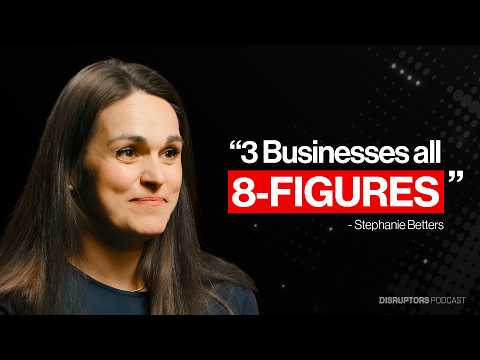
Stephanie Betters
Left Main REI
CEO and founder of Left Main REI, a Salesforce-powered CRM and AI data platform for real estate investors. Former cardiothoracic surgery nurse practitioner who co-founded Better Path Homes and has completed over 1,000 flips.
Full Transcript
20547 words
Full Transcript
20547 words
Steve Trang: Everybody. Thank you for joining us for today's episode of Real Estate Disrupters. Today, we have my good friend Stephanie Betters with Left Main REI, and she flew in from Charlotte, North Carolina talking about how she's now founded three multimillion dollar companies. If this is your first time tuning in, I'm Steve Trang, sales trainer. Every month, we help hundreds of people buy more houses at deeper margins.
If you wanna join us on our training calls, DM me the word sales on Instagram, and I am on a mission to create 100 millionaires. The information on this podcast alone is enough to help you become a millionaire in the next five to seven years. You will take consistent action. You will become one. And the show is brought to you by our sister company, Investor Lift.
Get access to over 2,000,000 cash buyers across the country. Go to investorlift.com, put in disruptors to get 10% off. And if you get value today, please tag her from below, share this episode right now. That way we can all grow together. And this is a live show, so please ask your questions for Stephanie to answer.
Ready?
Stephanie Betters: Yep. He's here.
Steve: So it's been a while since you've been on, a little over a year.
Stephanie: Yeah.
Steve: So I wanted to just start off with, you know, what's changed in the last fifteen, eighteen months.
Stephanie: Yeah. A lot has happened.
Steve: I know.
Stephanie: Yeah. Alright. I'll start personally. I left my job as a nurse practitioner.
Steve: Which was crazy that you were still a practicing nurse with two, at that time, two multimillion dollar companies.
Stephanie: Yeah. And
Steve: you were still a nurse on the weekends.
Stephanie: Yes. Yeah. So
Steve: I Well, congratulations on finally taking the jump.
Stephanie: Thank you. It's it was a really hard move to make, you know. Not necessarily because of the even really the security of it anymore, but it was just I I really loved my job. You You know? I loved everyone I worked with.
I loved my patients. But it came down to time, you know, and return on time.
Steve: Mhmm.
Stephanie: And my kids are getting older. I have three kids, and everything's on the weekends. And I felt I felt not only did I not personally have any margin, but I was missing a lot. It's like, what am I doing? You know, the reason why we've built these companies is so that we can have freedom and time freedom and make our own choices.
And I really felt that it just could just started to conflict with that. And I really had to make the choice, you know.
Steve: But you kinda knew it before then. Mhmm. It's not like it was a revelation. It's like, oh, wait. I am missing out on time with my family.
Was there something that kinda pushed you over the edge?
Stephanie: Not necessarily any significant event or anything. It just I think it was just a culminate culmination Yeah. Of just fatigue. And I will say that, you know, there was a couple times where I like, I went to work or I left, and my kids were like, okay. Bye, mom.
And, like, didn't even, like it wasn't a thing. Mhmm. Well, that's bad. They're used to me leaving. That's terrible.
Yeah. They're not even phased by it, which in one way is wonderful. That means they're secure and and, you know, they're okay. They don't need they're not hanging on to me. But the other end, I'm like, it should be weird.
Steve: Yeah. It should be
Stephanie: weird that I'm gone. I'm missing something. You know? So I had a couple moments like that, and I was like, I just can't. My heart can't take that anymore.
Yeah. But now that I'm not at the hospital on weekends, Saturdays are amazing.
Steve: Yeah. Like, what what what happens on Saturdays?
Stephanie: I just I don't do anything. I just I rest.
Steve: But you got all these companies.
Stephanie: Well, I don't do anything on the weekend.
Steve: Okay.
Stephanie: Yeah. You
Steve: don't have fires to put out?
Stephanie: No. Not on the weekend. No.
Steve: Yeah. Well, that's pretty awesome.
Stephanie: Yeah. And it's it's okay to be off on the weekend.
Steve: Well, I know it's okay to be off on the weekends. I recognize that. But I think probably our average listener doesn't understand that yet. Or not doesn't understand it, but doesn't get to really enjoy it. Right?
You know, like because earlier parts of our career
Stephanie: Yeah.
Steve: It was grind season. Right? Like, we go through these different seasons in our careers, and for the first few years, it's constant grind.
Stephanie: This is true. Right?
Steve: And you had to, like, put out fires and, like, you know, by the time if if no one else could deal with it, then you have to deal with it, and you have to, you know, take time off away from family or, you know, maybe over dinner, you have to take the phone call. Mhmm.
Stephanie: Well, I'll sit back for a second and say that I've always set up my businesses so that I wouldn't be needed on the weekends because that's when I was at the hospital. Mhmm. So that was, like, the line always. Right? Like, I'm not reachable now.
I'm doing something else. And quite honestly, like, if if there was a fire that I had to take care of while I'm at the hospital, taking care of, like, actual emergencies, like, I would be really upset. Like, I would get really, really mad.
Steve: There's an angry side of you.
Stephanie: There's an angry side of you. But I would get really upset, like, truly offended. Oh. Especially in the early days when, like, a contractor would call inevitably Friday evening at 05:00 looking for their payment. Mhmm.
Like, you should have had your stuff to me sooner. Like, what now? You want your money? Like, you didn't do your you know, you didn't complete your scope of work by whatever deadline, which is always Wednesday for us, to get paid on Friday so we'd have this buffer. So I've really set it up always that I was not available.
Yeah. So thankfully, I had that little void kinda waiting for me. You know what I mean?
Steve: So now you get to enjoy Saturday. So Yeah. You know, what does Saturday look like for you?
Stephanie: Really, I'm I'm I'm present with my kids. So the summer, you know, they weren't in sports these last few months. But prior to that, they all have their games. I'm able to go to more games. I'm able to go to the movies.
They'll just go out to dinner. Before, you know, on the weekend, if there was something at night, I'd be on call. So I couldn't be anywhere loud, like a movie theater or a concert or a game. Right? Because then it's really unprofessional to to call me for medical advice.
And I'm like, there's it's loud. Right? So it's just really wonderful. I'll you know, my husband, Zach, and I, we still are kinda like, oh, wow. I will be out on a Saturday.
I'm like, I like Saturdays. Yeah. You know?
Steve: So we're definitely gonna talk about that later on, later on on this, show, talk about what you had to do to set up to get yourself in that position.
Stephanie: Yeah.
Steve: I think the very first time I interacted with you was when I was getting onboarded for Sharper. Yeah. Are you still with them?
Stephanie: Yeah. I still I still do some part time consulting.
Steve: You still do part time consulting with them? Yeah. Okay. So, what else has changed since our last show?
Stephanie: We launched Main Dev Experts Mhmm. Which is the Salesforce consulting company that is sisters with Left Main. Yep. But does also service some non Left Main customers, but primarily Left Main customers who want additional consulting and support, custom development, etcetera.
Steve: So what is that exactly? Like, if I like, who is the avatar for main dev?
Stephanie: Typically, large teams who want additional automation without outside of traditional tools, like your lead gen tools. Like, for example, recent projects there was a was an integration with HouseCanary, which is, you you know, essentially creating appraisal reports and sending out third party inspectors with a a click of the button. Mhmm. That's just kind of a off the top example. But they're like, deep integrations essentially with API connections.
Yeah.
Steve: So someone that is whose business relies very heavily on Salesforce. Yes. And are they looking, like, a certain amount of volume? Or
Stephanie: Yeah. Everybody over there is doing a 100 or more deals a year
Steve: Got it.
Stephanie: To say. Yeah.
Steve: And you partnered with somebody on this. Yeah. This is not your this is not a solo project.
Stephanie: Yes. I've learned some lessons.
Steve: Yeah. What lessons have you learned?
Stephanie: Well, I think a big one for me besides the personal stuff and putting some boundaries in place so I can be a person, which I never really considered before. But, professionally, a big, big takeaway for me is that I don't to go into a new bent business venture and to and to really seize an exciting opportunity that I'm passionate about. It's gotta still hit hit all the passion criteria and, like, impact criteria that I'm looking for. But now when I look at those opportunities, I look at them and ask, do I have to be the like, do I humanly, physically have to be the engine that pushes this? Mhmm.
And if the answer is no, then I can go into there with a with a team or point a COO or kinda have a core couple people even. Even if it's a small couple people, then I'm willing to do it. But I can't and I shouldn't always be the engine, and that's not scalable. You know? And I know it sounds really obvious, but it's kind of against migraine.
I'm a I'm an operator. I'm a in the dirt, in the weeds kind of person. I like doing that. I like solving problems. I like being personally involved.
Steve: I remember eat problems for breakfast.
Stephanie: That's still my that's still my motto. But, you know, I can only humanly do so much. And I think I actually end up ruining opportunity by holding on to it too tightly Yeah. And not and not bringing other people into the fold earlier.
Steve: Can you expand upon that? Ruining opportunity?
Stephanie: So I think that there you can be your own bottleneck. Mhmm. If you don't know how to delegate, then you will strangle your own progress.
Steve: Right. But is there, like, a example from your business? Was there another thing that, like, had a high potential and it didn't work out well because of this?
Stephanie: Thankfully, everything kinda were were has worked out in the end, and I've learned these lessons without, you know, tremendous failure. Although, there's plenty of things that I ruin all the time. But, I think a primary example is probably main dev
Steve: Mhmm.
Stephanie: With okay. Here's an opportunity. There are there is a need that's not being met with our base product. Right? There's because there's really a different between difference between product and service.
Right? So what is the product? What does it provide out of the gate? And then inevitably, people want more. They wanna expand upon it.
They wanna customize it more. Well, that you can't constantly be customizing product or else, you know, you're always gonna be spinning your wheels. Right? You can't constantly change the thing because number one, then your team doesn't know what's going on because it's always changing. They never get the the hang of it.
Right? And then it's different for one person than for somebody else. And there's no, like, you know, standard package. You know, and all of us are entrepreneurs. Everybody using it as an entrepreneur.
So everybody has ideas. Right?
Steve: They all wanna customize.
Stephanie: Exactly. They all want to. And to to to the most for the most part, 80% of them, they do that fine. No problem. You do your little customizations.
But there was a significant subset, 20% or so, right out of the gate, who needed more truly for this to, like, really do what it needed to do for their business. So when I was looking at this opportunity, I was assessing, you know, is this something that Left Main should do? Mhmm. Should Left Main do this as part of its service offerings? Or does this make sense to separate it?
And I thought it made better sense to separate it because it's less confusing that way then Mhmm. About what is product and what is additional service. So Darren, who's also in CG, him and I were masterminding about this at a CG meeting. What's the best way to do this? Because he had this opportunity to you know, he's very familiar with Salesforce.
He was a user, you know. And he's like, why don't we just do this together?
Steve: Mhmm.
Stephanie: You know?
Steve: I was
Stephanie: like, okay. I think I think that would make a lot of sense. So so we did, and we immediately hired help, like, from the get go. And that was kind of the deal, because Darren is very much wired like me too. Like, he's a workhorse.
Right? It's nice to be have two partners be workhorses so that nobody feels, you know, ostracized in the process. But But that was the deal. I was like, Darren, I'll do it, but I can't be the one whose customer calls, who's doing the development, who's doing all the operations. I can't do that.
So we need to have somebody, essentially, right away who can do that, and then we'll launch. That's exactly what we did. That was a huge lesson for me because other I would have never taken a step back and said that before. Yeah. You know, I would never have said, I can't do it.
And I think partly because I I want to believe I can do everything. Right? But, also, partly, I wanted to control it. You know, I wanted to make sure it was gonna be okay. You know, I this is the passion thing for me.
This is an impact thing for me. I don't wanna mess it up. And I feel I feel that a lot is riding on it. I, you know, I don't wanna disappoint anybody. You know, that like, I take that to heart.
You know? So there's that fear of lack of control. So and and I and I learned that in in Left Main and Better Path Homes. A lot of these lessons were learned on Better Path Homes, our real estate, investment company. That if I was too much in the weeds, then I essentially disabled everybody around me, even
Steve: if you
Stephanie: had a team. Because I'd be constantly jumping in, solving the problem, constantly doing it, having the answer all the time.
Steve: It's kinda like the lessons we learned from multipliers.
Stephanie: Exactly.
Steve: Right? We're fixing everything, then no one's getting better.
Stephanie: Exactly. And then the people around you, though, are actually worse. Yeah. Right? Then they sit and they look for you for the answer.
I'm like, I don't wanna I don't want that. First of all, that disempowers everybody, and then that kinda creates almost like a dictatorship where everybody's just around waiting for a note, waiting for an order.
Steve: Bunch of order takers.
Stephanie: I don't want that. I want people around me with ideas and passion and excitement and ownership of what we're working on. You know?
Steve: And there was something you mentioned there a moment ago about, not wanting to be the the driver or the the the horse.
Stephanie: Yeah.
Steve: Yeah. Can you elaborate on that?
Stephanie: Meaning that I don't want to be the one who has to physically develop or physically do the task. Mhmm. I want to be the leader.
Steve: Right?
Stephanie: I wanna come up I wanna have the vision. I wanna have the collaboration. I wanna put together the framework, and then I wanna fill the framework or do the drywall with team.
Steve: Mhmm.
Stephanie: You know?
Steve: So it's just kinda like going back to, you know, Gino's, Gino Wickman's words. Right? It's like, you wanna be the visionary Yeah. For someone else to integrate. Is that what that means?
Stephanie: Yeah. Essentially.
Steve: Got
Stephanie: it. And I'll collaborate on that because, like, I am a natural integrator, I think. And I I like collaborating on that in the strategy why strategy thing. I'm not just gonna, like, dump an idea on somebody, but, hey. Run with that.
Yeah. And I'll see you later. I'll be on the beach. No. I wanna collaborate, but I want to be the collaborator.
I don't wanna be the the implementer or or the person who has to carry it across the finish line. At least not everything.
Steve: Right. And then, you were talking about, passion criteria, impact criteria. I know that we've talked about that before. So what are your passion and impact criteria?
Stephanie: Yeah. Good question. So impact. Primarily, for me, that's about the industry and the real estate industry. You know, just like you label, you know, a disruptor, I've got a bone to pick with our industry.
I really do. I think that our technology is way behind. I think there's so much that we can do to be better operators, to to provide more solutions for homeowners, to just have more presence. So everything that I do has to especially in the real estate industry, has to fulfill that. Like, is this pushing our industry forward?
Is this revolutionizing the real estate industry with technology? Can we push this envelope? Can we have more AI? Can we have more automation? Can we can we expand our existing tools?
And I think that really comes from the fact that it this is a traditional hustler industry.
Steve: Mhmm.
Stephanie: Like, they're small companies. They're mom and pops. And, like, it's it's hard, you know, and there aren't tools to help small companies. All all these other companies, a lot of techno technology companies go for the big dogs.
Steve: Well, I think part of it too is, though, is that we're also a high margin business, and this is something Eric Brewer and I were talking about a couple weeks ago. It's that because we're high margin business, there's a lot more room for for forgiveness and doing things wrong.
Stephanie: It's true. Very true.
Steve: So, I mean, I can't I can only imagine what my business would have looked like ten years ago when it was easy to get sellers and Salesforce. Man. Like, where were my business, where it could have gone?
Stephanie: Well, that's why I get so excited because really just little tweaks, little things make massive impact Yeah. You know, on the bottom line. And that affects the small company. That affects the the the husband and wife grinding it out, you know, trying to figure out how to how to make a path for their family, how to change their their kids' lives, you know.
Steve: So are passion criteria, impact criteria two different things or is the same thing?
Stephanie: Really, it's one and the same. I I it has to impact in the industry and then passion, like, I wanna be fired up about it. Like, it needs to be a hell yes. Not like, oh, that's that's a good idea. There are plenty of good ideas, but I'm I I want hell yes.
Awesome. Yep. I'm in. You know?
Steve: And then you mentioned boundaries a moment ago as well. Yeah. Right? So how do you draw those boundaries? Because I think that's another issue where, like, as business owners, we kinda talk about, like, you don't wanna step on your team's toes, but at the same time, like, how do you draw a line to create solid boundaries?
Stephanie: I think this is this is difficult. Right? And I I wanna preface my answer by saying in the beginning, like, it's just all in. Right?
Steve: There aren't really any boundaries.
Stephanie: It's just one like, you just gotta sprint to get over the initial hump and get proof of concept, then you can start hiring people because you're not gonna get people to to, you know, risk their family and their livelihood on you if you have no concept, no no anything, you know. And if you do, they're probably your family members because they know you personally or something else. Right?
Steve: Right.
Stephanie: But in the beginning, it's just flat out sprint, you know. And then once you've get gotten some business model established, like, you've done some deals or you've got at least some concepts in a business plan together that is executable, that you can start bringing people into the fold, then I think the boundaries are really established by communication. So you have to just really clearly communicate to your team what to do when, and then what they can do without asking you, and then what they need to ask you about. Right? And then having having something that they can refer to, having kind of an operating system or policies, procedures, you know, it has to be documented so people can refer to something instead of just default calling you or asking you.
Steve: So is there something in place right now? Like, I'm working on your team. I'm a sales manager. Mhmm.
Stephanie: If I
Steve: have a problem, I just go to the book, and it says, like, here's how you handle these specific situations.
Stephanie: Yeah. We have essentially, like, FAQs. Right? So common scenarios that come up. And, thankfully, it's relatively repeatable.
Right? Like, there are a collection of issues that happen, and there are always weird things. But concentrate on the things that happen most frequently, and then just document that. Like, what what is the FAQ? And then if there are some common nuances that come up less, I would document that too.
So if you look at any of our companies, you'll find that we have, number one, employee handbook. Because some things are are silly, like, what days do we have off for holidays? Right? Like
Steve: Our lunch is paid for.
Stephanie: Yeah. Yeah. Do I have paid time off? You know, just simple stuff like that. Yeah.
To department level policies and procedures. And we we do process maps. I I love Lucidchart. Lucidchart is great. It's very visual, like, if then, then this.
And generally, those once you go through orientation and, like, people are onboarded well, they don't need a ton of that anymore. They can kinda
Steve: get it. I'm not surprised at all that you love Lucy Churchill. That makes total sense to me. So it's not a revelation. Right?
Like, we've read the books that say, like, you need to create policy procedures. Right? That that part is not a revelation. The part that's really hard is actually executing
Stephanie: it. Yeah. And keeping it up to date too.
Steve: Yeah. So what practices do you have in place to make sure that you do have it built out is robust enough that you're even updating on a regular basis?
Stephanie: Yeah. Well, I'll say in the beginning, what mediates it the most is probably a new hire coming on because you're like, oh, shoot. How am I gonna train them? Right? And then you've gotta make sure you have material to train them.
So that's a really great motivator to have some sort of onboarding plan. And then when you're kind of writing out an onboarding plan, that'll start to identify what issues there are. Like sales, for example, if you wanna talk about doing a sub two deal. Do you have an example of a sub two deal? Like, what does that contract look like?
Do you have a copy of your contract that you can review with that person when they when they onboard? Do you have maybe a call they could listen to about how to talk about it? Or maybe can you make a recording about how you present as the homeowner? Right? Like, just starting to create some resources like that along the question of what does this person need to know Mhmm.
To be successful in this role? That's really that communication. You need to know what they need to know to be successful.
Steve: Right.
Stephanie: Right? So then you can kinda show them that path, and then you literally have to construct the path, which is what I think a lot of a lot of entrepreneurs fail at because that sucks.
Steve: It's it's, like, the worst part of
Stephanie: the doubt. Yeah.
Steve: Yeah. I
Stephanie: know. Every so every time you have a new hire, that gets evaluated. And then ideal gold standard is to look at look at policies and procedures or, you know, your process maps of, like, what we do in these certain sit situations. Pick one a week to go over and make sure is this still how we're doing it? Because our companies are fast growing.
Did anything change here? Is there a new team member who needs to be incorporated in this? You know, like swim lanes and things like that. But weekly is gold standard.
Steve: Yeah.
Stephanie: Even I I mean, even I stumble with that. We'll go a few weeks where we don't do it, and then it hurts. Oh, damn. Then no wonder. We haven't looked at this in a minute.
We aren't doing it this way. Somebody has this part in their head. Yeah. You
Steve: know? So, you know, I didn't mention this earlier. So, on top of meeting you through, Sharper, right, we were peers in Collective Genius.
Stephanie: Yeah.
Steve: And I am an active left man user, so I definitely vouch for it. And so, yeah, Better Path Homes. So real quickly, I know we talked about it before, but real quickly, can you talk about Better Path Homes in Left Main?
Stephanie: Yeah. So Better Path Homes, Charlotte. We wholesale, and we do new build construction. About 200 wholesales a a year and about 200 new builds a year. So we'll hit probably around 400 this year.
Steve: Remarkable.
Stephanie: Yeah. It's been crazy. It's been fun.
Steve: That's some astounding numbers. And the Left Main, for those and we we kinda talked about a little bit, but Left Main itself Yeah. What is Left Main?
Stephanie: So Left Main is a CRM Mhmm. That was built on Salesforce. Salesforce is a platform. Left Main is the app that's preconfigured and installed on the Salesforce platform that's built for real estate professionals. So investors, wholesalers fix and flippers, and, agents.
Steve: Yep. So I I bring this up just if you guys aren't familiar with LeftMain and Better Path Homes, we did talk about it in-depth a year plus ago on a different episode. But, you know, for those of you guys watching right now, I just wanna give you quick context to everything that Stephanie's got going on. So that leads to my next question is with all of these things going on, how do you say no to opportunities? Like, I think that things are being thrown at you.
Right? Like, the more success you have, the more people want to collaborate with you in one way or another. Mhmm. Is there anything else that you look at? I know we talk about passionate impact right here.
Is there anything else that you use to to filter out or lens?
Stephanie: Definitely passionate impact first. Mhmm. And then second is, is this on brand for me in the sense of, is this what I'm doing already? Right? Is it is it incorporating real estate?
Is it incorporating operation systems, processes? Is this, like, out of the left field? Like, am I gonna go start a button factory? No. It's gonna have to be in the real estate industry for sure.
So it has to have some sort of context and some sort of play on what I'm already doing.
Steve: Mhmm.
Stephanie: So just like Left Main came from my the mother company, Better Path Homes. Right?
Steve: Right.
Stephanie: The the reason why I think that I've found success there is there's been focus on the context of what I'm trying to do. Right.
Steve: You know?
Stephanie: So that's second, for sure. And then the third one is, how much physical power does it require from me to get across the finish line? Is this something that I have to do, or is this something that we can do? You know? And if it checks all those boxes, I'm gonna look seriously into it.
And then, of course, I'm gonna ask, you know, what is the revenue potential of this? What's my ROI going to be? And does that distract me from my goal of, you know, my passive income goal, my time goals with my family? Is this going to take me down a journey, right, to come back to this, to my main goal. Yeah.
And as long as it it's not a distraction like that, then then I'm probably gonna be in.
Steve: You feel comfortable sharing what your passive goals are?
Stephanie: It's funny. It's not really, it's not really about money anymore. It's more about time. But I don't know how how much I wanna share with 87,000 IRS agents just hired.
Steve: That's fine. They're just walking around with guns.
Stephanie: They're just watching us waiting for me to yeah.
Steve: They're armed and prepared to use it. But beyond that, you know, that you don't have anything to worry about.
Stephanie: I think my my passive goals in general are that I don't I don't need any salary at all. I've worked really hard alongside my husband, of course, to reduce our our personal overhead. So we want all of our household bills to be less than a $100,000 a year. So that if everything blew up, we could pay all our bills, our mortgage, you know, our electricity, whatever kids close, all that for less than a $100,000 a year. And then I wanna have passive income that supports, you know, supports my lifestyle where I wanna take my kids on on vacation during school breaks.
And I just don't want to worry. And it's tricky because that number always changes. As soon as I put a number on the table, then I change it. Right? Mhmm.
Back in 2009 when we first started our company, Well, I'll go I'll say to that 2014 because that's really when we wrote our business plan. Our goal then was to have $300,000 in in in income from the company.
Steve: How much?
Stephanie: 300,000. I look at that now. I'm like, well, that was a low goal. You know, I should have put it higher then. So it becomes less about passive income or less about income, I should say, when our when we're fed and happy and content, and I'm there.
You know, I feel financially free. I feel diversified enough that I don't have to worry about that. Now I really wanna make sure that I can control my time, with my family and concentrate on stuff that really matters. Because as soon as you put a number on it, you're gonna change it and chase something different. And I think you're chasing the wrong thing.
Steve: Yeah. I mean, there's there's a couple different things there's there. Right? There's that first, I know I have achievement addiction.
Stephanie: Yeah. Exactly.
Steve: Right? So every time we we hit our goals Mhmm. We don't we're not happy about it. Right. And then we would just make a bigger number.
Stephanie: Yeah.
Steve: And then b, something I learned from Paul Sparks recently is, closer versus more. Right? Like Mhmm. You have clarity on where you wanna go, then you're no longer chasing more.
Stephanie: Exactly. And if
Steve: you don't have clarity on your goals, then the default is just a bigger number. So, and this might be completely, you know I don't know. Maybe not hypocritical, but, you got a thousand doors right now in portfolio. Right? And which is a number that we're hitting.
Right? There was there's I I imagine there's at one point you said, you know, a thousand doors would be pretty cool. You got a thousand doors now. What did you do to get to a thousand doors?
Stephanie: Oh, gosh. One thing at a time. So we started with buying one rental. Well, it would turn at first, our first rental was actually a, a home for Zach's mom. Mhmm.
She was going through some stuff. She we needed to buy her house, essentially. So we bought her a property, got her settled, and then she ended up moving back, to his hometown in Malone, New York, way upstate by the Canadian border. And then when she when she left, we put a tenant in there. And that process, that all happened in in two thousand fourteen, basically, when I was, like, nine months pregnant.
And I was really scared. So I think number one was getting over the fear of doing that, of having a rental and having a tenant and managing that whole process. Once we did one, I was like, okay. We can do another. And we built our wholesaling business so that we could stack cash and buy single family rentals.
So we did that really just we did take about a five year break from it building our wholesaling company. I'm gonna talk about the detour. I learned that detour then. Build moving away from just buying and holding, we had took this big, like, arc of a journey in starting a wholesaling company wholesaling company so that we could buy rentals, but there it took us away from buying rentals for five years. Right?
Steve: Mhmm.
Stephanie: Now I'm grateful for it because now it's a machine, but it was scary in that five years. Right?
Steve: So I see you're five, and I raised you. Right? Nine years. Right? I was distracted.
Yeah. Got into the business to buy rentals.
Stephanie: Yeah.
Steve: And for nine years as a realtor, which had nothing to do Yeah. With buying rentals.
Stephanie: Right?
Steve: Right. Massive shiny object syndrome. Anyway, go ahead.
Stephanie: But it's so true. It kinda takes you down this path. So that's why you really have to to have that mindset that, okay, this is what I'm doing so that I can get back here, and then you actually have to get back there.
Steve: Right.
Stephanie: You know? So we did. So after that, after we built our wholesaling company, now it was great. We started having income that we could depreciate on and buy a single family residential. Meanwhile, we're still working at the hospital.
And our and we just kinda just kept doing that. Right? And then we started getting into, multifamily. Mostly just because we had friends who are doing it. Mhmm.
And really just kind of watching.
Steve: Lots of friends doing it.
Stephanie: Yeah. Yeah. More and more. Yeah. It's like this what is this?
What what is this about? So we started just being private money lenders there, like LPs and some deals. This is nice.
Steve: Mhmm.
Stephanie: Wow. This is really good. Right? Just put some passive income. I get to put some some portfolios and and, you know, some some doors in the portfolio and, like, a long term hold, but then not just all on me.
So we liked it. So we did a couple LP deals. And then with that experience
Steve: LP. For those that don't know.
Stephanie: Sorry. Limited partner. So GPs, general partners, are the ones who generally qualify for the funding for apartment built large multifamily apartment buildings or do due diligence or put down earnest money. They show liquidity. Essentially, they're they're guaranteeing the property.
Steve: And they have to do the work.
Stephanie: And they have to do all the work. And then LPs kinda come in for that gap funding. So just like when you buy a single family house, if you're doing a traditional mortgage, you get, what, 70 to 90% of the funding from the bank, and then the rest you put down cash deposit. So the GPs get that that finance the, the money the that money from from traditional lenders, you know, big banks. And then the LPs fund the difference.
So we came in as that for for a few deals, and then we started having better relationships and more opportunities came across our table to be the GP. Yep. So we're GPs in a in a handful of deals now too, and that easily pumps up your your your door count. Right?
Steve: Yeah.
Stephanie: But now, you know, that's much more appealing to me than single family. So we've we keep our portfolio of single family homes. We've been holding those. We did sell a couple, last year when the market was really good. We weren't sure what was gonna happen this year.
So we did take some chips off the table, but holding multifamily, is how we've really got our passive income goals. And it doesn't require us to get any calls even from a property manager
Steve: Yeah.
Stephanie: Which is great.
Steve: And, with you being GP, I've had the opportunity to work with you guys. Right? So, you posted something on Facebook. It's like, hey. I just closed on this apartment complex.
And I was, you know, like, DM me for more information. Yeah. So I did. He's like, yeah. I already bought this one, but I have another one coming up.
And I think it took a while, right, to Maybe four months or so Yeah. We had the next opportunity. But, yeah, I got to invest with you guys. And now I get to say, you know, we're partners
Stephanie: Yeah.
Steve: On, on some I think a 129 units in
Stephanie: Yeah. Mississippi. Mississippi. Yeah.
Steve: Yeah. So you wanna talk a little bit by
Stephanie: the way.
Steve: You wanna talk a little bit about that deal?
Stephanie: Sure. So this deal came to me through our network. So I came in as it and my husband, of course, came in as GP partners because we put down earnest money on the property. There are, gosh, I think five PPs, including the husband my husband and I, on that deal, which is awesome. And just quick side note, there are a ton of people out there who say, like, oh, you know, you're syndicating.
You're not you don't a 100% own everything. That's fine with me.
Steve: Yeah.
Stephanie: Right? Like, I would rather diversify than have, you know, a $12,000,000 asset completely on my back. And could I qualify for that? Right now, I probably could. Mhmm.
But I don't want to. I'd rather do a couple, like, deals over here with four or five of you, four or five of you here.
Steve: I don't know.
Stephanie: It just feels safer to me. And then so to each their own, but this is the way I like to invest. So that was our piece as we put down the due diligence, the earn excuse me, the earnest money. And we had, another GP partner who put down or or demonstrated liquidity, which generally has to be about a million dollars. Depends on the deal.
But but just generally about a million dollars that has to be sitting in a bank somewhere. So one another GP was the property manager who is going to actually go out and hire they are not the property managers. They went out and hired the property manager and then does all the the the walk throughs and the renovation plan and essentially executes the business plan. And then we had another person who'd funded due diligence. And then, of course, somebody who finds the deal.
Steve: Yeah. So
Stephanie: and it depends on the on the collection of GPs as who's who on those deals. And, you know, we've kind of had different roles in that process, but I'm never the executor of the business plan.
Steve: Right.
Stephanie: Again, I'm not gonna be the horse who takes over the finish line. This is kinda what I'm comfortable doing. So, so, yeah, that's how I'm part of the GP deal. This deal looked fantastic. The the Jackson, market the MSA of Jackson, Mississippi is wonderful.
This property is right outside there. It was 12,200,000.0 acquisition. 126 units, I think. Doing great. So we're in our first year of the business plan.
We're ahead of, schedule as far as raising rents and renovating the property. We were able to get some new leases in there. There's a pool on the property that got renovated. It's going really well.
Steve: Yeah. And, I talked to my team. Right? So they're like, hey. Let's we were talking about, hey.
Let's record a video about this apartment. They're like, great. So, like, what do you know about it? I was like, I don't really know anything. Like, what do you mean?
It's like, you invest in this apartment? I was like, yeah. I know. But with Stephanie. Stephanie said she needs a $100, right, to be an LP.
Stephanie: Yep. I
Steve: talked to my wife. I was like, hey. Like, do you wanna invest with Stephanie? I was like, yeah. Okay.
So great. That's that was really all the due diligence we needed. But after, we we've done this, right, you've been paying 4%.
Stephanie: Yep.
Steve: Right? So the money is coming in every month, and my wife's looking at me, like, this past week. He said, hey. Why don't we do more of those?
Stephanie: Right. It's kinda nice.
Steve: And to which I said to her, if you recall, I've been talking about this for years. You've just dismissed it as risky this whole time.
Stephanie: Yeah. Right? Well, it's okay. Sometimes it takes a little bit of time to come around to it. Right?
Steve: It takes a while. So now you and I were talking before the show. I am a little bit more pessimistic, I think, on multifamily than you are.
Stephanie: Yeah.
Steve: So let me make my argument, and then you give me, like, the intelligent answer. Alright?
Stephanie: I'm sure yours is also intelligent.
Steve: So what I'm seeing is, I learned recently that I I felt apartments have been overpriced for some time now. It's how it felt, but I couldn't justify. I couldn't explain it because I'm not I'm not an expert. But it just felt like it was overpriced because the cap rate kept going lower and lower and lower, meaning the value is higher and higher. Right?
And then I recently learned that the cap rate is very closely tied to what you can borrow money at. So if you can borrow at three and you buy at four, then great. Right? Like, that's really what they're looking at. Where they buy for whatever, they do a cash out refi at a lower cap rate.
Stephanie: Mhmm.
Steve: Right? That's tied to the fed rate inflating the value, not inflating, but increasing the value of the property. So my concern is kinda like what we saw with, a lot of, people buying right now. You know, going interest rates were at 3% at the beginning of the year, if you can believe that, right, for a 30 mortgage. Yep.
And it jumped up to six. Now it's down to about five, but that greatly affected, right, the values of of of single family homes. At least it did in Phoenix, which I think is the most volatile in the in the country.
Stephanie: I do think you get a trophy for that. But yes.
Steve: Yeah. We got one right here. We got we got a trophy here. So that is my concern Yeah. As far as multifamily.
So what are your thoughts on my concerns?
Stephanie: So what I like about multifamily is it's it's really just about the numbers of what that asset can produce. It has less to do about comparable sales Mhmm. With single family. Like, for example, if you own a property and somebody on that street sells it for too low or maybe they're distressed and they sell it, then your price goes down no matter how much how good your house is. Right?
It's going to negatively affect you. Same thing goes with rental. Like, if you're getting additional rent of that single family house and somebody sells low, your your property is worth less. Right? With what I love about commercial property and, you know, I know the most about multifamily residential compared to storage and things like that.
I won't speak to those because that I I don't that's not my game. But I like it because as long as you're getting good rental numbers, you can generally get a good cap rate. Right? Now the price of acquisition of what you can pay for a property, of course, you have to take into into account what you need to pay for debt on that property. Right?
So if the debt is cheaper, then you can generally pay more. Right? So that's definitely true. And I will say that I think I think apartments in general, you have to buy a little bit deeper now because it's more expensive to borrow. Right?
Steve: Right.
Stephanie: But the reason why I think it's a safer asset class is, especially in an inflate inflation market, is the same problem that we have with buying with buying multifamily. Normal normal mom and pop, first time homebuyers, everybody has with buying a house. So if it becomes more difficult to get debt, then those people can't buy a house.
Steve: Mhmm.
Stephanie: Or maybe they can't afford it anymore. Maybe that thousand dollar difference now actually makes it cheaper to rent, which is actually what we're finding in a lot of markets. Before, it was more expensive to rent compared to what you get on a mortgage if you get a mortgage at 2%. It's really hard to compete with that. Right?
Steve: But
Stephanie: now if we're looking at 6%, then it's cheaper to rent. So the people who can't afford a mortgage or can't afford that interest rate, they're gonna have to be somewhere. They're gonna be in an apartment building or they're gonna rent a single family house. They're going to move the the it'll migrate to to rentals, essentially. And the large multifamily is essentially more scalable in that because it's all under one roof.
CapEx in general is about the same, so I like that. But those who are credit worthy win. Right. And the way I have always played the game, my husband and I have always played the game, my friends, have played the game is the long game. So, thankfully, over the last ten years or so that we've been in business with little little under ten years, we've always taken our credit into account.
We've always put money away. I'm not going out there buying Ferraris. I'm just spending all the money. A significant portion got reinvested into the company, almost all of it. I didn't pay myself for forever.
Right? And then we saved a little bit of money. We have we have so we have company, liquid, essentially, and then we have personal liquid. So now when we're looking at creditworthiness and personal guarantees for an apartment building, I'm a pretty credit worthy individual.
Steve: Right.
Stephanie: You know, so it's easier for me to get loans than probably a traditional person. Right? I've had I've had w two income forever. Like, at the hospital, I have w two income for all my all my companies. I pay myself w two now.
So I have all that to display, and I can generally get good debt. Does that mean I have to buy a little bit different? Yeah.
Steve: But these
Stephanie: deals are still there.
Steve: But I think the deals will be there. My concern is if the strategy, right, is to buy something as a you're buying at a good price, but you can do the the rehab and you're gonna fix it up and you're gonna do a cash out refi. Oh, so
Stephanie: you're saying the refi you're worried about?
Steve: Yeah. I'm worried about what you can refi for. Because if the original plan was, like, I can re I can do a refi out and get this up to, like, 18. Well, now maybe the cash out refi is I can get up to 16. Like, can I repay out back all the LPs?
And then, you know, if I need to sell this right, because a part of the exit a lot of the multifamily I I know that our strategy is a little bit different, but a lot of guys is to, stabilize it and sell it. Yeah. Well, you might not be able to get your exit strategy is completely changed, or your your pricing has changed. At least that's my speculation.
Stephanie: Yeah. And so, again, this has to go down to the acquisition. Just like single family, you make your money on the buy. Right. So you have to you have to take that into account.
What is what is going to be the refi capability later? Right? And when you're buying it, can and you increase the value of the property. Let's say the business plan is executed well. If you have to exit at a higher percentage rate on the refi, does this all still work?
Steve: Right.
Stephanie: And you can't but you just essentially can't do it unless you can get your buy your your lenders out in five to seven years. Yeah. You just you just have to have to bet on that. Right?
Steve: So, You gotta wait. Yeah. The wait. So, you know, what we talked about we've talked about a lot of different things, and we talked about the three businesses. But I wanna get back to just go now go a little bit deeper here.
Right? So, you found three multimillion dollar businesses. No small fee. Right? I mean, usually, it's hard to do one.
If you someone has multiple businesses, usually, none of them are doing well. So how did you get yourself in a position where you get three businesses that are firing on all cylinders?
Stephanie: Learn from your mistakes. That's gonna that's number one. Yeah. But I think your first million is the hardest. Yeah.
Definitely. It definitely was for me. Breaking out of the traditional path of, you know, get a good job and work hard.
Steve: Mhmm.
Stephanie: Starting something on your own, being a leader, you know, being someone who inspires others, putting process and and procedures in place, having systems at work, and learning all those lessons when everything inevitably fails. Right? Like, you get smacked in the face. The the buyer cancels. The seller cancels at the very last minute, and trying to stabilize the the your first business so that you don't ride the roller coaster, and then you actually have a business that operates.
Once
Steve: So I guess for that question. Right? Because you're talking about you gotta make sure this business is stable.
Stephanie: Right.
Steve: Most entrepreneurs have shiny object syndrome. I'm putting myself in that category. Right? So, like, you're you got this business that's running. Mhmm.
And it's good, but it's not great.
Stephanie: Okay. But
Steve: you got this other opportunity, and you get distracted. And then this first one that was paying your bills starts to wither.
Stephanie: Mhmm.
Steve: So what advice do you give someone that's kinda like
Stephanie: Don't do
Steve: it. Period. How would you because I I would put myself in this category. Right? You know, let's talk about a much younger version of myself.
I miss that guy. Right? But, like, hey, Stefan. I got this incredible opportunity. Yeah.
I gotta jump on it. Right? I think this is a a feels like a once in a lifetime opportunity. I gotta chase it. Right?
What questions would you be asking that guy to to to ponder before making that kind of commitment one way or the other?
Stephanie: If you do it and your current business completely fails, are you okay? Yeah. Would you have made the right choice? If you jump now knowing that everything you built so far and the people that relied on you went away, are you still okay with it? Yeah.
Essentially. Right. And if that answer is no, because you feel like you would have left something on the table or that you didn't complete the thing, then you can't just can't do it. The reality is is there's so much opportunity, especially once you see it for the first time Mhmm. And you see what can be built and what is possible.
Business is insane. I I I compare it to, like, the medical world because that's what I know and the how much money I can make at the hospital versus how much I can just grab out of the sky in business. It's insane. There's so much opportunity out there. Right?
But it's not about the opportunity. It's about the execution and actually realizing the end goal. It's not just about chasing opportunity. So so you have to kinda come back to your mindset. Is is that what I'm doing?
Am I just creating chaos in my life and chasing stuff, or am I actually getting stuff to the finish line? That's the whole reason why you started to begin with. So before you go and get distracted with something that's shiny, is your business currently in a place where it can lose you? And if it's not, then you can't do it. Yeah.
Right? Because otherwise, you'll literally have a doom loop of this over and over again the rest of your life, and that feels terrible. It feels terrible to start a business over and over and over and over again. Right? Because that's the hardest part.
You never get to the good part.
Steve: It is the hardest part. So is there any personal experience there, or is this, like, a lot of counseling of you, other business owners?
Stephanie: Thankfully no. You know, I didn't I did not start Left Main until I was in the owner seat of Better Path Homes. Mhmm. Meaning, I was not sitting on any active role in that company. Yeah.
I had hired a COO to take my place, and now I was essentially a consultant to that business. That's when I started looking at other up you know, that's when I decided to capitalize on on what I could build with Left Main and and take that take that to the finish line. You know? And the same thing, there's plenty of opportunity. I've have turned down multiple people with business ideas and collaborations and, you know, integrations even with the the product that would be distracting for what I'm trying to do with Left Main.
Steve: Sorry. I was reading the questions here. So so so you said you got yourself into the owner's box. Mhmm. So I don't think everyone knows what the owner's box is.
Stephanie: Essentially, that means that if you look at, you know, if you look at the standard real estate company, there's a marketing department. And it even if it's just one person deep, there's a marketing department, there's a leads management department, there's a sales management department on the acquisition side and the disposition side. There's transaction management, there's financials, if, you know, that's bookkeeping, if that's invoicing. Is is is there project management for the flips that you're doing? Is there asset management with the rentals that you own?
And is there operate some operations person holding it all together? Right? That's the general those are the general roles. If you are the only person or if you are the leader of that department, you are not in the owner's box, meaning that you still have an active role in that business to get it to the finish line, to get the the product completed, to get the transaction closed. You're still part of that conveyor belt of actions that need to happen.
Meaning that you are a cog in that wheel. Right. You can't go jump into another engine if you're still running this one. Right? Then this engine stops.
So once you can hire out those seats, which has to be done thoughtfully, meticulously, we can't just jump out and let everything go on fire. Once you can hire out, sit back, you know, watch, be the leader, be the advisor, be this be the strategist of the situation, and you can kinda slowly step back and the team runs, that then then you're ready for another project.
Steve: Yeah.
Stephanie: Right?
Steve: You're not allowed to go play another business until your business is not reliant on you.
Stephanie: Exactly. You have to at least be COO or CEO in an established business that is not a 100% reliant on you for day to day function. Otherwise, it just fails.
Steve: Yeah. Something I remember, Gary, right, Gary Harper said was that you could start as many businesses as you want so long as there's a person as that person can't be on multiple that picture can't be used multiple times. Right?
Stephanie: Exactly.
Steve: There's a picture on that folder or there's a person tied to that company. And, again, you can't use that guy at multiple companies.
Stephanie: Exactly.
Steve: Alright. So you're the picture or you're the name on that company.
Stephanie: Yeah.
Steve: It can't be on the name on another company.
Stephanie: Exactly. I mean, it's imagine. It's like trying to take take the the catcher on this team and make them also an outfielder. Like, they can't you cannot do both. Each each position is extremely important.
Yeah. And you just really kind of betray your own hard work if you keep jumping around.
Steve: So can't start your second company until your first company is not reliant on you.
Stephanie: Correct.
Steve: So then, I guess, this, having two companies running Mhmm. I mean, Left Main, are you in the owner's box in Left Main?
Stephanie: Not completely. Yeah. No. Not I'm I'm definitely the CEO, obviously, which is the very active role.
Steve: Mhmm.
Stephanie: And I still have my hands in a couple department marketing, some sales, some customer success stuff. Not totally it's hired out, but they're not independent yet.
Steve: Yeah. So what are the struggles that you faced having two high level high functioning companies?
Stephanie: Shoot. Keeping up. So, well, thankfully, Better Path Homes, my involvement there now is really on a quarterly basis. I go to quarterly meetings there that I don't have to run, which is awesome. I attend quarterly meetings and financial meetings and, strata like, special strategy meetings.
Like, for example, when COVID hit, we all were at the table. Like, okay. What do we do? Right? That's my involvement there.
So I don't I mean, if I spend an hour a week, that's it on that company. So, generally, it's just reviewing financials and making sure that I know what's happening still, that I if something looks wrong or crooked, I could jump in and be like, wait a minute. Is that right? Yeah. And, of course, I'm still paying attention to the real estate market in general.
What what are we doing? You know, the overall operations of it in the sense of, like, how is this business performing in this market? What do we need to watch out for? I'm still involved in that sense. But, really, on a theoretical strategic way instead of a daily bay daily way.
So my struggle and the things that I'm working on, that my challenges now are essentially growing left main. Right? How do you grow a tech company in this industry, in the real estate industry? It's very difficult, especially a very fast growing one. Yeah.
That has been taking up all of my time because I'm so passionate about it going correctly. And, inherently, there are things that don't go correctly. So just literally eating problems for breakfast. What's this? Fix this.
What's that? Fix that. What are we doing here? What are we doing there? How do we how do we improve operations?
How do we expand reach? How do we help people on a more individual level? You get you know, those
Steve: What's been the biggest challenge? Like, the things that are keeping you up at night running left main?
Stephanie: Probably probably customer success in the sense that I want everybody to have a a personal relationship with how this tool helps their business. And I want to provide tools that really enable everybody's team so that they don't have to be dependent on my staff member. Right? Like, what can I give you that you need? Right?
What kind of materials you need? What kind of training do you need? How can I make things clearer? How can I make things simpler? How can I have more one on one relationships with your team and my team and, you know, how can I continue to show the customers, like, how this is helping their business?
Right? Like, oh, you're having this problem. You're not getting enough deals. Okay. It looking at your dashboard, this looks like a sales thing.
I wanna be able to have that kind of consulted level
Steve: Mhmm.
Stephanie: For every company. And that's a huge challenge because every company is different. Every company responds differently to to training. Some people don't wanna watch videos. Some people don't wanna read.
Some people don't wanna be on a phone call. Some people don't wanna be on a Zoom call. So it's been really challenging to, like, disseminate information in a personal way, and have it be meaningful where people can start connecting more and more dots, asking better and better questions. And then, you know, making sure that this tool, the CRM, continues to be the number one for integrations and bringing in all the things that you want for your real estate company and all the moving parts of the industry, so that you can you can continue to have one place. So it's a lot of things.
But Yeah. So I didn't that a brief summary, but I'm obsessed with the with the operation and fulfillment of the product. Yeah. You know?
Steve: And then starting main dev with Darren
Stephanie: Yeah.
Steve: What what have you learned or some challenges you experienced in starting a third company?
Stephanie: Thankfully, you I will I know it sounds silly, but, really, every company gets easier because you you start that company with all the lessons that you learned elsewhere. Mhmm. It'll be a totally different thing if I started Left Main without Better Path. Right? Like, I'm only really able to do that at the level I have been able to because I've learned lessons in Better Path, and then I've learned a ton of lessons with Left Main that I then applied to that company, Better Path, and Main Dev.
Right? So you just your overall experience gets better each time. I don't the biggest challenge, I think, with Main Dev is developers because it's not me. So hiring and appropriately vetting additional developers, which are difficult to come by. They're generally not in The States, which is hard, and we we we only really wanna hire people in The States because time zones are easier.
Culturally, it makes sense. People understand. It's just there's a lot of things that
Steve: Right.
Stephanie: Are easier. Not necessarily excluding anybody, but finding developers is tricky and training them to be to be our way. Right? This is why we've built it this way. This is what we're doing, and then this is what you do.
Right?
Steve: Yep. So, I wanna jump into the audience questions. But before we we do that, we're gonna do a quick commercial. So You're wholesaling real estate, and you're doing deals, but you're probably a little concerned about the market recession, how it might interrupt your business, possibly unsure how to navigate these conditions. Our sales disruptors event from August '19 teaches wholesalers our sales process on how to buy more houses during an economic recession.
You're gonna learn how to overcome seller rejections, how to position yourself as an authority figure that sellers will trust even in declining market conditions. Sign up today. Disruptors.com/salesdisruptors and get all the tools you're gonna need to thrive and prevent your business from being strayed from the upcoming recession. Alright. So jumping into the audience's questions.
The first question, is from David and is, when is it a good time to invest in multifamily?
Stephanie: Yesterday. Okay. It's a good time. It depends on how what you're doing. If you're if this is, like, duplex, quad, or the we're talking large multifamily.
But I'll, I'll I'll answer in the large multifamily. When you're ready to make an investment that you're okay not seeing returns for or that money back for for five years. Meaning, like, this isn't what you bet the farm on. Right? This is what you do with your excess.
So, you know, I would come I recommend coming in as a as a LP, limited partner first, where you can kind of be a passive observer and kind of get the lay of the land. And, really, as an LP, you put the money forward. But, like, in your case, a $100,000, you're not gonna get your 100 k back for three years. Are you okay with that? Like, is your family gonna suffer?
Is that okay? Do you have a 100 k? Right? And then, of course, you're gonna get interest along the way, but that's not what, you know, pays your bills. Right?
It's the it's the the combination effect of everything. So, really, once you have enough of a nest egg a nest egg to put to put there.
Steve: Got it. And then Sean also wants to know, if you had to begin your real estate journey again, what outlet would you choose? I guess, what's your avenue that you would attack first?
Stephanie: I don't know that I would have done anything different. I still would have started with single family. I think it's that's hard to answer because in the in the middle of it, we regretted the detour of of building a wholesaling company because it took us away from our goal of of of, you know, buying multi of single family and that passive passive income. But it came we were able to bring it back around where now we passively own a company that produces income that we can invest in real estate.
Steve: Mhmm.
Stephanie: So we get the benefit of of the of passively owning a company plus real estate assets. So although it was a journey and it was really difficult, to get through that five year period, I wouldn't change how we did it. Right. And I like being diverse. I like having some single family and some multifamily.
You know?
Steve: If you didn't take the detour, would you still be working as a at the hospital
Stephanie: Yeah.
Steve: And having rental properties? Mhmm. Okay.
Stephanie: I don't think I ever would have left.
Steve: Yeah. And it's not a bad thing. Right? I think that's one of the things that I kinda see some people, like, you know, I have to get into real estate. I have to be active in it in order to have rental properties.
Like, if you got a fulfilling job Yeah. Pays you what you need and you can buy rental properties, you don't have to jump into this. There's a lot of pain in running Yeah. A full real estate business. Yeah.
It looks great on social media. But there are some down days Yeah. Or weeks or months right now.
Stephanie: Yes. Sometimes in a row.
Steve: Yeah. So, and then where was the other one? Dean McCall on Facebook. What kind of work did you do at the hospital?
Stephanie: I was a nurse practitioner with cardiothoracic surgery.
Steve: So you're for for the, you know, simple people like myself.
Stephanie: What is heart surgery.
Steve: Open heart surgery.
Stephanie: Yep. So nurse practitioner. So it means I was a nurse first. I was a nurse for five years, and I went back back to grad school and got additional training to be a nurse practitioner, which in North Carolina is essentially independent practitioner. Of course, I work with surgeons and things like that.
But, a lot of a lot of autonomy, all the decision making on me, Loved it.
Steve: So you were, like, opening people's chest up
Stephanie: Mhmm.
Steve: And operating in there?
Stephanie: Yeah. And then taking care of them in ICU and throughout their whole hospital stay, managing everything.
Steve: I had no idea you were you were that far into it. I thought you were, like, you know, seeing people and, you know, normally, what I see nurse practitioner, at least here, is they work in primary care physicians' offices.
Stephanie: Yeah.
Steve: Right? So they're a full doctor and everything. I didn't know you're actually in there with gloves on and getting dirty.
Stephanie: I'm steady hands.
Steve: Okay. That's good. And then on YouTube, Lauda wants to know, in your opinion, what does it take to go from an 8 figure company to a 9 figure company?
Stephanie: A good concept. Something that's really scalable, and something that truly solves multiple people like, multiple verticals problems, I think. I think to get to 9 figures, you've gotta be in multiple verticals.
Steve: Can you give an example of that?
Stephanie: So, you know, in the concept of Salesforce and and CRM world, that's not just real estate. Then you'd be looking at, you know, providing solutions in in the health care vertical or solutions in the rehabilitation vertical or maybe in, the marketing vertical. You definitely would have to expand out into more than one.
Steve: Alright. So speaking for myself here. Yeah. Right. So I'm a sales trainer.
Stephanie: Yep.
Steve: And I have as a sales trainer that focuses on buying houses
Stephanie: Mhmm.
Steve: I have two options. Right? So I've kinda made up my mind, but I want your opinion.
Stephanie: Okay.
Steve: Is it deeper is it better to go deeper and do sales management training? Right? Where, right now, I'm filling one need, which is training. Mhmm. But other needs as a business owner,
Stephanie: let
Steve: me know if this fits you as well. Mhmm. Right? Sourcing salespeople, onboarding salespeople, training them, managing them, which is probably the hardest part, most frustrating part Mhmm. And then retaining them.
Right? So there's going deeper on real estate investing or buying houses. Mhmm. Or should I go add realtors, add car sales, add, one thing that I was talking to Chris Richter. He's like, Steve, there's a lot of money on software sales.
Mhmm. You should be training software sales. Mhmm. So you're talking about lots of verticals. In your opinion, which is the better direction to go?
Stephanie: I think incrementally wider is a good way to go as long as you have the infrastructure to support that. Mhmm. Meaning that when you go into another vertical that you have another industry, thought leader in that. Like, when you talk about software sales, in general, sales is a relatively same concept. Right?
Fulfilling pain and providing solutions and kind of, like, that story arc, like, how this will help you. Right? And I think that applies to many, many verticals, which makes it really exciting. But I think what makes you special and what what makes what makes training and management experience like that special is that it is it it it is specific. Mhmm.
Right? Like, why don't we just go to general training? No. I want real estate training. Right?
That's why I come to you.
Steve: Right.
Stephanie: I want software sound. Well, that's why I come to you because you have that software thought leadership. Right? You know what I'm saying?
Steve: Mhmm.
Stephanie: So as long as you can bring in that that leadership that is industry standard or can can be created as industry standard, then I think you go wide slowly but surely.
Steve: Yeah. So in your opinion, more verticals or more more industries?
Stephanie: I think so. Yeah. I think there's a there I think the opportunity is there. I think it just needs to be done correctly with that leadership.
Steve: So what does correctly look like?
Stephanie: Meaning that you bring in somebody to represent another industry besides you.
Steve: Alright. So kinda have a sales, corporation.
Stephanie: Yeah.
Steve: And then have, like I think I mean, Grant Cardone was known as the car guy. Yeah. Alright. So gang Look
Stephanie: at him now.
Steve: Yeah. He's doing pretty well.
Stephanie: Yeah. And look at what about Sandler training? You know, like, there are things that Sandler's very broad.
Steve: Mhmm.
Stephanie: There are things that work like that and and generate good income. But I think what's really special is when you can go wide, but be still be specific.
Steve: Yeah. You know? So buying a car guy, buying a software guy
Stephanie: Yep.
Steve: And do it all under the same umbrella.
Stephanie: Yeah. And then you kill it.
Steve: Alright. So thank you, Lotto. If I if I if I execute and become a 9 figure company, I have Lotto and Stephanie to thank. Follow-up question from Lotto is what what are you currently buying?
Stephanie: Multifamily. Yep. And land. And we do buy a lot of vacant land to do our to build our new construction. Multifamily
Steve: In Carolina or everywhere?
Stephanie: Land is only in Charlotte in about an hour surrounding Charlotte. That's where we buy all of our land. And it's all infill lots, that we build our our little cutie pie vinyl boxes on. They're really cute. And then multifamily, anywhere Southeast, we'll look at.
Steve: Why Southeast?
Stephanie: I like it the best. I'm there. The rental rates seem seem this most stable. Migration patterns, a lot of people coming, you know, with Texas as an exception. I think Texas is another really good market because you're getting a lot of migration from California.
But in general, Southeast, people are coming down from from, New England for better weather, especially now too with people who are more and more remote. They can choose where they wanna live. People wanna live in a nice area like that, good weather, good sunshine, beach access, etcetera. And we also see some people kinda migrating up from Florida. We call them halfbackers.
But I I still think Florida is a decent market too. But that's kinda my pocket is is North Carolina, South Carolina, Tennessee, Mississippi, Georgia.
Steve: Those are What's a half backer?
Stephanie: Halfback means when you start in that in, New England and you move all the way down to Florida, then you go halfway back. And that's in North Carolina.
Steve: And that's a thing.
Stephanie: That's called yeah. They're called halfbackers.
Steve: So Florida was just too far.
Stephanie: Just too much. Right? Went too too far.
Steve: Is it, a geographic thing or is it a, a culture thing? Like, I mean, like, if you go from New York to Florida on spectrum wise, like, that's two totally different places. So is it a situation where, like, wow. This is way different than what we're used to when we went back, or is it, like, a weather thing? Or is it distance
Stephanie: Probably more weather and distance from family.
Steve: Got it.
Stephanie: You know, like, imagine leaving your entire family up in New England and being in Florida. It's hard harder. You know? So
Steve: I don't know. I I'm I'm an individualist, so that'd be totally fine.
Stephanie: You'd be fine just being out by yourself. Yeah. Yeah. I think it's probably a little bit of both.
Steve: Yeah. Then what advice do you have someone starting their first business during a recession?
Stephanie: Oh my gosh. You won't regret it. The cheese is always there. It just moves. Mhmm.
So, I mean, the the bootstrap, the person that's just getting started, those are the people I get the most excited about because they're strappy, they're enthusiastic, and they're looking for that opportunity. And it is there. There will always be opportunity no matter what the market is, no matter what where you are, what vertical you are, there's always opportunity. So don't be don't be miss misled by noise.
Steve: Mhmm. The
Stephanie: cheese is always there. And if you haven't read the book, who who who moved my cheese, you should read it. But it's just it's always there. And I think that's a really big concept to to keep in the front of your mind is that there is always a way forward.
Steve: Yeah. And I think that, you know, you look at, is it harder today to buy houses than it was a couple years ago? For sure, it's harder. But if you're starting off brand new, you don't really need to do a lot of deals to change your life.
Stephanie: Well, that's what's wonderful about real estate. I mean, you can grab 30 k. Yeah. I mean, that's huge. That's not normal.
No. You know, you can get out of a deal that I you know, I've made a 100,000 on a deal before. Yeah. Like, what? On a single deal?
Those are big numbers. And if you get one of those, you know, it changes everything. Now you have something to invest back into it. And I'm not saying go be an elephant hunter and just go get the 100 k deals, but, you know, $10.20, $30,000 is a lot of money for people who are out there just working a w two job. You know what I mean?
Steve: Absolutely. That's why
Stephanie: I love real estate.
Steve: So, you were saying something earlier. So Better Path Homes, you'd it last year, $202,100. Mhmm. So that's quite a bit more than the last time you're in the show.
Stephanie: Yeah.
Steve: What changed since the last time you're in the show? Were you able to increase production that much? Because I think it was 200, it was
Stephanie: 200 even, I think. We've doubled, essentially.
Steve: Yeah. Like, what what what were two or three things that's changed?
Stephanie: So I think what we did in 2020 really set us up for success. Now that I look back retrospectively, in the moment, you you're kinda hoping and praying. Right?
Steve: Right.
Stephanie: But we didn't stop in 2020. Most of the people in our market, most of the people I knew slowed down or stopped buying or stopped their businesses and laid off, things like that. We did not. We doubled down in 2020, and we stopped flipping houses in 2020. We did that in January.
We sat down at our annual planning meeting and had an identity crisis. It's like, can we stop flipping houses? But this is what we've always done. Right? And we stopped.
And then COVID hit, and I'm so glad we didn't have a a ton of assets like that.
Steve: Oh, so you made the decision to stop flipping before COVID?
Stephanie: Before COVID. And the reason why we stopped was we realized that the numbers just really weren't there. It required so much overhead for us. This is us. We have a team of people.
We needed so much hand holding to get a project across the finish line that it killed our margins.
Steve: Mhmm. So
Stephanie: when we compared wholesaling, flipping, and new build construction, new builds had a much better margin than flipping. It's a lot easier to control, a little bit more algorithmic. Like, really, once you pass underwriting for the land, like, can we build here? If you can build and it meets that criteria for the for the lot for the, excuse me, for the house you're trying to buy, that lot is pretty stable. I mean, I'm not saying that there aren't still crazy things that can happen.
There are. But, generally, it's more predictable. So we went that route. We started buying a ton more land, which has a huge runway. Right?
You gotta find the land, buy the land, get the permits passed, all that stuff. COVID took forever to get stuff done really into 2021, but we just kept buying. And we were very specific, very focused, and we stuck to, like, the system of how we did things. And then we also improved dispositions. Improving our disposition process was huge.
Steve: What does that mean exactly?
Stephanie: So meaning so this is kind of on the wholesale side now. We had more relationships and better relationships with buyers. We were tracking more who was buying, why they were buying, getting specific buy boxes down. And there were there were there are buyers on our list. I mean, we've made hundreds of thousands of dollars together.
And you best believe that we know their kids' birthdays. Right? Right. And we have that relationship. They know.
They like. They trust us. We've seen through 2020 together. We've we've been consistent, and that has spoken volumes for the market and establishing our trustworthiness with buyers along with homeowners, who, by the way, watch you too. You know, they see what you're doing over time.
You know, time can be your friend or your enemy. Right? And so, again, we always try to play that long game. Like, we're here to stay. We're not here to rip somebody off for $20,000 just so we can ride off the sunset.
Right? Like Right. We're gonna do the right thing, and we're gonna be fair to everybody. We're gonna make money, and nobody's apologizing for that. But we're gonna do the right thing for all parties, and we're gonna have real relationships with people.
Steve: Who in your organization is having the relationships with the buyers? Because you're super likable. Zack's awesome, but I imagine it's not you too.
Stephanie: No.
Steve: Yeah. So who
Stephanie: We have an amazing, amazing team. So Noel is our disposition rep, and she she leads that charge. She is amazing. Yeah. She's super likable, super friendly, very interesting, very knowledgeable.
She's become she's become that that face now. She speaks at Ria's, you know, and and it's amazing. Yeah. So we've kinda taken all the things that all of our ideals and and passed it into the team and grown the team to be like that also. She's also naturally like that.
I don't wanna take away from her own natural ability. She's she's a winner. But Right. And when we hired her, I knew she was gonna be a winner. She's won in other industries.
She was a leader. She she actually used to be an actress. I've I've actually found that, people who have done something, like, very high stakes professionally tend are really great employees. They're competitive. They're coachable.
You know?
Steve: What do you well, how do you define high stakes?
Stephanie: Like, professional sports. Mhmm. Like like, acting is another big one. Someone who's been a someone who's been a business owner in the past and didn't like having all that on their back, you know? Yeah.
I wanna see a resume of people who have accomplished something and have demonstrated that they're coachable.
Steve: Right.
Stephanie: And they can still be like a like a player coach. Right? Like, you're gonna play, but you're also gonna have to be a leader too and then be led.
Steve: Yeah. And then you were saying something earlier. Saturdays, you're really excited about Saturdays. Sunday, a work day? Like, what's
Stephanie: Oh, Sunday's amazing too. I love Sunday. I just for some reason, it hits me on Saturday. Mhmm. Because, like, you know, I'm hustling all week.
I'm I'm busy. I've got meetings. I'm traveling. And on Sunday is kinda like the first day that I'm like, I can take a second. Mhmm.
So I love Sundays too. I I spend that time with my family. We go to church. We have our, you know, we have our own little we go to my mother's house for dinner every Sunday, most Sundays. Yeah.
It's it's definitely all family day the whole weekend.
Steve: But Yeah. I do like that, you know, got to see your kids down in Tampa. Yeah.
Stephanie: I think it
Steve: was Tampa. Yeah. I was in Tampa, back when we were at Opal Sands. We're not doing that place anymore, unfortunately.
Stephanie: Yeah.
Steve: But, yeah, I got to, you know, see the whole family. So you got to bring your whole family Yeah. With you.
Stephanie: Yep.
Steve: And so that's pretty awesome. Guys, if you need more questions, please fire away. So what are you excited about for the rest of this year?
Stephanie: I've got some cool events coming up that I'm excited to go to. We have I'm doing a workshop at the Tab Retreat,
Steve: which
Stephanie: is in Jamaica. So it's awesome. So Zach and I are gonna go to that and, and hang out with some friends down there. So it's always nice when you can go do some work on the beach. Right?
Steve: Right. And then Tab is you wanna elaborate on what Tab is?
Stephanie: Tab so that's a group. Terry Thayer heads that group up. Tab is stands for the absolute best. Hope I'm not butchering that. Terry.
Terry is a friend of mine, and he he's in CG too. Did you meet him?
Steve: Oh, Terry is an awesome I've known him for a while. We actually I was
Stephanie: gonna say.
Steve: We actually train his sales team too.
Stephanie: Love it. Yeah. You said you train our sales team too, by the way.
Steve: Yeah. It's a pleasure. Yeah.
Stephanie: But, so he's in Raleigh. So, close by markets, and, yeah. I'm excited. I'm excited to go to his event. I think it's gonna be a good one.
Steve: What are you gonna be teaching at the workshop?
Stephanie: Systems operations in the context of your CRM.
Steve: Got it.
Stephanie: You can still take away without the CRM, but, it's really kind of all encompassing around how to use technology for systems and operations.
Steve: Yeah. And Terry was on the show, I think, right around the same time you were on the show. So Oh, really? Around that time because he was in that same studio
Stephanie: Okay.
Steve: That you're in before we did this whole transformation.
Stephanie: Bougie now.
Steve: I still don't know what that word means. I'm totally out. I'm too
Stephanie: That's your daughter.
Steve: Totally too old. So alright. So tab. Yep. Tab retreat.
Stephanie: And then, I'm really looking forward to Dreamforce, which is the first time Salesforce has put put on their big event in I think this is three years. Definitely at least two, because of COVID. So that's gonna be in San Francisco. I'm super excited about that. That?
It's in September next month.
Steve: Dates? Shoot. I'm asking that.
Stephanie: 20 somethings?
Steve: Okay. I'm asking that because I think that's something that I've been trying to get my wife to go to that.
Stephanie: Like No way.
Steve: Yeah. She's gone once. Right?
Stephanie: Oh my gosh. Let's go.
Steve: She went once.
Stephanie: And, you
Steve: know, I was totally like, hey. Like, since you're, you know, really into Salesforce
Stephanie: Yeah.
Steve: Go have fun.
Stephanie: Come nerd out with me.
Steve: So if you're going, then I think that's there's more reason.
Stephanie: Convince her to go. Yeah. I think it's so the tab event is the twenty fourth. It's the week before tab. So whatever that is.
Eighteenth.
Steve: That's when we're doing our event.
Stephanie: Oh. I
Steve: know. I think we'll we'll we'll have to compare notes.
Stephanie: Away.
Steve: About to compare notes.
Stephanie: Yeah. Those are so those are some big events. I'm excited. And I'm also just really looking forward to the school you're starting for the kids. They're
Steve: It hasn't started yet?
Stephanie: No. It starts in two weeks.
Steve: Oh, we our started July.
Stephanie: Yeah. So they're excited and get back into a little bit of routine at the house too with that. It's a little little free for all right now for summer. Everyone's playing Roblox and Minecraft and swimming in the pool, and there's no structure.
Steve: So No. There's no structure for you for us either. Right? Like, I am so much better at work when there's a time to drop off at school.
Stephanie: It's right. It's just kind of the the cadence of the day.
Steve: Yeah. So on YouTube, Kush says tells Steph. Kush says, hi. Congrats on your new home. So you got a new home.
Stephanie: I do. Yep.
Steve: Yeah. Because I only saw the inside because Tyler shared the video of him visiting. Yeah.
Stephanie: That was actually our old house. Yeah. I can't believe he did that.
Steve: Why? I don't
Stephanie: know, which is funny.
Steve: And then Jonathan Aspil wants to know, what do you think is needed now in today's market?
Stephanie: Oh, in reference to what? In reference to real estate? In reference to
Steve: I would say probably the real estate market.
Stephanie: What is needed to be successful?
Steve: What do you it's pretty general. What is needed?
Stephanie: What is needed? It needs to
Steve: be a little bit. We're gonna keep this open ended for you.
Stephanie: Okay. Let me see how I wanna approach that.
Steve: I guess his follow-up question is what are the opportunities she thinks are coming up. So Okay. Okay. That context.
Stephanie: Okay. So I think the biggest opportunity right now for us is homeowners who have poor credit, who have variable interest rate mortgages that are coming up on a refi that maybe can't afford to buy a new house because they have bad credit. Right? I think those people are the biggest opportunity. There there's a lot of deferred, COVID, moratorium stuff that's coming due.
So I think if you if you focus now on on people with with bad credit, with variable rates, they can't afford a new property, and they don't know what to do now. They're gonna be the ones who need the cash the most. And then they're also, this is the day and age of customer service in the disposition world. Yeah. If you want to be able to buy, you you're going to need to have to sell.
So I think the dispo, the dispo aspect of our business has really kind of been ignored. Because if you get a deal, you're gonna
Steve: sell it. For granted.
Stephanie: Right? Like, you take it totally for granted.
Steve: Yeah.
Stephanie: You got a deal signed, someone's gonna buy this thing. But now that the market is kinda cooled off a little bit, hard money lenders have dried up a little bit. They're not gone, but they've tightened up a little bit. Yep. So a lot of the buyers have also have also took taken a a step back.
So if you have good relationships with buyers, you know what people want, and then you provide them, like, you be the bridge, you're going to do really well. Those are huge opportunities.
Steve: Yeah. And I think, you know, you got you spoke on Jason Lewis' call. Yeah. Right? And Lina on our team was on that call.
I was like, alright. Here are all the new KPIs Stephanie's tracking.
Stephanie: Yeah.
Steve: So we're gonna start tracking these KPIs. So if I can get all of them, maybe share two or three for those that aren't in investment machine.
Stephanie: Sure. So, always track number of new leads month over month. What does that look like from what you're generating? Essentially, are your marketing channels still working? Are they still producing for you?
What percentage of your leads are converting to opportunities? Meaning that this is a homeowner that has a problem that you can solve in an area that you buy houses. We always track that conversion percentage, and we shoot for about 50%, which is difficult to do. But depend you have to have a little bit of a mix of lead sources to get 50%. Things that are outbound, like cold calling, have a lower percentage conversion than things like website or direct mail or, you know, things like that.
So, look at your conversion ratio. And then I I really like to track the length of time on average it takes for your team to make contact with a new lead. I think that's a big marker of of the motivation of a homeowner. Right? Like, how many times does it actually take for you to try to attempt them for them to pick up?
Mhmm. And I think it's also a really great marker of your team's operations and performance. Yeah. You know, like, I want how many attempts does it take for you to get in contact with somebody, and then how long does that take? Yeah.
And for us, about 14 attempts before we get ahold of somebody.
Steve: Wow.
Stephanie: 14.
Steve: But persistence.
Stephanie: I know what we've seen, though, is now it takes less.
Steve: Yeah. Right?
Stephanie: So we don't have we don't have to hit somebody 14 times. We have
Steve: to hit There's a little bit less competition now. I think some people are getting kinda frustrated with our market. But, yeah, it's an interesting perspective. I never looked at it in the way that I knew, you know, time the initial contact is an is an indicator of our team's, processes and systems. I never looked at it as a motivation.
Mhmm. The homeowner, that's a great perspective.
Stephanie: So we have a huge dip. I mean, it used to take us, you know, like, two thousand minutes, essentially. Our time to first attempt is, you know, within five minutes, generally. Again, weekends and after hours can kinda skew that. But in general, we're attempting to right away, but they're just, like, ignoring.
They fill out a form, and they're just, like, ghost.
Steve: Right.
Stephanie: Right? So but we went from two thousand to, like, a hundred and fifty minutes because people picked up. Oh oh, hi. I've had to try you 17 times. Okay.
Steve: Yep. Yeah. And then Kush wants to know, what is the legacy that you want to leave?
Stephanie: Oh, Kush with the deep questions. I want to have influenced my children enough that they feel that they are capable of anything, that they that they feel passionate of about. Meaning, like, if they choose a hill to climb, I want them to feel like they can do it, like, without question. If I can instill that in my children that they can achieve what they imagine, I'm gonna win. Yeah.
And I and this the second piece to that is when Zach and I are old, I want my kids to have chosen to be with us. I want them to wanna come over
Steve: and have
Stephanie: dinner at our house and then not be like, oh, it's Christmas. You know? I'm gonna go gotta go see mom and dad. I want them to be excited to spend time with us because I think that that would also be a measure of the connection that we've had during their childhood and the feeling, like, that we're safe and we're not judgmental or, you know, that we don't ostracize them in some way that they feel that we are still comforting and exciting to be around when when we're old.
Steve: And Yeah.
Stephanie: And they have a choice. You know?
Steve: That's I mean, you put a lot of deep thought into that. That's that's awesome. Jonathan's follow-up question is, how are you mitigating labor costs, shortages in labor and materials, and permanent backups that currently exist when you're about to build on land?
Stephanie: Oh, gosh. You've gotta have multiple options. You can't put all your eggs in one basket for for contractors or for suppliers. So constantly be making relationships on those on those levels too. We used to have one main builder, one main contractor that we worked with for our, new build construction, and now we have three.
And that has been big for diversity. Like, all those companies have their own issues too that they that we have to work through and collaborate on. Right? But, but it there's also a little bit of internal competition with that too, that if we don't do business with them, it's because we have choices, and that kinda keeps everybody sharp. And then suppliers, you just gotta keep an eye on what's happening with all of them and what your options are.
Like, windows have been a a deal. Right? Like, don't put all your eggs in the pillow basket. You're gonna may have to get windows from somewhere else. Work with contractors who have good have good deals there too.
Generally, the contractors will have better deals with suppliers than you can because they they have more volume as their own as their own their own primary supplier. So lumber yards are like that too. There's there's generally several in your market. So just choice. And then if one person doesn't perform, we just gotta go to the next person on the list.
You know, don't let that pot boil too long. You gotta you gotta be able to call it call call time of death and move on to the next one. That'd
Steve: be the strategy just talking. On on YouTube, Ben wants to know how how do you scale building relationships on the Dispos side if you're doing volume?
Stephanie: It's not scalable, and that's kind of the point. You've got to have personal relationships. So that means that you've gotta meet people for coffee. You've gotta meet people for lunch. You know, bring something that's interesting to them, like a Yeti mug with your logo on it.
I don't know. I think, initially, there's there's this big push you've gotta make contact with new buyers. See, look at that. Drop that off. It goes a long way.
People get really excited about knickknacks. I'd be excited. But it's the point is to not try to make it scalable. By ever by all means, like, email out your deals. Right?
Text out your deals. Cold call buyers in your area to try to make contact with people. But then once you do, take that relationship further instead of just, like, this blast and just anonymous communication with people. Get get take the time to get to know what what it is that they want, and then provide that to them as as consistently as you can.
Steve: Yep. And then follow-up question on this. Kinda know which way you're leaning on it, but ask it anyway.
Stephanie: Okay.
Steve: Would you recommend selling properties highest and best? Be a one group walk through or first come first serve on your list?
Stephanie: The way we work is, we send out send out a deal, and we again, we try to be as personalized as possible. When we when we send out deals, we do have a kind of a a process to it. We send it to our what we call Ultra VIP buyers first, then our VIP buyers. Ultra VIP are people who've done significant volume with us before, generally more than three deals in a quarter. VIP people are people who we personally know.
We've had conversations with them and, like, know of them what they want, buy box. We have their cell phone number. And then, our regular buyers list is if you've ever put your email on Facebook. You'll be on a regular buyers list. So we send it out like that.
And I wanna tell me the question one more time. I wanna make sure I get the the rest of it.
Steve: This beside, would you recommend selling for highest and best? Do a one go walk through or first come, first served to your
Stephanie: list? So if we send it to our Ultra VIP first and we get our asking price, that's it. It's sold virtually. So that means that they have to they have to be able to make the buy decision on our video and pictures. And if they do that and they put down a nonrefundable EMD, it's theirs.
And we don't we don't bid it up. We don't do anything. It's essentially first to pay that price. Now if we get down all the way down to the regulars buyers list, it's generally because we didn't price it right. And then we'll then we'll negotiate.
Steve: How do you take the EMD?
Stephanie: Wire.
Steve: So they wire it. Mhmm. So you have someone looking for the wire?
Stephanie: It doesn't, well, it I guess this kinda depends. But 99% of the time, it gets held, in escrow at the at the our title company. Yeah. Depends a little bit on which which, attorney that we're closing with, because one of them has a really easy way that you can kinda you can scan a check-in and deposit it. South Carolina can be a little bit tricky, but 99% of the time, we'd close with with, with this lawyer that that it makes it easy to make your EMD.
And then we can verify with them.
Steve: Yeah. What we were trying to do at one point when we were still actively running OfferFast Yeah. Was to have it so that they can take a picture of it
Stephanie: Yeah.
Steve: And it check just goes to your account.
Stephanie: Yep. That's what they have, and it's so nice.
Steve: Yeah. Yeah. Alright. So I want you to think about a last thought you like to leave the listeners with while I make a few quick announcements. K.
Guys, if you got value today, please like, subscribe, share, comment. Leave a five star review. The more we're telling the algorithms, right, because it's what it's about, that this is valuable content, the more people we can help, and that's important to me. We'd have our sales disruptors event tomorrow. So if you haven't seen that, go to disruptors.com/salesdisruptors.
And then do, keep an eye out for our two newest shows, Partner Disruption and Certainty Talks. And next week, we got my good pal, Vic Heredia, coming in here, and he's actually the reason why I have a podcast. So I was his guest at an event that made all this happen. Right? So, be sure to check out his story.
It's it's an it's an incredible one. So what are some last thoughts you wanna leave everyone with?
Stephanie: I think that the key just the the the key to success is to run into the problem, run towards the problem to solve it instead of being defeated by it. I want you to wake up in the morning, eat problems for breakfast, meaning, it's okay to have problems. And it's okay to to systematically solve them. That is the consistent action of not being discouraged and just continually to do something to push the agenda forward or to push the progress forward. It's okay to have problems.
It's okay to solve them one by one.
Steve: And I can just add, okay to share those problems.
Stephanie: It's a 100% okay to share those problems. It's okay to be a person. Yeah. You know? Yeah.
Steve: I think that's one of the things that everyone's like, share my successes.
Stephanie: Yeah. I keep the
Steve: promise to myself. Yeah. You'll find more help if you share the problems.
Stephanie: You do. And then you don't feel so alone. It's it's really difficult to be an entrepreneur. It's very lonely. And I think the more that you actually share, the more connections you make with people around you.
And then you feel that sense of community, which I think is so important.
Steve: I think it is. How can someone get a hold of you?
Stephanie: You can follow me on Instagram at steph betters is my handle. Leftmainrei.com that.com. What else? Those are probably the ones. I'm on social.
Find me on Facebook, on Instagram. You can email me, stephanie@leftmainrei.com. I'm there.
Steve: There you go. Yeah. Thank you for coming on. Thank you
Stephanie: so much for having me.
Steve: I'll see you guys all next week.