Key Takeaways
Most US markets require only $5,000-$10,000 monthly ad spend to get 300+ TV commercials per month and generate significant leads
Five critical elements make TV commercials successful: right avatar targeting, clear call to action, memorable phone number/website, concise 30-second messaging, and proper show placement
Joint venture partnerships allow investors without capital to access TV advertising by splitting profits 50/50 with experienced operators who provide ad spend and support
TV commercials work best during slower months (November-December) when competitors reduce marketing spend, leading to higher margins and less motivated sellers
Success with TV leads depends heavily on having a dialed-in sales process - investors who answer calls professionally and convert leads consistently see the biggest returns
Quotable Moments
”“We have a lot of clients doing $100,000 deals. If that phone call that came in, they didn't answer that call, and that person went somewhere else, that's a $100,000 that really screw your skew your numbers.”
”“When people are slowing down, speed up. Why not? Or or stay the same pace pace, pace at least.”
”“You don't know your potential until you start achieving it.”
”“Entrepreneurship doesn't have to be hard. It is overall but it can be a lot easier.”
About the Guest
Full Transcript
15289 words
Full Transcript
15289 words
Steve Trang: Trying out Steve train. Jump on the Steve train. We real estate disruptors.
Steve: Hey, everybody. Thank you for joining us for today's episode of Real Estate Disruptors. Today, we've got Tony Javier with Real Estate Masters 10 x TV back for the second time. And Tony flew in from San Diego to talk about how to get motivated seller leads using TV commercials. Now I am on a mission to create 100 millionaires, and the information on this podcast alone is enough to help you become a millionaire in the next five to seven years.
If you'll take consistent action, you will become one. Now right now, you might have some questions about your business. I have made my team available to answer those questions for you to the best of their ability. So if this sounds like something that might be interesting to you, send me a message on Instagram, and we'll see if we can point you in the right direction. And this show is brought to you by our company, Investor Lift.
Get access to over 2,000,000 cash buyers across the country. Go to investorlift.com, put in disruptors to get 10% off. And if you get value today, please tag it from below, share this episode right now. That way we can all grow together. And don't forget, we do have part in the disruption tomorrow and certainty talks on Friday.
And this is a live show, so please ask your questions for Tony to answer. You ready?
Tony Javier: Let's do it.
Steve: Alright. So you were on this show not that long ago. I wanna say beginning this year?
Tony: Last September.
Steve: Last September. Yeah. Alright. So it's been a year. Right?
Tony: A year. Yeah.
Steve: Okay. So what's changed since the last time you were on this show?
Tony: Yeah. So we launched, 10 x TV. Real estate masters TV is what we formally called it. And, that was back in January. So September, we'd only been doing it nine months.
Right? Right. So we were just getting some data. Things were going really well with our clients. And now we, we're up to about a 115 real estate investors we're servicing with TV commercials around the country.
Steve: Wow.
Tony: And so we're trying to grow that. The problem is is we're selling out of markets. So You do
Steve: have a limited supply.
Tony: We do. We do. Yeah. Yeah. So that's that's a struggle.
So we are adding radio to the mix. Mhmm. We kinda slowly are doing that right now, because radio and TV go really well together, because of the way media works. TV, I feel like, is the number one way to build credibility in your market and also get you really good return. And radio commercial, radio commercials are very similar to that.
They just don't have the visual aspect of it. Yeah. So yeah. So we're we're growing, and we're trying to figure out how to expand.
Steve: So right now, I I had a I had a friend, have a friend. And I remember he told me like, I wanna say, maybe, like, six years ago, seven years ago, it was a presidential election. Mhmm. And it was like, the month of November was a nothing burger. Right?
Because we cannot compete with all the politicians.
Tony: Mhmm.
Steve: They have more money. Well, not just the politicians these days, but the packs. They have more money than they know what to do with.
Tony: Yep.
Steve: What is your guys' experience with this?
Tony: Yeah. So they pay two to three times market rate. I mean, and and stations know that that they'll pay it. So they jack up the rates, for some commercials. So luckily, we've we're our avatar is different than a lot of others to where we buy inexpensive commercials in a certain time of day Mhmm.
That politicians don't buy as much of. So we've been lucky. So if someone's spending $5 a month, in, you know, the months that that the election commercials are running, they might see a 10 to 20% drop in the commercials that they get.
Steve: Oh, that's not too bad.
Tony: So instead of $5 a month, they might be spending, like, 5 or $4 a month. Right? So luckily, we haven't had a huge issue with that, but there are there have there's gonna be some months this year that we're just not gonna be able to get as many commercials because we're not gonna spend two to three times the market rate for our clients. Right. It's just not gonna make sense.
Steve: So you got, so you started adding radio. How long ago did you add radio?
Tony: We literally just started last week. We re I reached out to a handful of clients. They're like, heck, yeah. We're gonna do it because they're, you know, doing really well with, with TV. Mhmm.
So we're slowly rolling out our clients right now, adding radio. And then, as we probably next few months, we're gonna give that just access to our clients and then, maybe maybe start selling it more to the masses. Because, like, if, you know, for instance, if someone wants to market Phoenix and we're already sold out in Phoenix, if one of our clients doesn't wanna do radio in Phoenix, then we can sell them radio
Steve: Right.
Tony: And, and help other people that way.
Steve: Got it. So, you know, you have this situation where you've capped or not capped, but there is a cap Mhmm. Of how much you can penetrate, the the real estate investor, business owner.
Tony: Right.
Steve: So how close do you have an idea of how close you are to that cap?
Tony: Yeah. So we we could sell about 350 spots throughout the country, and that's if we sell out even just all of the smaller markets. So, really, it's probably two fifty to 300 for the for the main markets, you know, like, a Phoenix, a Dallas, Kansas City, you know, those types of cities. Right. So, yeah, I'd say between 250 to 300 spots.
So we're almost halfway there. But again, the the struggle is if, you know, the next 10 people could inquire about markets that already sold out.
Steve: Yeah. What's the what what are the big markets right now that's at the top of your head is available today?
Tony: Oh, off the top of my head, I mean, we have some small markets like, you know, Chattanooga, let's say, Tennessee. You know, there's there's a lot of, like, small markets on the East Coast. You know, like, we have, Myrtle Beach. There's a spot open. Charleston, we're sold out.
We've got a waiting list there. There's actually some some good markets we have waiting lists in. Let's see. What else do we have? I wanna say Tucson.
We may have a spot there.
Steve: Mhmm.
Tony: You know, some of those mid to small markets are actually really good markets because you can spend a small ad spend. And when I say small ad spend, $5 a month to me is a small ad spend.
Steve: Yeah.
Tony: And guys are making anywhere from 30 to 50 to 100. Some are making up to $200 a month on a $5,000 ad spend. So it's just absolutely annihilating in some markets. But as you know, it's all about, you know, not not just the commercial and and who you're hitting, but it's also about the sales process. Right?
Right.
Steve: Oh, absolutely.
Tony: Which is why, obviously, where you come in. So if they can convert on on the other side, we can drive the leads. If they can convert, they can I mean, that's why we call it 10 x TV? I mean, it's hitting 10 times more people, 10 times faster, 10 times easier, and our clients that are doing really well are getting a 10 x return or more.
Steve: Yeah. I was actually having a conversation with someone, the other day, and we're talking about how, we're not spending as much on marketing right now. You know? We we've cut back on marketing as as this, market has evolved. Uh-huh.
And they're asking me, like, well, you know, how is this affecting, your your, your business right now? I was like, well, our guys definitely having to work harder. But the marketing, all it really like, we already have everyone in Phoenix. Right? Like, there was a point in time where we skip traced the entire market.
And so, really, we're we only have a handful of people that we haven't not a handful of people. There's only so many people that we haven't reached.
Tony: Mhmm. Right?
Steve: So all the marketing is doing for us is finding the ones that's ready to go now. Right? So instead of having, like, this kinda, like, this massive gray area, we have, like, alright. Here are the 10 dots we need to focus on right now. So and that's the power of advertising.
So what is your, you know, your group, the people that are you're working with, how are they experiencing this particular real estate market?
Tony: Well, I think the ones that are smart are still gonna market. Like, there's some that literally just stopped all their marketing. Right? I mean You have
Steve: a list for that.
Tony: What's that?
Steve: That's a list we're gonna need in a little bit.
Tony: Okay. So I don't I I don't think that's a smart I mean, obviously, there's different situations. There's some people that literally have all of their dollars into flips, and they just need to stop marketing and put the money into flips, get them sold, and and and put it back into market. I understand that. But I I don't think it's smart to just stop all your marketing.
Steve: Mhmm.
Tony: Scale back maybe, you know, be smarter obviously. Even the time of year we're coming to. I mean, we're coming in October, November, December. That's when people are slower, but I think a lot of people are slower also because they they pause or stop their advertising Mhmm. Or slow it down in those months.
So, of course of course, you're gonna slow down. For me, I I like pushing through those through those months and spending the same amount. Because just like you said, I mean, if you're not running in December on TV and someone's ready to sell, they're not gonna see you until January. It may be too late. Right?
So for me, November, December might be a little bit slower, but we've also had some really good months. And we're also getting in front of those people that may not call you till January, but they may write your number down in November, December.
Steve: Yeah. Well, for us, in my own personal experience, December November, December, lead flow is always lower. However, those are always a larger margins because everyone else has stopped or slowed down. Right. But at the same time, if you're gonna sell right now in December, then you're clearly more motivated.
So that's been my experience. Have you guys seen the same thing?
Tony: Yeah. Yeah. We've had some really big months in in November, December, and January when people say they're slow. Absolutely. Yeah.
Yeah. When people are slowing down, speed up. Why not? Or or stay the same pace pace, pace at least.
Steve: Yeah. So as far as your clients, I mean, are they seeing any kind of, like because I think what's kinda cool, right, because you have audience or clients across the country, you kinda have, like, this ebb and flow. You kinda see the what's happening on a nation nationwide level. Mhmm. What you must have some sort of intel what you're seeing out there.
Tony: From what standpoint? Like, real estate prices? As far as real
Steve: estate market, like, you know, what area is low, what area is hot, and and so on.
Tony: Yeah. It's definitely market specific. I mean, for instance, Wichita, Kansas is my main market where I do real estate, and we bought a house a few months ago. We thought we'd sell it for 90,000, which, you know, lower lower end property, obviously. We put on the market for $1.15 and got a full price cash offer, you know, $25,000 above what we thought it was gonna sell for.
I'm keeping a lot of the properties we're buying, so this is one of the first properties I've sold this year just because we're keep we're stacking up on rentals, for a lot of different reasons. And, so our market's hot. I mean, it's still like, it may not be $20,000 over asking price like it used to be on a $150,000 house, but you're still getting your asking price, which is still higher than you may have thought you were gonna get in the first place. Right?
Steve: Right.
Tony: So markets that didn't get hit in 2007, Wichita, Kansas, those kinds of markets, I think, are really strong. San Francisco, I think, is getting annihilated in some different areas of of San Francisco. San Diego is dipping a little bit where I live. You know, I think we're we're down 5% or so in the last six months, which I think is just gonna bounce back. I I think it's just a temporary correction.
So yeah. I mean, we're we're seeing stuff happen in different markets, but what I'm telling from what I see from about 90% of our clients is instead of getting $20,000 over asking, they're getting asking. Yeah. Instead of selling in,
Steve: you
Tony: know, one day or one week or less, it's taking thirty days, sixty days.
Steve: Right.
Tony: You know, people are freaking out after thirty days, and they're like, oh my god. My house has this you know, I'm gonna slash the price. And it's like, no. I mean, just be patient. You know, in most markets, because still the inventory is really low.
And I think that's where some of the price drop that that's that's where people say, oh, so many prices are dropping percentage wise in market. It's because people are freaking out because they're not selling in the first week. Yeah. And we've gotten so spoiled.
Steve: Well, not I mean, not just spoiled. I mean, our perspective has completely shifted. You know, like, the things we were saying as as this market was shifting is, like, you know, the people that haven't been here for a while aren't used to the fact that it doesn't houses don't sell in two or three days, and you don't always get multiple offers. And we said that, and now we're experiencing it. We're now we're experiencing what other people kinda like this trauma that they're going through.
It's massive panic. Mhmm. Lots and lots of panicking. So, with doing TV, I know for me, you know, a lot of the leads that come in, generally, when they call in not not generally, but a good percentage of them, maybe a third, something along those lines, they're calling in already listed. Are you guys finding that right now?
Tony: No. No? Just from TV or just in general?
Steve: TV.
Tony: No. I mean, we get a percentage, obviously, that are they're gonna be listed, but for the most part, they're off market.
Steve: Alright. What do you guys how are you guys handling it if it is listed?
Tony: Well, my acquisitions person is licensed, so there's gonna be some things you have to make sure you do, if you're licensed. But if they're listed, most likely, it's not a deal. Mhmm. Unless they're like, hey. My house is listed for $1.50.
We'll take $1.20, you know, and they didn't tell their agent or, you know, they're not lowering their price. So Right. That's all honestly, over twenty year in twenty years, that's only happened, I think, once or twice where they called us and that same thing happened, and we ended up negotiating and and buying the house.
Steve: Yeah.
Tony: For but for the most part, if they're listed, they're probably not good deals.
Steve: Got it. And you mentioned something about a joint venture, earlier?
Tony: Yeah. So last year, when I came on the podcast back in September, we started seeing some really good data from our clients because we we started early in the year launching TV commercials. And we had clients coming to us and being like, first month I made $50, second month I made a $100, on $5,000 ad spend. I mean, I use that a lot because there's a lot of markets you can spend $5 Mhmm. And and get a lot of commercials.
And I thought, okay. How can we implement TV commercials and markets ourselves? I'm like, I don't really wanna build a sales team.
Steve: You know
Tony: how it I mean, you know you know, building one good sales team is hard enough. Building a bunch throughout the country is hard enough. So we started, joint venturing with other people around the country that if they wanted to partner with TV commercials, that we would figure out how to do TV commercials with them.
Steve: Mhmm.
Tony: They would not have as big investment upfront. We take some risk with them, and we would split the profits. Right. And so, so that's what we're doing. We're slowly scaling out a joint venture, model to where someone says, hey.
I just I can't pay for TV myself, and I don't wanna do it myself, that we will come in and do it with them. And then we also provide funding if they wanna do flips and whole tails and and provide some support on the, additional support on the back end for them.
Steve: It's really smart. Yeah. Yeah.
Tony: So, basically, we're building a a sales army and utilizing our strategy that we know know works really well and not having to create a whole team around it or a big team around it.
Steve: Yeah. That's brilliant. How many how many, joint ventures do you have around the country at the moment?
Tony: We're doing five right now. And then, we want to figure out how to get a scalable model. Because even even if we took really good people to do it, we still have to do some tracking and accountability and things of that nature. So, so, yeah, we just have five right now.
Steve: Okay. And then if someone was interested right now in the joint venture, like, how how does that work?
Tony: Yeah. So the the joint ventures, the way they've happened, at the beginning, it was newer investors that have done some deals, which I I'd want that as a requirement. They need to know the business. Right? They came to us and they're like, man, you know, for us to be able to afford to do TV commercials and make sure we have at least three months of ad spend because first month, typically, our our clients are doing deals and making money.
But there are times where it does take some time to ramp up the leads and and for those deals to convert. So I I say plan at least three months. I like to say six months, but three months usually 90% of our clients are making money and doing doing pretty well within three months. And so some some people are like, I just can't can't commit to that. And so we're like, okay.
We we vet them a little bit. We like you. We like your market. We can spend $5 a month in that market. And then we'd figure out, do we provide the ad spend?
Do we split the ad spend? You know, how do we work that? And we we do it based on just different factors. So that's been the way it started. I'd say about somewhere around $6.09 months ago as we started that.
And then, we also had a client that came to us and said, hey. I bought a second market with you guys. We're doing really well in both markets, but I I don't I just don't have the capacity to take on both. And so I saw what one of them was doing in one of those markets in Texas, and I'm like, I will be your JV partner there. So we will put a lead manager in place, help you with the leads, help you with whatever you need.
And, I mean, like, last month, we spent $6, and I think we made $80 in that market Yeah. Off the $6,000 ad spend. You know? And so, I want I wanna figure out how to get people on TV that they can't afford it if I feel like they can do deals. So whether it's them become a client of ours or us to JB with them.
Steve: Yeah. Alright. And then so we're talking about, joint venturing now. One thing that, we also talked about earlier, you know, offline before we started is, expanding outside of real estate. Mhmm.
You know? So, like, my team is breathing down my neck. It's like, Steve, we need to do more sales training outside of real estate investors because the market's only so big. Mhmm. An understandable, you know, conversation.
At the same time, I don't know a lot of industries where the margins are so large, margin of error is so large that, you know, you can spend a significant amount on the sales team. You know, like, you I'm I'm thinking, generally speaking, if you have, like, an insurance salesperson or, you know, you're smelling you're you're you're you're selling most items, there's not enough margin there to justify spending a good amount on sales training. Mhmm. So you're talking about expanding outside of of of real estate. So what has been your experience in that?
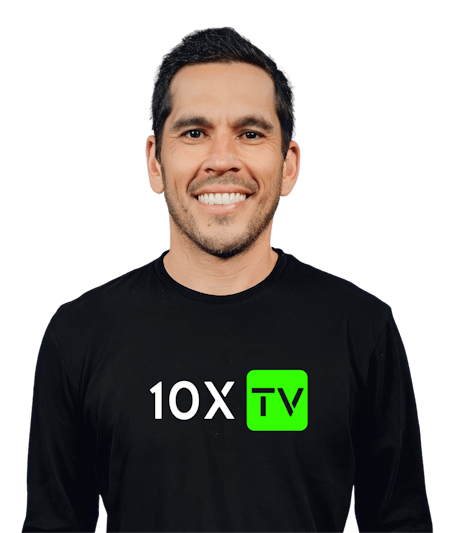
Tony: We haven't started that process yet. So we just did the did the rebranding. If you can see, actually, I can't see my shirt there. How do we? There's a little delay here.
There you go. 10 TV. There you go. So there's the new logo. So we we decided to to rebrand it.
We were calling it Real Estate Masters TV, but we decided to change it to ten x TV because we are going to expand it outside. And so the way that it looks is we know that real estate works really well partly because I've got ten years of TV experience now, so I know what works and what doesn't for myself. And now we've tested it, and it's worked for a lot of clients. And so how do we take that outside of the real estate industry? And like you said, you know, we have big margins in real estate.
Right? So, I mean, you could have a $102,103 $100,000 a month. Right? So people can afford TV, people can afford sales training. For scaling outside of, outside of real estate, it's just gonna have to be the same thing where it's high ticket items.
Right? Yeah. Some you know? I I may call it high ticket TV, right, or something like that. But it's gonna be attorneys.
It's gonna be doctors. It's gonna be roofing companies. Roofing companies have amazing margins, and they can, you know, turn a roof in a couple days. It's gonna be HVAC contractors. Basically, anywhere where there's high ticket items, high margins, and their turnaround time is low.
Yeah. And, obviously, attorneys may be the the the, the exception to that because sometimes it'll take them a few months or maybe even Yeah.
Steve: But their margins are huge.
Tony: To get their
Steve: Yeah. Because I think case is wrong. You don't even even really need to reinvent this. Right? I mean, you just have to stay home one day one morning and just watch The Price is Right, and you got, you know, all those attorney ads, like, have you been mess with the oma, or have you been injured in a car accident?
You already have. Your target audience probably from just from that.
Tony: If they don't already have someone running their commercials.
Steve: Well, right. But you know the avatar. You know what industries
Tony: they're willing
Steve: to pay. You don't have to reinvent the wheel.
Tony: You're right. You're right.
Steve: Yeah. Yeah. Got it. Okay. So you said you're just ex you're just exploring this at the moment.
Tony: Yeah. I mean, my media guy that that runs this back end for me. So the story behind TV, I'll just tell it real quick, is, I I met a guy at a networking event, and he invited me to a poker game. So we go down to the to the guy's basement, the friend of a friend, and I see this guy that I've noticed that's on TV. And so this whole celebrity factor of, like, oh, wow.
It's cool, man. I get to talk to this guy. So I sit next to him and start talking to him, and and, I was like, hey, man. How are your TV commercials doing? He's like, man, we're doing, like, $2,000,000 a year of construction business and all we do is TV.
And I'm like, wow, that's super cool. And so I start drilling him on it and he's like, it might be good for your business. Why don't you call my my guy Drew and, he can tell you more about it. He's the one that did my production and did the ad buying and stuff like that. So I told him my business and and everything, and he's like, yeah.
For probably a few thousand bucks a month, I can get you hundreds of commercials a month. And I'm like, oh, that's sweet. And so I come up with the scripts and, you know, give them the graphics, I think, would be good. So we collectively worked on it, and within thirty days, I had a commercial and, spent $3 my first month and made $35. And then that was eight years ago or ten years ago now.
Mhmm. And it's been anywhere from a five to, 12 x return on my money, since then. So that's kinda how TV started. Go back to your last question. What was your question again?
Steve: I was talking about what is your plan for how do you plan on growing this other arm?
Tony: Yeah. So oh, oh, so what I was getting to was is that my media guy, Drew, has been doing this for twenty years. I mean, he knows TV like the back of his hand. So for me, it's me going out and finding people, educating on on them on what works. I've got a really good formula that works.
I mean, when we sat down and we we said, okay. We're gonna launch this out. Like, what is the formula? What made our commercials work when some other people's didn't, or, you know, what could be the drawback? And so we have five main things that we went through that said, okay.
These are the five things that need to be really good for your for commercials. And when someone comes to me and they say, hey. My commercials didn't do very well, it's usually because they're missing one or quite a few of those things. And so, so, basically, what we do is we take that formula, plug it into any other business, and then my my media team, which is Drew and his team that's behind the scenes that does all the ad buying, they're really good at negotiating rates. So they can go to stations where if you went directly I mean, you're a good negotiator, obviously, but, like, if you went to a station and you said, hey.
I want to spend money on your station. Can you tell me what the package would be? Can you tell me what, you know, times of date to be on and all that kind of stuff? They'd probably try and sell you the most expensive stuff. They probably wouldn't understand your avatar.
I mean, that's happened to me so many times, with different with different things that I've done where they just don't understand the avatar, and they're just gonna be way more expensive. So, like, last week, I had a client come to us or someone come to us and say, hey. We started TV. I just wanna fully disclose that. We started it, like, two months ago, and we just not get any leads.
Steve: Mhmm. And I
Tony: said, how much are you spending? He said, $5. Or it might have been, like, $4, 4,500, something like that. And I said, how many commercials are you getting a month? He said, 40.
And I'm like I I so we already have one client in that market. So I went I went and and looked, and I said, for that ad spend, we can get you, like, 400 to 500 commercials a month.
Steve: Right? And then what shows
Tony: are you airing on? So he kind of named some, and I'm like, that is not your avatar. Like, they're totally screwing you. Yeah. So anyway, so we're gonna and we've done that with probably a handful of people where they're like, my TV commercials didn't do well.
And so not only do we are they on the wrong stations and maybe shows, but their phone number's not easy to remember, their website's too long, their message isn't clear. I mean, there's so many different things that you think it would be simple. I mean, I I've been doing it a long time, but even just from a marketing perspective, you would think that really smart people would be able to figure some of those things out. But sometimes they just they're just disconnected on a couple of those things, and it makes all the difference in the world.
Steve: Yeah. I mean, marketing is one one of those things that you can learn if you go out and, like, spend some time to figure it out, but it's not intuitive. Like, mean, there's just so many areas that things could break if you don't think about it. Mhmm. Right?
So what are those things that you were saying, like, you know, they're must have as far as a commercial? You're saying, like, you know, you you you're looking at this thing. It doesn't have the five pieces. Like, what are some things that are must haves in a in a in a TV commercial?
Tony: Yeah. So, I mean, you could have the perfect commercial, but if you're not hitting the right avatar, if you don't know who it is and you're not hitting those right shows, then you're hitting the wrong people. Mhmm.
Steve: You're
Tony: just not gonna get the phone to ring. So that's that's one thing. Two two is a clear call to action. I mean, have you ever seen, like, a billboard or, just, like, you know, pretty decent commercials and they just have no call to action? Mhmm.
Right? You know? And so for ours, we have a clear and defined call to action, and it's there on the screen the whole time for them to see it. There's easy to remember phone number and website. Like, if someone can't remember the phone number, someone can't remember the website, they're gonna Google, and you're not gonna be found.
I mean, you might be if you're doing PPC or if you have a bunch of reviews on Google and it pops up on the map, you know, or if your SEO is really good. But chances are, you know, you're gonna be competing with a lot of others. Even if they do see you on the top, they're gonna see the next four four guys. Mhmm. And they're gonna go, oh, maybe I need to call them.
Right?
Steve: Right.
Tony: So that that's a big thing. And then, the messaging, you have thirty seconds to get your message across. So, like, it needs to be clear. It needs to be concise. And I don't consider myself a copywriter, but I I feel like I'm pretty good at, like, copywriting when I write, like, for my, you know, websites and stuff like that.
So I wrote my scripts in the beginning, and they worked really well. And it's just like, who are you? What do you do? What problem can you solve? And what are the advantages of using you?
Yeah. You know what I mean? And it's just you have to portray that in thirty seconds. Yeah.
Steve: What's in it for me? If someone wanted to see one of your ads, one of your commercials, like, where would they go find this?
Tony: You go to remtv.com, remtv.com. You can see you can't see the full commercial, but you can see some clips of it. Mhmm. I don't know that I really have a full commercial on on a website right now.
Steve: Yeah.
Tony: More of, the clips of of the commercials that we have.
Steve: Got it. Yeah. So you're early on this journey to expand. Do you have, like, a time frame on this?
Tony: To expand?
Steve: To outside real estate.
Tony: Yeah. So, you know, we we really wanna service the real estate industry well. So we wanna do that really well for the next, probably, six to twelve months, especially as we add radio to the mix. Mhmm. I've I just hired a a decent sized marketing team in the last I think it's about six months ago, and so we've been ramping a lot of things up since then.
And so, I wanna make sure that we get everything dialed in before we start, outside of our industry. But I would say we probably start testing in the next six to nine months, just putting some feelers out there, maybe, maybe just, you know, reaching out to some other people in the in different industries and seeing what the results are, especially those who have already done TV in different industries. Get some data, and then when we feel like we've got some good data, then, then just just start launching.
Steve: Yeah. So our we just had our quarterly meeting this past weekend, and so they're like, we really wanna do this. Like, I don't know if we're ready, but let's let's just take a small step. Let's take some baby steps and see if there's an actual desire for it. So, the quarterly rock for this quarter, the final quarter of the year, is to just do one general sales webinar.
And And from that one general sales webinar, we'll find out how many people are actually interested. Right? And then from there, we'll see if we have audiences they're willing to pay. And then after that, if we have audiences willing to pay, then we'll actually start applying resources to fulfilling it. Mhmm.
But, you know, taking just little baby micro steps just to see if the market's there before we before we expand.
Tony: Well, the way that I feel like I'm gonna do it with TV is so right now, when someone comes to us, we don't have we don't have an educational platform where we can just show people how to do TV and they do it on their own. Mhmm. We could do that, but chances of someone going and implementing all of those steps that I told you is very slim. Even when we do the implementation, every once in a while, we have a client that just doesn't have time to get us just some basic information for us to get them get their commercial together. Right?
Yeah. So but I I feel like to be able to launch at the masses, I think we'll probably put together a course that shows people how to do TV commercials if they wanna do it on their own. And then if they decide that they want us to do the implementation for them
Steve: Mhmm.
Tony: They'd have to go through an application and, you know, go through a sales team and make sure they're a good fit to to work with. So we'll do definitely do it a little bit different where we'll have an educational platform that if they want to do it themselves, they can. And then if they want us to do it for them and us pay, then pay us, then we'll do it.
Steve: Got it. And then I know that you're talking about there's some markets that are open, other markets that are sold out, even have a wait list. Do you guys still have that policy of one client per market?
Tony: No. We have two to three people per market.
Steve: Okay.
Tony: Yeah. So Phoenix, Arizona, big enough for three people.
Steve: It's a
Tony: it's a large area. Atlanta, Georgia, Dallas, Texas, there's, you know, some markets that would they will allow three people. There's probably small markets that could even allow three people, but we we cap it at two just so they don't feel like they're they're they're fighting over, too many leads and that kind of thing. I mean, if you think about it, there's hundreds and hundreds, maybe even thousands of investors in a given market. So Yeah.
If you have three or four or five people on TV, which, you know, a lot of them would be our clients or, you know, maybe running with another media company, It's not gonna it's probably not gonna get saturated. Yeah. But, yeah, two to three per market, and we have, several markets where we have three clients in a market, and all three are doing well. So
Steve: So how far would 5,000 get me in Phoenix?
Tony: 5,000 would not get you anywhere. Yeah. It would be I mean, some of the bigger markets, even $10 could probably get you by. Mhmm. We'd probably recommend closer to maybe 15, but I think $10 could probably get you enough commercials to make it worthwhile.
But, yeah. I mean, I I I would say I meant to do the stat on this, but I think probably 80% of the markets in The US could $5 a month would get you would get you, would be enough ad spend to get you quite a few commercials. And when when I say quite a few, we're we're gonna get you at least 300 minimum. Mhmm.
Steve: And
Tony: there's some some markets where someone will say, you know, I can spend $5, you know, which is our minimum of what we want someone to spend or we require someone to spend. And sometimes we can get, like, a thousand commercials a month.
Steve: It's crazy. So, we're gonna jump into the audience questions. But before we do that, we're gonna do a quick break. So let's go ahead and take that break. Hey.
Steve Trang here. A lot of you have been asking me for sales management training. I didn't feel quite right teaching it, but I found the perfect guy to teach it for us. So, Wren, tell us about it.
Tony: Steve, we're gonna be introducing some really intense fundamentals and philosophy behind the management of sales teams. Have a ton of experience building really high performance sales teams and really taken a little bit of this and a little bit of that management practices and theories from all over the place and brought them together to create a unique whole person perspective that drives low performers to high performers and elite caliber salespeople into sales champions. And couldn't be more excited to partner with you on it and the Sales Disruptors brand.
Steve: For sure. So go to disruptors.com/success, and we'll we'll see you at the next
Tony: event.
Steve: Hey. Alright. So we already have a bunch of questions coming in, and, man, Instagram is definitely, paying attention today. So first question from Isaac McGee on Instagram is, what is the name of this guy's business?
Tony: So we launched when we launched, the TV program, Real Estate Masters was my educational company. So we originally, we called it Real Estate Masters TV. So we're in the in the process of switching it over to, if you can see the shirt, 10 x TV. Mhmm. And we wanna do 10 x TV because, you know, for the name of it, you know, a lot of our clients are getting over 10 x, but it's, again, reaching 10 times more people, 10 times faster, 10 times more ease 10 times easier and 10 times more authority in your market based on that.
And then also we wanna launch other things outside of real estate, so Tennis TV is is the name of the the
Steve: TV brand. Any concerns about, you know, there's a big guy who really pushes that that that slogan. Any concerns at all about that?
Tony: No. Not at all. I mean, if you contacts us, we'll figure something out, but, I think we we own 10xtv.co. We own I mean, we've got some different domains and some different things, and, I don't know, we may look at trademarking, but I doubt he has anything to do with TV. I think it's all media based.
Steve: Yeah. We have, we did part in the disruption, and the first thing we did is did research on it, and and we saw there's actually multiple podcasts out there called part in the disruption. Oh, yeah. Had no idea. The first thing we did was trademark it so that no one come after us
Tony: Right.
Steve: Even though we wouldn't necessarily enforce on someone else. We just don't protect ourselves from having someone pursue us. Right. Right. And, our trademark attorney says, well, you don't have to worry about the other part in the disruption, guys.
You have to worry about the part in the interruption, guys, because they have the debate show before you did. And I was telling him, like, well, I hope ESPN comes after me. And I would I would wilt. Right? I mean, there's no question about that.
Tony: ESPN is part of the interruption or just
Steve: Part of the interruption.
Tony: Interruption. Yeah.
Steve: And there's no doubt I would wilt. Right? Like, I don't have the money to go ask against those guys, but it'd be a pretty cool story. Right? I was
Tony: like, yeah.
Steve: You know, like, ESPN's coming after a little guy like myself. Pat Locke, says on Instagram, it's not slower unless you think it is. Great point. I love the mindset, but Phoenix is tough as hell and so is San Diego at the moment. I actually talked to someone yesterday in San Diego.
And he's like, yeah. This deal I had, that took eight months to clear probate is no longer a deal. I was like, man. Like, like, this was an 80 k spread when I locked it up. Mhmm.
Today, it's, I had to go get my earnest money back.
Tony: Oh, man.
Steve: Camilo on YouTube. So Tru had a house. I almost did a 25 k price drop on, but held on another two weeks and ended up getting a full price offer, and appraisal just came back above. There you go. Good job.
Yeah. Be patient. Yeah. You gotta hold out. So Steven Coller asks, what does a joint venture look like?
So we kinda touched on it a little bit, but maybe you can go into a little more detail of what a joint venture would involve.
Tony: Yeah. So, we would want to pick a mark, first of all, that would be a small ad spend. Right? Because we are probably gonna participate in that ad spend most likely and or participate in funding the deals in that market, and it's gonna be market specific. So, if someone wants to to find out about it, they just go to our website, r m t v dot com, fill out the form, schedule a call with my team, or myself depending on, you know, when it comes in, and we talk about what the market looks like, what is your experience level, what do we bring into the table, how much are we investing in the commercials if we do invest in the commercials ourselves, and then we split the profits.
Usually, it's a fifty fifty, fifty fifty split. So if an experienced investor comes to us and say, hey. What's your j v j v split like? It probably doesn't make sense because they if they have a sales team, if they can afford to do the ad spend, they're gonna make so much more money without us. Right?
And they don't need us necessarily. But if someone is doesn't quite have the money to, you know, again, have the three months worth of ad spend, We'll waive all of our fees. We do have some fees involved with what we do, and we put our money where our mouth is. So, like, we're taking a risk with them by putting our time and effort in getting commercials up and running for them and spending time by, you know, doing a little bit of coaching if they need it. We have a couple new investors that, that are in our JV partnership, so I spend some time with them coaching them, going over numbers.
They use our deal analyzers. They'll utilize my team if they need it. So we give a lot more resources for JV partnerships than we do with just our clients. Usually, our clients, if they're more experienced, we get them on TV, we go over their numbers, we support them on TV, and that's all they need. But joint venture partners typically are gonna need more than that.
Steve: Right. Make it makes total sense. And Isaac wants to know how much do we need to spend a month. So you you've given some, figures there. So answer it, generally speaking, and, Isaac, if you can let us know what market you're in, he could probably get a more clear answer.
Yeah. There you go.
Tony: Yeah. $55,000 a month, like I said, get can get typically hundreds and hundreds of commercials, a month. So, let me give you an example. Trying to think of a market that is not taken, Chattanooga. I think there's probably close to a million people in that market, total when you look at the main market and the surrounding area.
$5,000 a month definitely gets hundreds of commercials a month. So if it's, again, like a Dallas, Texas, Atlanta, LA for sure, it's one of the biggest markets. New York City encompasses 15,000,000 people. You'd have to spend $30 a month there. I mean, it's it's crazy.
But the the spreads are big there, so it could work, and you're reaching a lot of people. So, yeah, 5 I'd to be safe, 5 to $10 can get 90 some percent of markets throughout the throughout The US.
Steve: And then, Stephen Collard's follow-up question is, what do you suggest for ad spend in a secondary market like Notre Dame, Indiana, which has 290,000 population?
Tony: So Notre Dame is, what's what's that bin?
Steve: Bend.
Tony: No. Not Bend. Where where is, where is Notre Dame? What city is that? I wanna say Great Bend.
No. That's not it. Anyway, whatever city that's in, I can tell you right now, I know the number because I looked at it the other day, you're gonna hit, a little less than a million people total. I think it's 300,000 households. So you're gonna take that times about three.
So about 900,000 people. You can spend $5 a month there. That is a market. You can spend $5 a month. I'd probably recommend if you can do it 7 to 8 Mhmm.
Because that's the difference between $5 and $8 is two stations, 100, 300 to 400 commercials. Once you start bumping up your ad spend at thousand to 2,000, we can typically add another station, a bunch of shows, and then get you, you know, a couple 100 more commercials.
Steve: Got it. And then, Ian Ross wants to know, in your experience, should the call to action change depending on the avatar?
Tony: The avatar is gonna be similar, but if someone does land or someone buys multifamily or something like that, what we do is we call our system a franchise like system. So we know the scripts that work really well. So we're gonna stick pretty dang close to those scripts because they've worked for a lot of real estate investors throughout the country. These are the ones that I started with, that I tested, and then we tested in other markets. So if someone says that they do land, we can say we buy houses and land, or we buy houses, land, and multifamily, or we love mobile homes, you know, we might add some things like that if if there's a certain asset class that they're they're looking to buy.
Gotcha. We actually have one guy that's that's crushing land right now. He's in I'm gonna tell you the exact market, but it's in the South, and he he added land to his commercial. In the last three months, he's then done $200,000 land deals because they don't know what they're worth. They're, like, 10 acres out in the sticks a little bit.
He picked them up for, like, 25,000, split them up into three lots, and sold them for, like, $1.50. I mean, the numbers were pretty similar on both deals. Yeah. So, yeah, we can we can we can tweak it a little bit for for what their audience is, even though the avatar, the person that you're up marketing to is pretty similar.
Steve: Yep. And then follow-up question for me. And what were some of the challenges you faced as a company getting to the state where you have the confidence you have now in terms of knowing what numbers work in different markets?
Tony: Number one, my media guy. I mean, when I when I went to him and I said, hey. We're gonna launch this throughout The US. Let's create a system for this. So he we documented every single market, what the amount of households is, which can tell us about the amount of population that's there, and then we put a range.
Do you you know? When I say $5, that's the minimum. Like, you can like, some of those markets, you can spend up to 15. Right? Mhmm.
Or even more. So when I say $5, that's the minimum to get started. I recommend if someone can afford it to go a little bit higher. So, basically, we took, a range in each of those markets and said, okay. If someone's in Kansas City, Missouri, it needs to be $8 minimum, and they could start up to $20 if they wanted to.
So really it was just documenting that, and then we test that, and we put those, you know, put those ad spends out there, and then start launching our clients, and realize $5 the minimum did great, you know, and then we kind of like say, 'Okay, do you want to add a little bit more? Do you want to test 7 grand?' And then, 'Okay, that works even better.' 'Okay, do you want to test 10 grand?' 'Okay, maybe that didn't work quite as well. Let's maybe bump it back down to eight.' That's probably the sweet spot. So that's something we we do for our clients, but to have the confidence to to know what the ad spend is, I mean, it's just, you know, doing it enough that we know what numbers work.
Steve: Or having the right people.
Tony: And having the right people for sure.
Steve: Yep. And then a follow-up from, Camilo on YouTube is the name of your site again.
Tony: Remtv.com. So that stands for realestatemasterstv, or an easier way to remember it is ten x t v dot c o. Not com, but co.
Steve: Should've just boughtthe.com.
Tony: We were trying to get it.
Steve: Yeah. There's some, some domains I try to buy, and I look at them and I was like, they want what for this?
Tony: Yeah. That's It's crazy.
Steve: Yeah. And you got a shout out, from Swindler. So shout out from Wichita. What's up? So, in dealing with, your group, right, again, you have over a 100 people, which is impressive.
Right? I mean, it's not even two years Mhmm. That you've been doing this. What are some other trends you're seeing, as in their businesses? You know, outside of just the market, is there anything else you're seeing out there because you have that much data out there?
Tony: Oh, yeah. Yeah. It it's crazy because, we've had some well known people come to us and say, we want you to run our TV commercials. And we started, I think it's about a year ago. We started running the phone number through our system so we could have the data, number one, and two, so we could listen to the phone calls.
Because we'd have people come to us and say, we got 90 lee or no. They would come to us and they'd say, our commercials aren't working. Okay. What's your data? How many calls are you getting?
Well, we don't know. Okay. Well, how's your sales team doing? I think they're doing okay. It's like, okay.
We need some more data. So we started running the phone numbers through our system and partly because we had buy the number and know it's a good number.
Steve: Mhmm.
Tony: Even though we'd coach our clients, hey. Buy this number or buy something similar, they would go buy some random number. So that was part of it too. So we would see calls coming in and the way they were handled, and you would think the people that you would probably know that have good businesses, I mean, they're probably still doing okay, but when their guys answer the phone hello, or they're out and about just, you know, you can tell they're in their car, like their kids are in the back screaming, you know, just stuff like that. It's like people that I I can tell the people who have their stuff dialed in, they're the num ones doing the big numbers.
The ones that don't have their stuff dialed in, they have kids screaming in the background and some guy answering that doesn't even say the business name, those are the ones that struggle a little bit because even if you're on TV, if someone calls you and you don't answer with your business and you have screaming kids in the back, they're going to be like, who are you? Do I really trust you? You know? And you're very un present with them too, and they can feel that. So, so that's a trend is that those that are doing really well, we listen to their calls, they're dialed in.
They answer the phone or they return the call back quickly. You can see that in system, and they're converting they're just converting. They're just doing doing the deals. I mean, you know, we we have clients that a lot of we call it the hundred k club. We have a lot of clients doing $100,000 deals.
If that phone call that came in, they didn't answer that call, and that person went somewhere else, that's a $100,000 that really screw your skew your numbers. Yeah. You know? So that's one thing for sure. And then, that's the biggest thing I think at the top of my head is just people dialing in their sales process.
I mean Yeah. People spend so much money for leads, but they don't dial in their sales process.
Steve: Well, the marketing. Right? I mean, that's the first step is is we wanna get the marketing right. And after the marketing, then we gotta get the sales right. And then once we get the sales right, then we gotta get, like, the people right.
And after that, we gotta get the finances right. So there's, like, so many things we have to do well, and I think, I've been guilty of this. Right? You just assume everyone knows what the everyone knows what to do and how to do it correctly Mhmm. And consistently.
Mhmm. But without inspecting it, you just don't know. It's actually one of the reasons why, Jason Lewis and I partnered up. We created, a a, we use Observe, which is basically can listen to all the inbound calls. Mhmm.
And using AI, it can tell you, like, it was a good call or not call.
Tony: It's called Observe?
Steve: We're using it's, it's our we use it we call it our lead manager training, but we're using an another program where they can just listen to all the calls Mhmm. And scores the calls. And then, you know, you can get a weekly report or, like, you know, here are all the good calls to listen to. Here are all the bad calls to listen to.
Tony: Yeah. We're looking at trying to implement that technology too. It's probably the same company that you're you're going through and you're looking at. Yeah.
Steve: Yeah. So it it it makes a difference. Right? And then it helps me selfishly, right, as a trainer. I know what is working on the phones.
Right? Like, I have ideas. I have beliefs. I know what, you know, works for my sales team, but, like, having this data, it just tells us exactly. Right?
Here's what priceless. Here's what leads to, the, booked appointment. Here's what led to, like thank you for your time. So we have some more questions here. So, Ian, is the reason you're sticking to real estate now is mainly to establish a track record.
It seems like the principles of these numbers and factors would be applicable to almost any industry.
Tony: Oh, a 100%. The biggest thing is I I have a good name in in in this industry. I've been doing it twenty years. I've done close, done done close to a thousand flips in my in my career. So for me to to go into the real estate industry and say, I've been doing TV commercials for ten years.
I've been in business for twenty. It's a lot easier for me to go into the real estate industry with credibility. Yep. If I go outside of that, it may be a little bit tougher. Maybe that's maybe that's a limiting belief.
I don't know. But, but for us to tackle the masses, it's gonna be it's it's gonna be some some trial and error. You know, when I when I launched, when I launched this this business, it was easy because I had, 10 people that I went to, and I said, hey. I'm gonna test this out. Mhmm.
And I think every single one of them said yes. And so, and then I still have, I think, eight of those clients that are still running this day two years later. So it's easy for me to get into that into this industry because I've I've been in it and have credibility in it. So to go outside of it just would be a little bit different. I you know, again, it may be a limiting belief.
It's just gonna be definitely different, to to go outside. And I don't know. Maybe it's gonna be a lot easier because it's the masses instead of those that are actually doing deals in real estate.
Steve: Yeah. I mean, it's it's it's you've got the the same questions I've got. Right? Because I, you know, like, I've been doing this for fifteen years. Right?
We've been doing the sales training for some time now. Mhmm. I go outside of real estate, like, how well how much traction am I gonna get? Mhmm. So, yeah, I think the limiting beliefs you got, I share those same exact Yeah.
Limiting beliefs. Yeah. What is your what is the biggest struggle that you face today?
Tony: Biggest struggle? Oh, that's a great question. You asked me this last time. I would say just planning the next move. You know?
I I I'm I'm comfortable enough, and and I say this with all the gratitude in the world, that I don't have to create anything above and beyond what I'm doing now, just because I've got enough passive and passive and residual income, to live a comfortable lifestyle, but I think I'm like you. I just wanna create. I wanna do different things. I wanna make impact and all those kinds of things. So I think it's just the next step.
You know? I think that's one of the reasons I haven't gone outside of, real estate investing yet for TV is just, you know, you put the right steps in place, you can have a great fruitful business. If you put the wrong steps in place, then it's like you could go, man, why did I do this? Oh. I didn't I didn't have to.
I did that recently with a company where I created a company that it just it sucked the energy out of me the last year. Mhmm. 95% of the problems came from this company, and so we decided a few months ago, we're like, we're not doing it anymore. You know?
Steve: What company was that?
Tony: Funding. Gap Funding.
Steve: GAP funding?
Tony: Yeah. So we're we're still doing some deals for real estate, and and we may ramp it back up. We just made a lot of mistakes. We just lent to the wrong people. We didn't have really good processes in place.
And 90 again, 95% of the problems that came across my desk was were these were these deals.
Steve: Yeah. Well, I remember you announcing it Yeah. At Family Mastermind. Yeah. Right?
Which, you know, I don't know if you were planning on going, last month or was it earlier this month?
Tony: I did. I did. I went for a day.
Steve: Oh, you did go. Yeah. Oh, you did go. Yeah. I went out.
I had my flight booked. Right? And I had the the Airbnb. And by the way, Airbnb does not do re returns for hurricanes. So I was like, oh, that sucks.
It was so much cheaper to go, like, rent a house because I got a whole team going with me. Right. So I rented a house. And they're like, yeah. You know, you shouldn't have known that hurricane's at risk.
Like, no. I shouldn't. I live in Arizona. I have no idea Right. Right.
What's hurricane's at risk.
Tony: Until three days before or something like that. Yeah. Right?
Steve: So so, yeah, we got the, the Airbnb, whatever. But, the morning of because I was planning on leaving Monday, first thing no. I was planning on leaving Monday afternoon. Right? And, like, my flight was still scheduled, and I'm just watching hurricane Ian just kinda, like, trend this direction.
So you flew in on Sunday?
Tony: Threw in on Sunday. I'm like
Steve: flew in.
Tony: I'm like, I'm just gonna figure it out. If I have to fly out again, you know, whatever, but yeah.
Steve: Well, you also have the convenience of having a plane. So did you fly your plane today?
Tony: I didn't fly. It was too far to fly. Too far to fly? Yeah. From San Diego to to Tampa, Florida.
It was just it could've done it, but it would've been yeah. It would've
Steve: been a trek?
Tony: Yeah. And way expensive. Yeah.
Steve: Yeah. So, I guess side question, how far do you feel comfortable flying? In
Tony: my plane? Mhmm. I'm going to Dallas next or two weeks. Yeah. So about halfway across the country is about as far as I want to.
Because I I mean, four hour nonstop flight to Tampa is just just a lot easier. You know? I love flying, but there's a point where you just don't wanna spend all day in an airplane.
Steve: Yeah. It's not fun anymore?
Tony: Yeah. Exactly. Yeah.
Steve: Yeah. Got it. So, planning the next step is the biggest struggle right now. So, really, is it the thinking the plan all the way through? Is it trying to figure out what to do what's trying to figure out what to do next?
Or what's
Tony: That's a great question. So my personality is ready, fire, aim.
Steve: Yeah.
Tony: Right? And that's what I did with the GAF funding company is I'm like, okay.
Steve: I I
Tony: you know, I've got some money sitting. I can get some really good returns on it. I've already done and it it happened by accident. I had a hard money lender come to me and say, hey. Will you lend some, you know, down payments to my clients?
And so that's how it started. And then after about a year, year and a half, they all cashed out perfectly, made, you know, x percent on my money, which was, you know, unbelievable. So I'm like, I'm a create a
Steve: business out of this.
Tony: And then I just, you know, started started lending to probably people I shouldn't have. And so for me, it's like I'm a little gun shy because I'm comfortable where I am right now time wise and everything that if I add something on, I don't want it to be I don't want it to suck the energy out of me. Yeah. You know what I mean?
Steve: Oh, I completely get it. That's the the biggest risk we're running right now is adding something else that will force us to deviate or increase liability to risking what we already have. Like, when we're young and scrappy and have nothing to lose, let's take on the world. Mhmm. But we're no longer the young and scrappy, have nothing to lose.
Tony: Mhmm. So Little scrappy still, but not quite as young.
Steve: I I can say, I I don't think I'm as scrappy. I've got I I can I'm capable of doing more, but I don't know if I'm as scrappy as 27 year old me who had, you know, visions of, you know, taking over the world.
Tony: Oh, totally. Totally. And, like, even the deals that we're cleaning up right now, it's like we have deals across the country that, you know, we had one person steal $80 from us on one deal. We had another one steal $70 from us on another deal, and it's like, you know, the young me would have flown on a plane and just gone out there and found contractors and cleaned it up, but I'm like, dude, I'm too tired for that. Like, I just if I have to lose some money on these deals, I'll I'll do it.
But, but, yeah, that's the regret. I mean, I've honestly, the last six months, I've been like, oh my gosh. There's some deals that I wish I wouldn't have funded that funded a year and a half ago Mhmm. That we're still cleaning up to this day. Yeah.
So, again, once we clean all these up and we may go back to it, it's a great model, and the market's weird too right now. Right? Yeah.
Steve: So, like,
Tony: if we fund a deal and it doesn't close for six months, I don't know if that market is going to go up by 5% or go down by 20%. So then we're we're at bigger risk. So
Steve: What were the biggest lessons you learned in in watching the gap funding company go sideways?
Tony: I think it's having standards. You know, we when when I started lending people, I didn't put a perfect avatar in place. If I put a perfect avatar in place, I would
Steve: Which goes against, like, what you already knew.
Tony: I yeah. Right? You know? It's like an experienced investor, done enough flips, Uh-huh. Has some capital behind him.
You know, he may not have the capital due to down payment and, you know, all that, but he's got some capital, work, you know, to to play with. They're not their own contractor. You know? The ones that were that one of the, two of the deals three of the no. Three of the big deals we got screwed on, they were their own contractors.
They would ask for draws. Oh, my guys are waiting there. They need to get paid. What you know, can I get that draw? And now it's like, no.
You need to have third party contractors that are doing the work so we know they know what they're doing Mhmm. And we know where the money's going. It's not just going to some hourly guys that are supposedly doing but that's actually what happened on one of the deals is they were taking pictures of core corner of the of of the rooms. They would paint the corner of the room and put flooring in the corner of the room, take a picture, and they would say that the whole room was done. You know, just stuff like that that, you know, just putting together the perfect avatar and and not deviating from it.
Because it
Steve: Is there guys that are, like, buying your TV as well or just
Tony: No. No. No. No. No.
We have we we've funded some deals for our TV clients, but now these are these are people outside.
Steve: Got it.
Tony: Yeah. So so the for those of you who are funding deals, if they've never done a deal before, huge liability. They have no idea what they're doing. Right? Even if they say they do.
Yeah. That's number one. If they're on their own contractor, that's a no no. And, make sure you're you're in a price point that if you take the property back, it's not a huge nut. We've got, we've got a couple $500,000 plus properties that we're paying, you know, big mortgage payments on, and then we're having to fork over another $80 to do the the renovations to get it where it needs to be.
And it's just like, what what was I doing? Why did I approve these deals? So Well,
Steve: it made sense at the time.
Tony: At the time. Yeah.
Steve: And, again, that's like the the lessons I'm learning, right, like, in the forties is like, oh, like, we don't have to tackle every single thing. We don't have to say yes to every opportunity. And then, again, considering the downside is like, okay. What's the risk if this goes wrong? Because that I don't have a risk calculator back here.
It's just like, that sounds like a great opportunity. Let's go. So we're we're we're building up that part of the brain.
Tony: And, you know, it's hard it's hard to know who to trust too because good salespeople will sell you that they're good people. Mhmm. I mean, if you had a conversation with this one lady that stole $80 from us, you would be like, there's no way she would steal $80 from you. Just the sweetest lady that was like, oh my gosh. We have great plans for this property.
And it's like I kinda let the emotions get involved of like, okay. I wanna help this gal. They've got good margins, you know, but they've never done a deal. You know, that that should have been my number one thing is they haven't done a deal. And that's why a lot of lenders when they, you know, when they vet people, it's like, have you done at least five deals?
Mhmm. I think that's usually their minimum.
Steve: Yeah. You typically see five on on the application. You know, we had this conversation, in our office, and they were talking about, like, we don't like to sell to seasoned buyers because seasoned buyers are really good negotiators. Mhmm. Right?
And they're
Tony: not gonna pay as much too. Right?
Steve: They're not gonna pay as much. And they were talking about, like, well, isn't it wrong to sell to someone who may be overpaying? This is this is, like, an ethical conversation. Right? And I challenged them on this only because I was once that stupid buyer, right, who thought I can remodel an entire house for your $15.20 k.
Right? But at the same time, you don't know what their carpenter experience is. You don't know they got family that's gonna be doing this work. Maybe they're just gonna build sweat equity into it. Right?
But we tend to pass this judgment of, like, oh, this guy, there's no way he can he can buy it at this price. He doesn't know what he's doing. And, like, we maybe we shouldn't sell it.
Tony: I was
Steve: like, I I think there's a question of how dare you tell this guy he's incapable of doing this. Because, like, if you ever, sold a deal, like, oh, there's you know, it's not a good deal, and you see what they're done when they're done with it, it's like, wow. It's amazing what they've done with it. But our sales team at times is trying to pass judgments like, oh, you know, there's no way they'd ever pay this much. So just things that, things that kinda go through my mind when we're saying, like, you know, you lose money in your first deal.
Like, there are people that lose money in their first deal. There are people that knock it out. You said And if
Tony: they lose the money, that's a learning lesson. A learning lesson. Either they won't do it again or they realize they're not fit fit for the for the industry.
Steve: I mean, that was me my first few years, right, is, in in working with other people that were, flipping houses. It was just a given, right, that you lost money in your first deal. Like, that's no longer a given now. Well, it might be now, but
Tony: Shouldn't be.
Steve: It shouldn't be. But the reality is there's a lot of people on their first flip. They can't they don't know how to budget a flip. They don't know how to manage contractors. They don't understand the finances.
They don't know how maybe hard money works. Right? They may not read that maybe there's a three month minimum. There's, like, a lot of things that can go wrong.
Tony: I think the number well, there's two things. One, the contractors, obviously. I mean, you know, even if they bid 50, if it goes wrong, you're
Steve: Oh, yeah. It's gonna go over budget. Just assume it's gonna go over budget and over time.
Tony: Yeah. For sure. For sure. And then, oh, God. What was the other thing I was just thinking?
Oh, the calculations. Like, someone's like someone sent me a message the other day. They're like, I've got this property locked up for a 100,000. I think I can sell it for $1.50. I'm gonna put 20,000 into it.
I can make 30 easy like, make an easy $30,000. And it's like, dude, real estate commissions, holding costs. Like, I had to educate this guy a little bit, and when I went back and forth with him, I'm like, okay. You just don't understand, obviously.
Steve: Or or just send them to one of your one of your students.
Tony: Yeah. For sure. Yeah. Yeah. It's, it's it's interesting how people think real estate's easy, and they just they just there's so many different parts to it that they have to be educated in order to
Steve: make it work. When you watch HGTV, it does look pretty easy.
Tony: It does look easy. Yeah. Right?
Steve: For sure. And that is the guy that's gonna pay the most. Right? Again, the guy that's flipping 10 houses a month is not my avatar. That guy is skilled, has been through, he's been scarred, and, he he knows how to negotiate, and, and he doesn't need it.
He just doesn't need it. So, again, it's been twelve months. What is the biggest lesson you've learned since you were on the show last?
Tony: Biggest lesson. Well, I think going back to the funding business, I think, just I don't know. Maybe just planning a little bit better. Like, again, I'm a ready, fire, aim kinda guy, but I think if I would've just sat back and thought about it a little bit more and then probably advised with people who did lending, I think they would have said, don't do this unless x y z. Mhmm.
Right? So I think I think probably advising from people that have, that have been there and done that. And I've been trying to do that more and more with a lot of things that I'm that are new that I'm putting into place. And so, I think that's probably the biggest lesson is is maybe just take your time a little bit more. And, you know, again, I didn't have to do that business.
My ego just got got in the way of, like, oh, wow. I made some money on these deals. Now I can make it a, you know, multi multimillion dollar company, which I think I could still do, but it you know, I got set back quite a bit with these deals that I'm trying to clean up.
Steve: Well, there's that question, like, oh, I should how do I scale this? You know? Like, the it's you see these memes. Right? Like, every entrepreneur, how do I monetize this?
How do I scale this? Mhmm. Right? And we we we have this habit. Like, we've already had all these successful businesses.
Obviously, we can just extend our genius to this, and then we don't actually think things through, and that's when we get that's when we get burned.
Tony: Yeah. And then I took away so much time and energy to that company, the the new funding company, that I could have been scaling the TV company, which is a thousand times easier.
Steve: Right. You
Tony: know, we find clients. We get them results. We, you know, blow them up on TV, and, it doesn't take a lot of our time. In fact, it's rewarding because people will text us, oh, man. Our first month, we did three deals.
We did five deals. You know? And and the numb the the feedback we get from them is energizing, and the feedback I was getting back from the gap funding people was like, my contractor walked away with $10. Can you lend me some more money? You know, those kinds of conversations.
Steve: Yeah. A little bit more, soul crushing. So if someone was interested in in getting more seller motivated seller leads from TV, what's the best way for them to do that?
Tony: Remtv.com, again, stands for realestatemasters, remtv.com. 10 right now goes to our real estate, investing, program, but eventually will go to our general, 10 x TV program where we're getting other industries across the country, on TV.
Steve: Awesome. Cool. So I want you to think about a message you wanna leave everybody with while I make a couple of quick announcements. Guys, if you got value today, please like, subscribe, share, comment if you're listening. Leave a five star review on Apple and Spotify.
We do have our sales leadership training coming up in just a few weeks. Wren Bartlett and myself, we're gonna talk about how to find quality talent, how to onboard them, train them, manage them, and ultimately retain them. You know, one of the biggest frustration frustrations we have in running a sales organization is training someone up, teaching them everything you know, and have them walk out the door to potentially compete against you. Right? So stop that.
If you wanna be able to create great, salespeople and retain them, be sure to check it out. Go to distributors.com//salesleadership, and we'll see if it makes sense for you to work with us there. And we do have part in the disruption tomorrow and Certainty Talks on Friday. And next week, we've got my good buddy, Caleb Pearson. He's gonna be coming out to talk about his business in, I believe, in Carolina.
So what are the last thoughts you'd like to leave all the listeners with?
Tony: Yeah. So I would say, you know, there's so much possibility in business, and, you know, you don't know your potential until you start achieving it. So, like, you know, for me, I've had a lot of ups and downs over the last twenty years, and, you know, there's been some resets. And when I had those resets, I think almost every business owner has had it where they questioned themselves, and they're like, what did I do? Why did I, you know, why did I make these decisions?
And you feel like nothing's working. And typically, that's just to me, that's a reset. It's learning the lessons, resetting, and figure out how to get to the next level faster. It's kinda like trampoline. Right?
Sometimes you just have to come down before you bounce, and you go even further up. Right? So that's one thing. And the other thing would be is entrepreneurship doesn't have to be hard. It is overall Mhmm.
But it can be a lot easier. So I think utilizing, good people, whether that's employees, mentors, being a part of masterminds, which is where we met, doing things just working things smarter. I mean, even what I said with the gap funding, like, if I would've just had a better system in place, I would've avoid a lot of those pains. Like for our clients, we get on TV, they come back to us, and they're like, wow. This is way easier than texting, cold calling, and some of the other things we've been doing.
So finding strategies that are just easier on you to implement, and just leveraging yourself overall with people, systems, and, you know, good processes. And it typically it typically there's someone there that can get you to where you wanna be. You just have to find them.
Steve: Absolutely. That's great advice. If someone wants to, get a hold of you, what's the best way to do that?
Tony: Tony javier dot tv is my Instagram handle. Tony j a v a v I e r dot tv. So you can go to my Instagram there. That's probably the best way to get ahold of me.
Steve: Awesome. Perfect. Thank you so much.
Tony: Thanks, buddy.
Steve: Thanks for coming back. Absolutely.
Tony: Thank you for
Steve: for watching. See you all next week. Us.